Caroline Johnson Hodge - Böcker
Visar alla böcker från författaren Caroline Johnson Hodge. Handla med fri frakt och snabb leverans.
4 produkter
4 produkter
1 217 kr
Skickas inom 5-8 vardagar
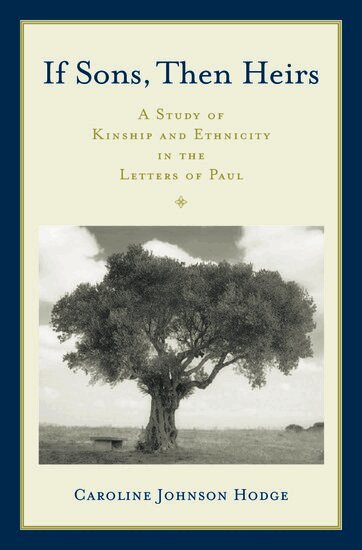
Christianity is widely understood to be a "universal" religion that transcends the particularities of history and culture, including differences related to kinship and ethnicity. In traditional Pauline scholarship, this portrait of Christianity has been justified by the letters of Paul. Interpreters claim that Paul eliminates ethnicity, or at least separates it from what is important about Christianity.This study challenges that perception.Through a detailed examination of kinship and ethnic language in Paul's letters, Johnson Hodge argues that notions of peoplehood and lineage are not rejected or downplayed by Paul; instead they arecentral to his gospel.Paul's chief concern is the status of the gentile peoples who are alienated from the God of Israel. Ethnicity defines this theological problem, just as it shapes his own evangelizing of the ethnic and religious "other." According to Paul, God has responded to the gentile predicament through Christ. Johnson Hodge details how Paul uses the logic of patrilineal descent to construct a myth of origins for gentiles: through baptism into Christ thegentiles become descendants of Abraham, adopted sons of God and coheirs with Christ. Although Jews and gentiles now share a common ancestor, they are not collapsed into one group (of "Christians," forexample). They are separate but related lineages of Abraham.Through comparisons with other ancient authors, Johnson Hodge shows that Paul is not alone in his strategic use of kinship and ethnic language. Because kinship and ethnicity present themselves as natural and fixed, yet are also open to negotiation and reworking, they are effective tools in organizing people and power, shaping self-understanding and defining membership.If Sons, ThenHeirs demonstrates that Paul's thinking is immersed in the story of Israel. He speaks not as a Christian theologian, but as a first-century Jewish teacher of gentiles responding to concrete situations inthese early communities of Christ-followers. As such Paul does not reject or critique Judaism, but responds to God's call to be a "light to the nations."
Del 4 - Inventing Christianity
God of This House
Christian Domestic Cult Before Constantine
Inbunden, Engelska, 2025
1 118 kr
Skickas
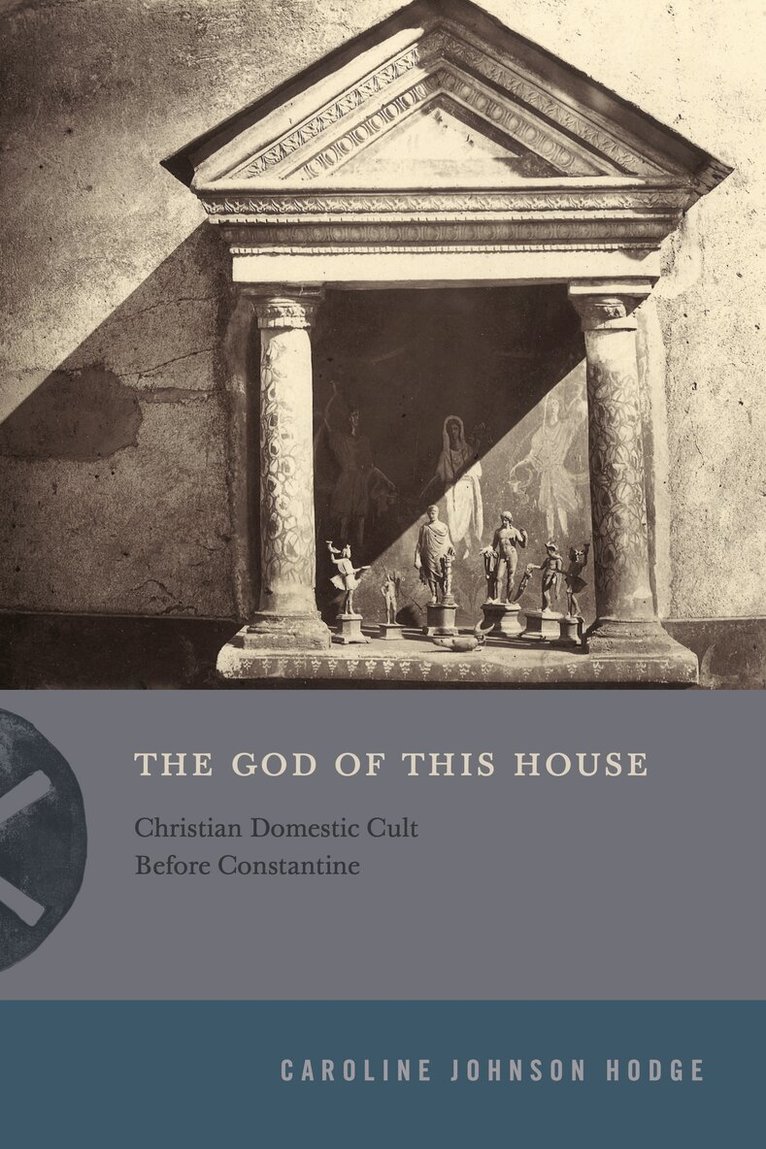
Christianity is often thought of as a tradition of belief, interpretation, teachings, and texts. However, a scholarly focus on ideas overlooks how early Christian doctrine interacted with social exchanges in lay spaces. Author Caroline Johnson Hodge fills this gap, shifting our attention from liturgical settings to religion as it was lived outside the prescriptions of congregations. Through a careful reading of the material record alongside print sources, Johnson Hodge shows that in the first through the early fourth centuries, Christians developed household rituals akin to traditional domestic cult practices around the Roman Empire, and this continuity contributed to the success of the new cult in the Roman world. Rather than a well-organized, universal domestic cult, Johnson Hodge finds that practices were flexible and varied, ranging widely from established household observances to unauthorized rituals, gravesite venerations, and the unpatrolled movements of women and slaves. Just as important as the official representations were the small gestures at hearths and doorways, the myriad ways in which followers of Christ incorporated their divine beings into the rituals of their households, shops, and tombs.In bringing the lived-religion approach to bear on this formative period, Johnson Hodge’s study offers a fascinating portrait of a very “pagan” world within ancient Christianity. This book will be especially valuable to religious studies scholars and others interested in the origins of Christianity.
652 kr
Skickas inom 5-8 vardagar
869 kr
Skickas inom 5-8 vardagar