Caroline Summers – författare
Visar alla böcker från författaren Caroline Summers. Handla med fri frakt och snabb leverans.
4 produkter
4 produkter
Del 264 - Studies in German Literature Linguistics and Culture
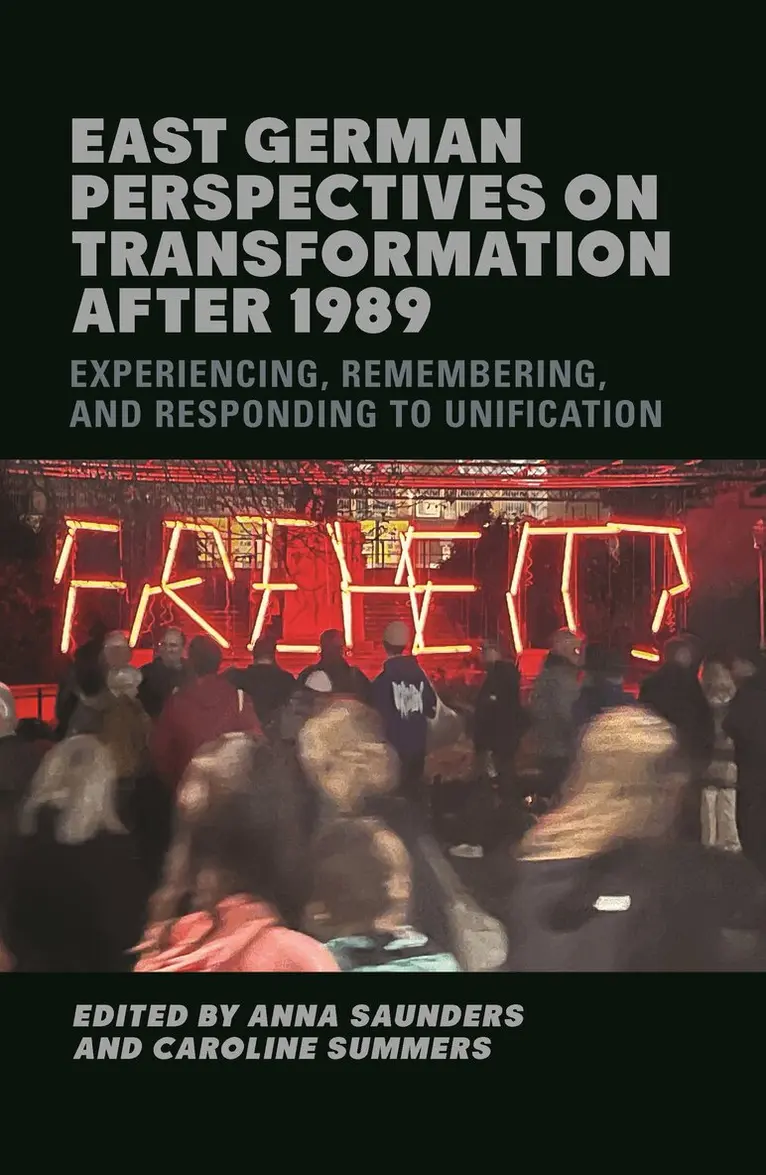
East German Perspectives on Transformation after 1989
Experiencing, Remembering, and Responding to Unification
Inbunden, Engelska, 2026
1 237 kr
Skickas inom 5-8 vardagar
Examines eastern Germans' diversity of experiences of 1989/90 and its continuing effects as reflected in biographical, creative, and collective representations, demonstrating the ongoing impact of die Wende in contemporary Germany.As the fall of the Berlin Wall and the official unification of Germany recede into the past, their impact on questions of identity and belonging in Germany endures. For many eastern Germans, the process of change and adaptation that began in 1989/90-in German die Wende, the turning point or transition-is not yet over; indeed, recent public discourse and events in Germany have caused controversy by questioning established narratives of unification. Rather than viewing the Wende as a phenomenon of 1989/90 and its immediate aftermath, this volume presents it as a complex and ongoing process. By examining eastern German representations of, and responses to, the Wende from varying perspectives-including life stories, fictional representations, and collective visions-the contributions in this volume present above all a narrative of diversity: just as "the East" cannot be understood as a homogenous space, neither can the Wende be seen as a unified-or unifying-experience. From an eastern German perspective, the period since 1989 has been marked by continuity as much as rupture, with the promised freedom and democracy often being overshadowed by violence and alienation. By focusing on the longer-term sociocultural implications of transition, this volume provides insights into past and present experiences of the Wende, as well as multiple imaginations of Germany's future.
Inbunden, Engelska, 2017
1 432 kr
Skickas inom 10-15 vardagar
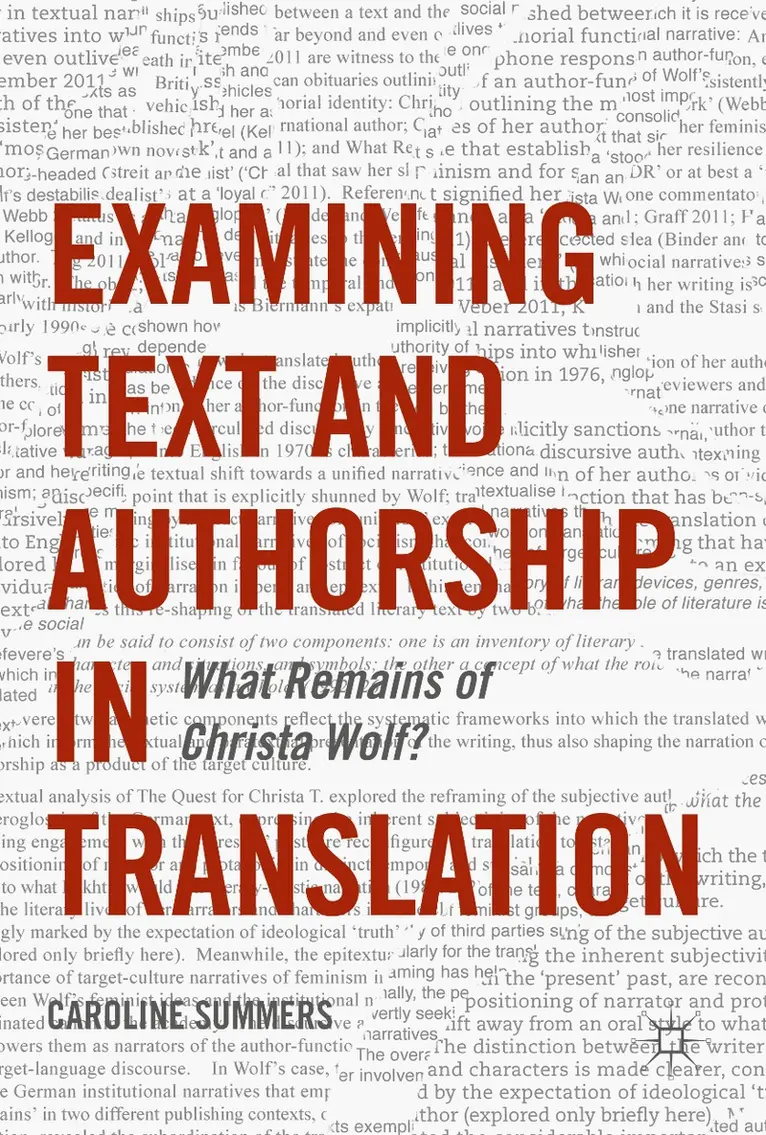
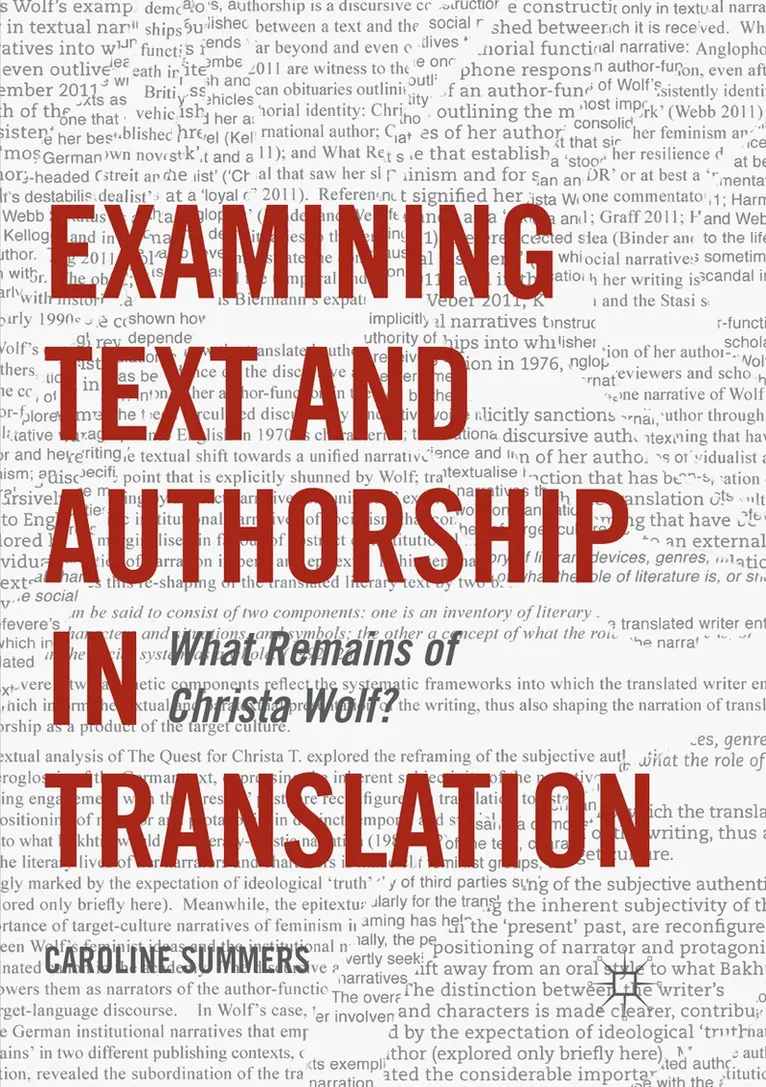
This book, the first in-depth study of authorship in translation, explores how authorial identity is ‘translated’ in the literary text. In a detailed exploration of the writing of East German author Christa Wolf in English translation, it examines how the work of translators, publishers, readers and reviewers reframes the writer’s identity for a new reading public. This detailed study of Wolf, an author with a complex and contested public profile, intervenes in wide-ranging contemporary debates on globalised literary culture by examining how the fragmented identity of the ‘international’ author is contested by different stakeholders in the construction of a world literature. The book is interdisciplinary in its approach, representing new work in Translation Studies and German Studies that is also of interest and relevance to scholars of literature in other languages.
E-bok
Engelska, 20171 291 kr
Läs direkt efter köp
This book, the first in-depth study of authorship in translation, explores how authorial identity is ‘translated’ in the literary text. In a detailed exploration of the writing of East German author Christa Wolf in English translation, it examines how the work of translators, publishers, readers and reviewers reframes the writer’s identity for a new reading public. This detailed study of Wolf, an author with a complex and contested public profile, intervenes in wide-ranging contemporary debates on globalised literary culture by examining how the fragmented identity of the ‘international’ author is contested by different stakeholders in the construction of a world literature. The book is interdisciplinary in its approach, representing new work in Translation Studies and German Studies that is also of interest and relevance to scholars of literature in other languages.
Häftad, Engelska, 2018
1 017 kr
Skickas inom 10-15 vardagar
This book, the first in-depth study of authorship in translation, explores how authorial identity is ‘translated’ in the literary text. In a detailed exploration of the writing of East German author Christa Wolf in English translation, it examines how the work of translators, publishers, readers and reviewers reframes the writer’s identity for a new reading public. This detailed study of Wolf, an author with a complex and contested public profile, intervenes in wide-ranging contemporary debates on globalised literary culture by examining how the fragmented identity of the ‘international’ author is contested by different stakeholders in the construction of a world literature. The book is interdisciplinary in its approach, representing new work in Translation Studies and German Studies that is also of interest and relevance to scholars of literature in other languages.