Cecelia Eaton Luschnig - Böcker
Visar alla böcker från författaren Cecelia Eaton Luschnig. Handla med fri frakt och snabb leverans.
4 produkter
4 produkter
544 kr
Skickas inom 10-15 vardagar
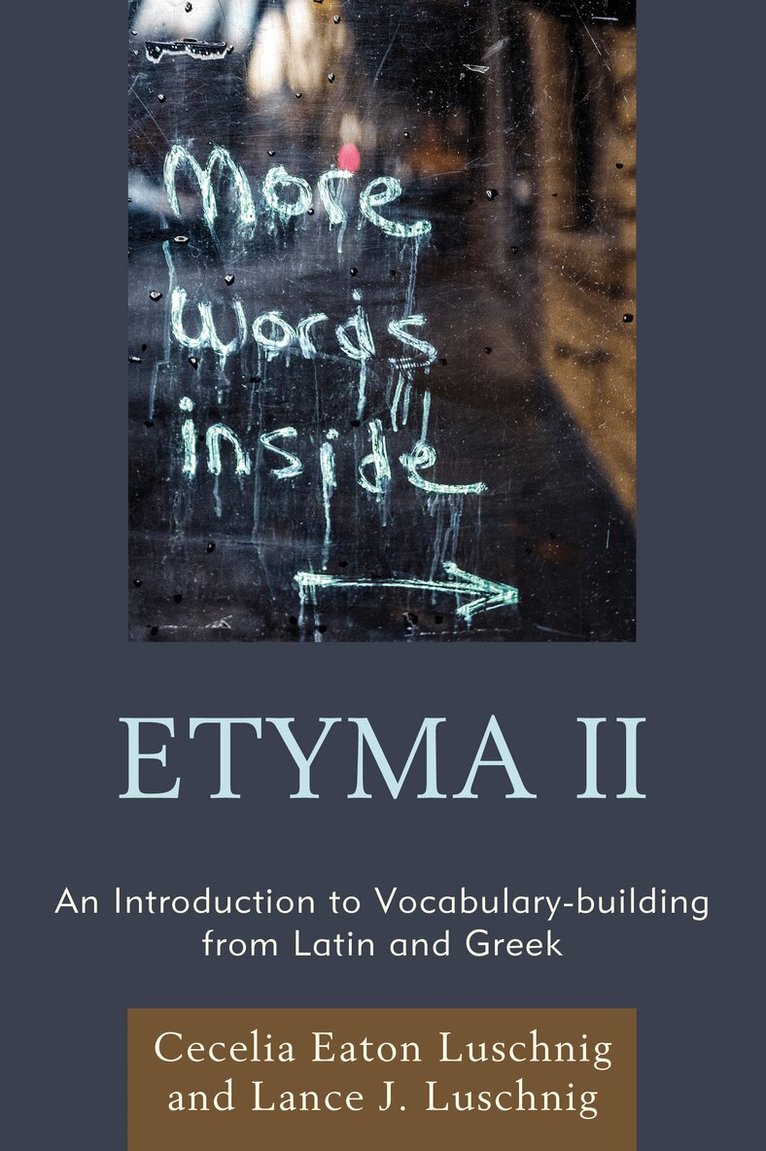
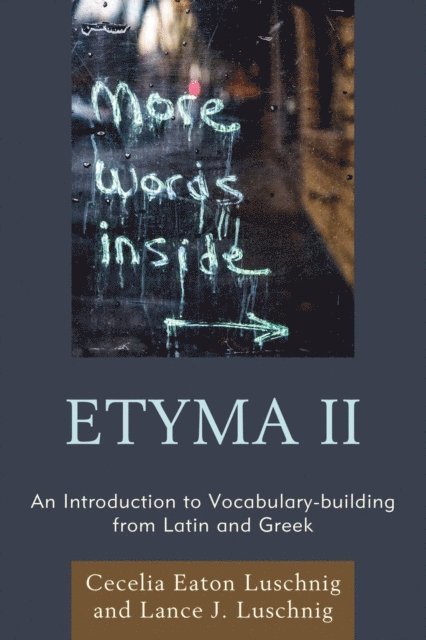
ETYMA II is an undergraduate or advanced high school textbook for English vocabulary-building. It is divided into three parts, beginning with a brief history of foreign words in English, including information on families of languages, the Indo-European relations of English, and the development of the language. This is followed by two large sections on the Latin and Greek element in English. In every section, numerous exercises help students work closely with the material. Each of the practical word-building chapters ends with a summary “what you should know” as well as adequate reviews. Complete reviews of material are included between every few chapters. Games, projects, vocabulary notes on history in words, words in contexts, odd and interesting words are included in every lesson to keep students’ interest alive, especially in the more arid chapters on the nuts and bolts of vocabulary building.
764 kr
Skickas inom 10-15 vardagar
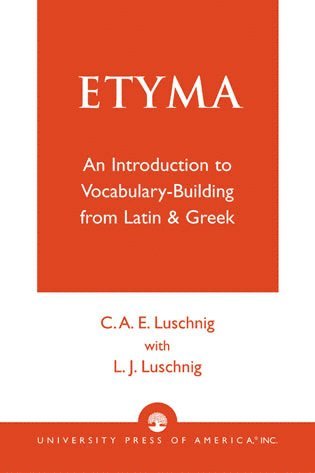
Intended as an aid to students who have not studied Latin and Greek to organize the base word stock of English, eighty percent of which is derived from these classical tongues.
344 kr
Skickas inom 11-20 vardagar
Del 102 - Mnemosyne, Supplements
Time Holds the Mirror
A Study of Knowledge in Euripides' Hippolytus
Häftad, Engelska, 1988
1 903 kr
Skickas inom 5-8 vardagar
The work is limited to the question of knowledge in Euripides' Hippolytus and seeks to show that one of the major themes of the Hippolytus, as of the Oedipus, is knowledge.In successive chapters these subjects are treated: (1) the witness theme, seeing and knowing, what the senses reveal; (2) fantasies of other worlds created by the characters and how these fantasies reavel the character's perceptions of the world; (3) how Euripides causes his characters to become aware of the shifting meanings of words and how it happens that one statement and its opposite can be predicated of the same individual or act; (4) the desire for and fear of knowledge and the choice of ignorance; (5) the use of generalization as a kind of ignorance; (6) the relation of the character's knowledge to that of the audience.The work offers a new perception of the drama through a detailed examination of this important question that was so warmly debated among the early Sophists.