Cecilia Solér - Böcker
Visar alla böcker från författaren Cecilia Solér. Handla med fri frakt och snabb leverans.
3 produkter
3 produkter
395 kr
Skickas
How can marketing create value for consumers, firms, and society? What are the major societal trends that shape contemporary marketing? How and why has marketing become so influential that consumption now defines our entire culture? How can marketing practices contribute to shape society in a more positive way? These are examples of questions that are discussed and answered in this book.Unboxing Marketing problematizes and enriches marketing as it is taught in introductory courses. To do this, the authors use the metaphor of unboxing, which means to unwrap marketing like it was delivered in a closed box created by traditional marketing textbooks. The book builds on the latest scientific research to first unbox some of the major forces affecting society and marketing today, such as globalization, sustainabilization, and polarization. Then the unboxing moves on to how markets are made and remade, the role that value plays, and how contemporary consumer culture operates. Finally, the areas of marketing strategy, marketing research, and marketing in the digital era are unboxed.
277 kr
Skickas inom 10-15 vardagar
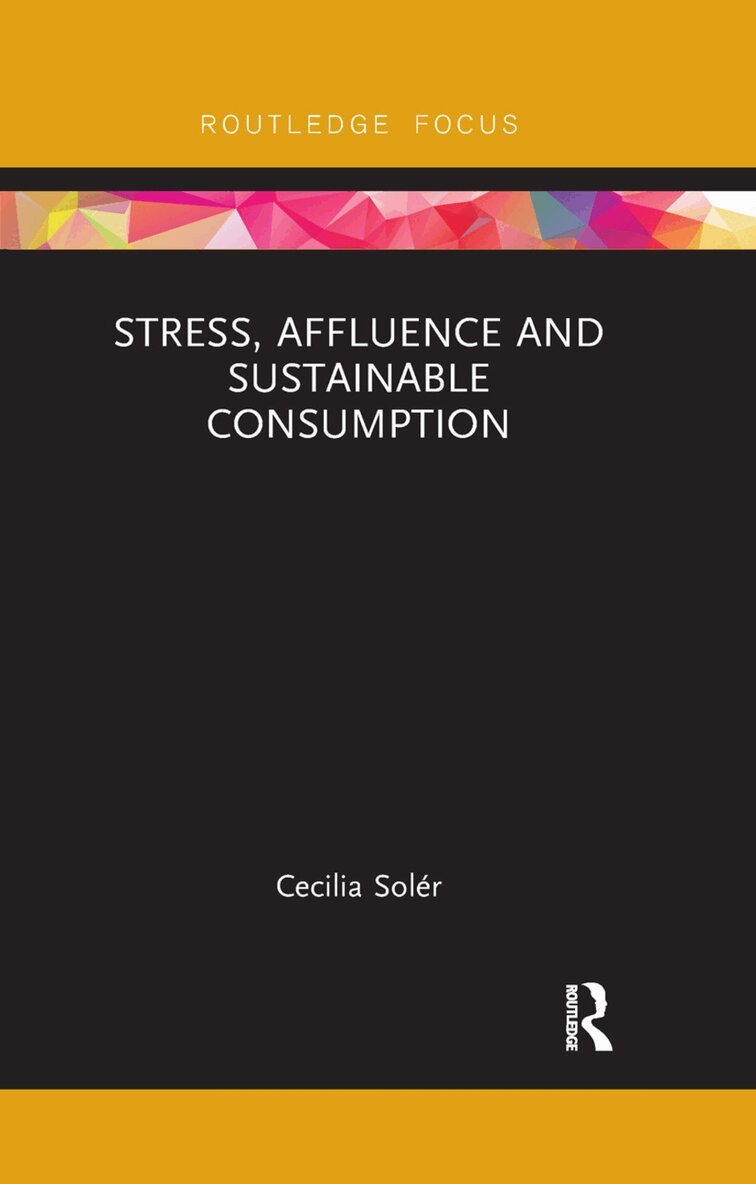
Why do affluent consumers almost automatically acquire new versions or variations of products already at their disposal? Even though most of us know that this novelty consumption poses a serious threat to an environmentally and socially sustainable future, we continue to do it. Why? Research shows that consumption of new automobiles, clothing, furniture, electronics, home furnishing, household apparel, mobile phones, etc., is motivated by a desire to feel more secure, less anxious and better mood-wise. Affluent consumers seem to engage in novelty consumption not to feel better but rather to avoid feeling bad. Stress, Affluence and Sustainable Consumption discusses sustainable consumption from a stress perspective, adding an embodied understanding to the sustainability-related consumption challenges that we face today.A stress perspective on affluent consumption differs from current understandings on consumption, as it fully acknowledges the consumer as having a body (including a mind) that reacts to the numerous product offerings and retail spaces, both physical and online. A stress perspective can explain how our bodies try to cope with an overload of perceptual input provided by advertising messages, product launches and even store structures. This book will be of great interest to students and researchers of consumer psychology, sustainable consumption studies, sustainable marketing and markets as well as sustainable development more generally.
817 kr
Skickas inom 10-15 vardagar
Why do affluent consumers almost automatically acquire new versions or variations of products already at their disposal? Even though most of us know that this novelty consumption poses a serious threat to an environmentally and socially sustainable future, we continue to do it. Why? Research shows that consumption of new automobiles, clothing, furniture, electronics, home furnishing, household apparel, mobile phones, etc., is motivated by a desire to feel more secure, less anxious and better mood-wise. Affluent consumers seem to engage in novelty consumption not to feel better but rather to avoid feeling bad. Stress, Affluence and Sustainable Consumption discusses sustainable consumption from a stress perspective, adding an embodied understanding to the sustainability-related consumption challenges that we face today.A stress perspective on affluent consumption differs from current understandings on consumption, as it fully acknowledges the consumer as having a body (including a mind) that reacts to the numerous product offerings and retail spaces, both physical and online. A stress perspective can explain how our bodies try to cope with an overload of perceptual input provided by advertising messages, product launches and even store structures. This book will be of great interest to students and researchers of consumer psychology, sustainable consumption studies, sustainable marketing and markets as well as sustainable development more generally.