Chantal Bax - Böcker
Visar alla böcker från författaren Chantal Bax. Handla med fri frakt och snabb leverans.
4 produkter
4 produkter
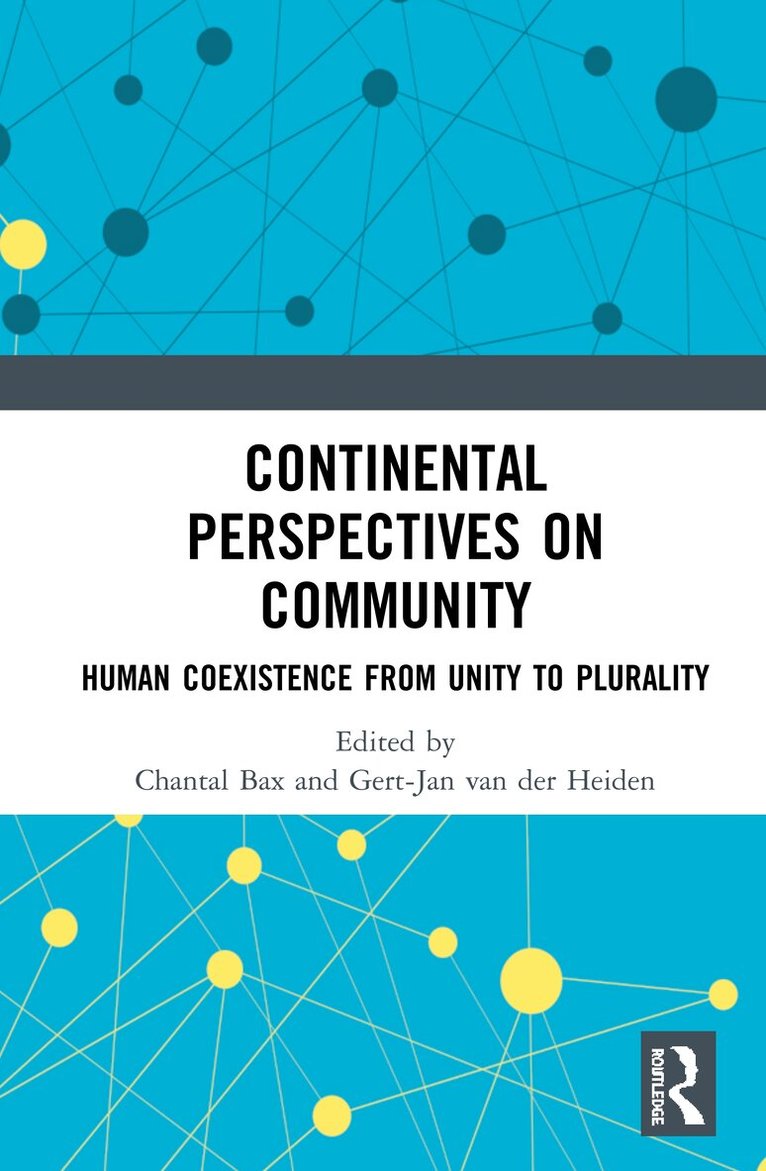
Continental Perspectives on Community
Human Coexistence from Unity to Plurality
Inbunden, Engelska, 2019
2 103 kr
Skickas inom 10-15 vardagar
This volume explores the issues at the center of many historical and contemporary reflections on community and sociality in Continental philosophy. The essays reflect on the thought of Nietzsche, Heidegger, Levinas, Arendt, Derrida, Badiou, Fanon, Baldwin, Nancy, Agamben and Laruelle.Continental Perspectives on Community brings the different approaches of these thinkers into conversation with each other. It discusses the possibility of how the concept of community can extend beyond the one and beyond any sense of unity and totality. Additionally, the book shows how notion of community in plurality is at the heart of ethical and political reflections on alterity and race, of political philosophical reflections on the exception, and of ontological reflections on what it means for humans to be social. In this way, it offers an important contribution to the examination of how a community can be thought today.This book will be of interest to scholars and advanced students working on social, political, and cultural issues in Continental philosophy.
Continental Perspectives on Community
Human Coexistence from Unity to Plurality
Häftad, Engelska, 2022
628 kr
Skickas inom 10-15 vardagar
This volume explores the issues at the center of many historical and contemporary reflections on community and sociality in Continental philosophy. The essays reflect on the thought of Nietzsche, Heidegger, Levinas, Arendt, Derrida, Badiou, Fanon, Baldwin, Nancy, Agamben and Laruelle.Continental Perspectives on Community brings the different approaches of these thinkers into conversation with each other. It discusses the possibility of how the concept of community can extend beyond the one and beyond any sense of unity and totality. Additionally, the book shows how notion of community in plurality is at the heart of ethical and political reflections on alterity and race, of political philosophical reflections on the exception, and of ontological reflections on what it means for humans to be social. In this way, it offers an important contribution to the examination of how a community can be thought today.This book will be of interest to scholars and advanced students working on social, political, and cultural issues in Continental philosophy.
Subjectivity After Wittgenstein
The Post-Cartesian Subject and the "Death of Man"
Häftad, Engelska, 2012
528 kr
Skickas inom 10-15 vardagar
Although Wittgenstein is often held co-responsible for the so-called death of man as it was pronounced in the course of the previous century, no detailed description of his alternative to the traditional or Cartesian account of human being has so far been available. By consulting several parts of Wittgenstein's later oeuvre, Subjectivity after Wittgenstein aims to fill this gap. However, it also contributes to the debate about the Cartesian subject and its demise by discussing the criticism that the rethinking of subjectivity received, for it has been argued that the anti-Cartesian turn in continental philosophy has lead to a loss of a centre for both ethics and politics. By further exploring the implications of the Wittgensteinian account of human being, this book makes it clear that a non-Cartesian view on the subject is not necessarily ethically and politically inert. Moreover, it argues that ethical and political arguments should not automatically take precedence in a debate about the nature of man.
Subjectivity After Wittgenstein
The Post-Cartesian Subject and the "Death of Man"
Inbunden, Engelska, 2011
1 964 kr
Skickas inom 10-15 vardagar
Moving beyond Wittgenstein's much heralded responsibility for the "death of man" debate begun in the course of the previous century, Subjectivity after Wittgenstein constructs a positive Wittgensteinian account of subjectivity and human nature. Drawing on his later writings, the book ranges across Wittgenstein's writings on philosophy of psychology and religion to articulate his notion of the post-Cartesian subject. In addition, the book answers the oft-repeated arguments that the anti-Cartesian turn in continental thought on the subject has lead to a loss of a centre for both ethics and politics. By further exploring the implications of the Wittgensteinian account, Subjectivity after Wittgenstein makes clear that a non-Cartesian view on human being is not necessarily ethically and politically inert. It moreover argues that ethical and political arguments should not automatically take precedence in a debate about the nature of man.