Char Booth – författare
Visar alla böcker från författaren Char Booth. Handla med fri frakt och snabb leverans.
4 produkter
4 produkter
Häftad, Engelska, 2011
920 kr
Skickas inom 3-6 vardagar
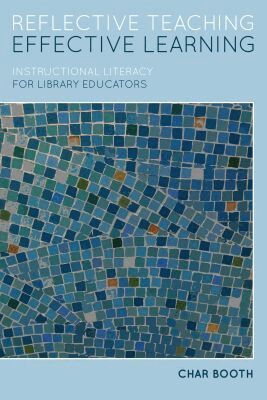
Whether or not ""instruction"" appears in their job titles, librarians are often in the position of educating their users, colleagues, and peers to successfully locate and evaluate information. Because MLIS education tends to offer less-than-comprehensive preparation in pedagogy and instructional design, this much-needed book tackles the challenge of effective teaching and training head-on. Char Booth, an avid library education and technology advocate, introduces a series of concepts that will empower readers at any level of experience to become better designers and presenters, as well as building their confidence and satisfaction as library educators. Laying the foundation for effective teaching, Booth outlines a four-part framework of Instructional Literacy, which includes . Reflective Practice: tools for improving learning in the moment and developing a teacher identity, as well as approaches to collaboration and creating communities of practice.Educational Theory: evidence-based strategies in learning and instructional research.Teaching Technologies: evaluating and integrating technology in learning using a practical ""toolkit"" approach.Instructional Design: a systematic and outcomes-based strategy for developing and assessing learning experiences. This foundation is supplemented by the USER Method, a step-by-step approach to creating learner-focused instruction. Tailored to library contexts, USER walks readers through understanding an instructional scenario,structuring content, engaging learners, and reflecting on outcomes. Also included are templates for instructional planning and technology evaluation, as well as practical advice and scenarios from those working in the field. Entailing a methodical approach to educating oneself about this emerging field, Booth's work helps librarians become better learners and teachers.
Häftad, Engelska, 2012
682 kr
Skickas inom 3-6 vardagar
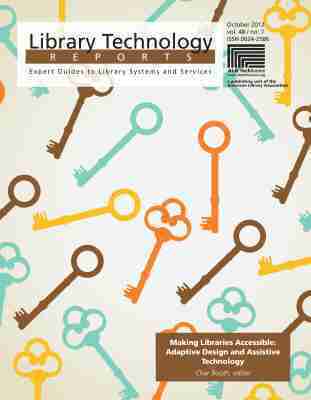
As a provider of public space and digital content, your library is duty-bound to promote equitable access to all users, regardless of whether they use assistive technology. In this issue of Library Technology Reports, editor Booth makes the case that that attention to the core principles of consistency, flexibility, and simplicity go hand in hand with libraries' commitments to open information and accessibility. Even when staffing levels or resources aren't ideal, libraries can substantially improve the experience of people with disabilities. In this issue, expert contributors address standards, spaces and services, devices, websites, and collections, offering advice on:Assistive technology products, including screen readers, literacy software, and speech inputE-books and e-readers for users with print disabilities, with charts comparing accessibility features of the most common e-readersThe nuts and bolts of using HTML, CSS, Javascript, or JQUERY for accessibilityBest practices for evaluating vendor database compliance
E-bok
PDF, Engelska, 2010468 kr
Läs direkt efter köp
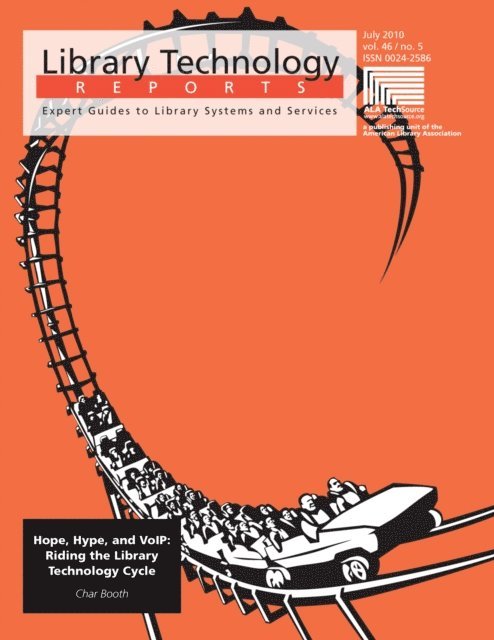
From the time that personal computers became ubiquitous, there’s been no shortage of “the next big thing” in technology. While some new technologies do prove to be revolutionary, there are plenty that flame out very quickly. Librarians often work with limited financial resources, so when a library invests in a new technology, staff must be confident that they are committing money and effort to something that will be useful in the long-term rather than to an idea with a lot of hype.In the July 2010 issue of Library Technology Reports, Char Booth examines the long-term adoption of one established tool, Voice over Internet Protocol (VoIP) in order to gain insight into the library innovation process. In addition to providing a wealth of guidance and information on how librarians can use this specific technology to enhance service, Booth also examines how various facets of this technology were examined, adopted, adapted and rejected. “Hope, Hype and VoIP: Riding the Library Technology Cycle” provides guidelines for how librarians looking at new technologies can evaluate them critically, creatively and with an eye toward sustainability.
E-bok
Engelska, 2010468 kr
Läs direkt efter köp
From the time that personal computers became ubiquitous, there’s been no shortage of “the next big thing” in technology. While some new technologies do prove to be revolutionary, there are plenty that flame out very quickly. Librarians often work with limited financial resources, so when a library invests in a new technology, staff must be confident that they are committing money and effort to something that will be useful in the long-term rather than to an idea with a lot of hype.In the July 2010 issue of Library Technology Reports, Char Booth examines the long-term adoption of one established tool, Voice over Internet Protocol (VoIP) in order to gain insight into the library innovation process. In addition to providing a wealth of guidance and information on how librarians can use this specific technology to enhance service, Booth also examines how various facets of this technology were examined, adopted, adapted and rejected. “Hope, Hype and VoIP: Riding the Library Technology Cycle” provides guidelines for how librarians looking at new technologies can evaluate them critically, creatively and with an eye toward sustainability.