Charles A.S. Hall – författare
Visar alla böcker från författaren Charles A.S. Hall. Handla med fri frakt och snabb leverans.
7 produkter
7 produkter
E-bok
PDF, Engelska, 20001 527 kr
Läs direkt efter köp
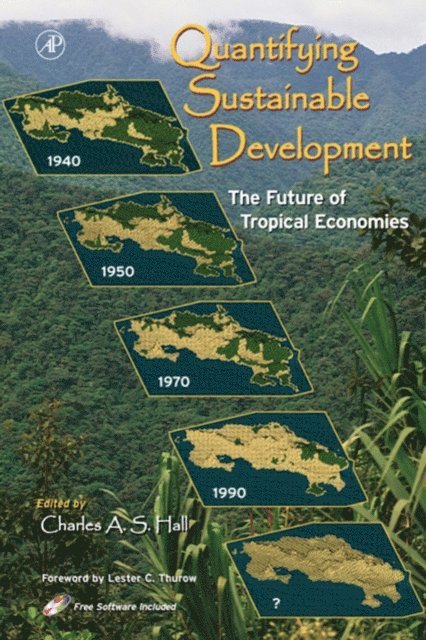
Until recently, the phenomenal economic development of the Asian tigers, Chile, and Malaysia, as well as the sustained economic growth of the United States, painted a very desirable and optimistic picture of free markets, fiscal responsibility, and, more generally, the entire dogma of neoclassical economics. As of the fall of 1998, however, the economies of many tropical countries have contracted severely, and the enthusiasm of the developing tropics for the free market and all of its ancillary policies is decidedly cooler. Have our traditional approaches to economics been failing the developing world? This interdisciplinary book covers the conditions of the developing tropics, the resistance of some of their problems to earlier attempts at solutions, and the use of new tools to develop a much more comprehensive and empirical framework for analysis and decision making. It also presents the development of cutting edge technology that links GIS and modeling approaches with extensive databases on meteorology, soils, agricultural production, and land use. The book discusses whether development is sustainable through a synthesis of demographic, economic, and resource-specific considerations. Costa Rica is uniquely suited to this study because of its size, stage of development, democratic institutions, and national databases.A CD-ROM containing all data and programs, color images, animated models, large data tables, and references accompanies the book.- Links economic and biophysical analyses of sustainability- Presents new tools and approaches for analysis and decision-making- Includes a CD-ROM containing data and programs, color images, animated models, and references
Häftad, Engelska, 2018
1 089 kr
Skickas inom 10-15 vardagar
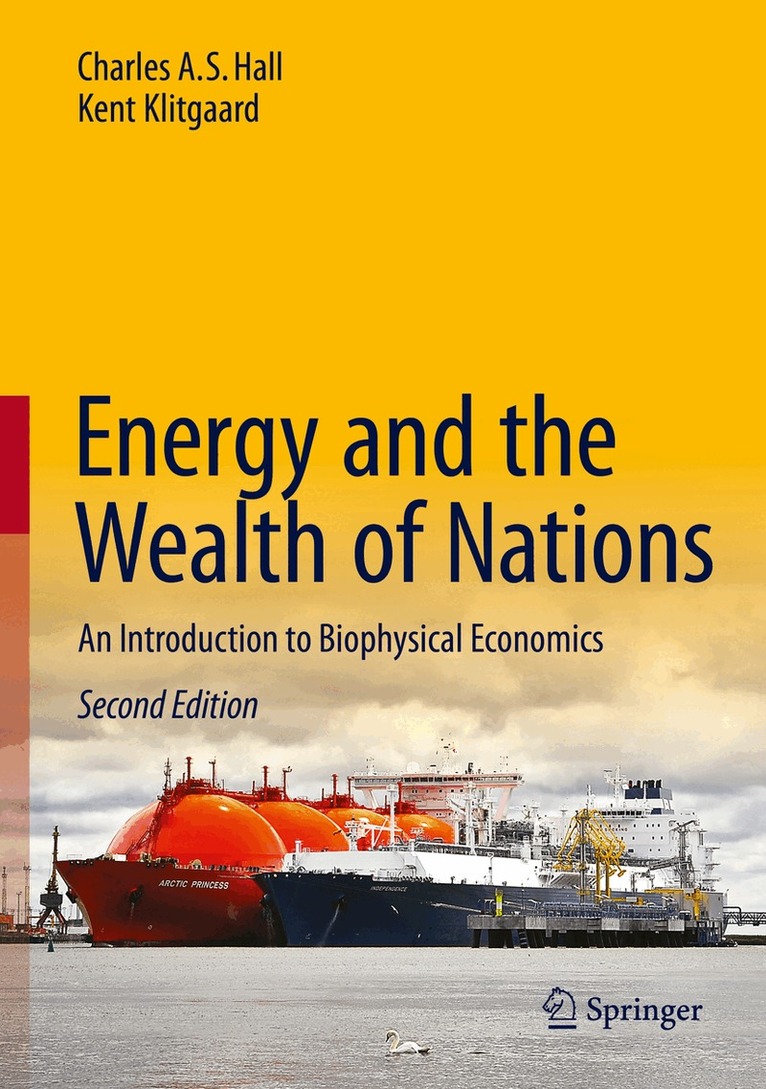
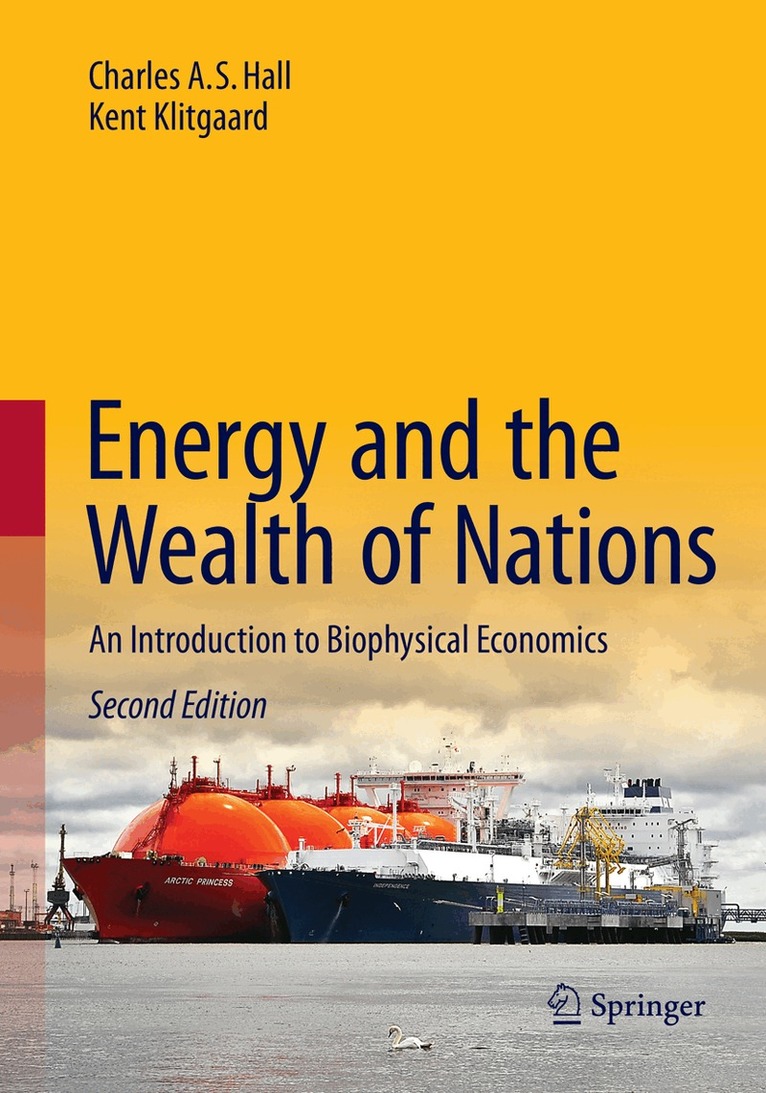
In this updated edition of a groundbreaking text, concepts such as energy return on investment (EROI) provide powerful insights into the real balance sheets that drive our “petroleum economy.” Hall and Klitgaard explore the relation between energy and the wealth explosion of the 20th century, and the interaction of internal limits to growth found in the investment process and rising inequality with the biophysical limits posed by finite energy resources. The authors focus attention on the failure of markets to recognize or efficiently allocate diminishing resources, the economic consequences of peak oil, the high cost and relatively low EROI of finding and exploiting new oil fields, including the much ballyhooed shale plays and oil sands, and whether alternative energy technologies such as wind and solar power can meet the minimum EROI requirements needed to run society as we know it.For the past 150 years, economics has been treated as a social science in which economies are modeled as a circular flow of income between producers and consumers. In this “perpetual motion” of interactions between firms that produce and households that consume, little or no accounting is given of the flow of energy and materials from the environment and back again. In the standard economic model, energy and matter are completely recycled in these transactions, and economic activity is seemingly exempt from the Second Law of Thermodynamics. As we enter the second half of the age of oil, when energy supplies and the environmental impacts of energy production and consumption are likely to constrain economic growth, this exemption should be considered illusory at best. This book is an essential read for all scientists and economists who have recognized the urgent need for a more scientific, empirical, and unified approach to economics in an energy-constrained world, and serves as an ideal teaching text for the growing number of courses, such as the authors’ own, onthe role of energy in society.
Del 36 - Lecture Notes in Energy
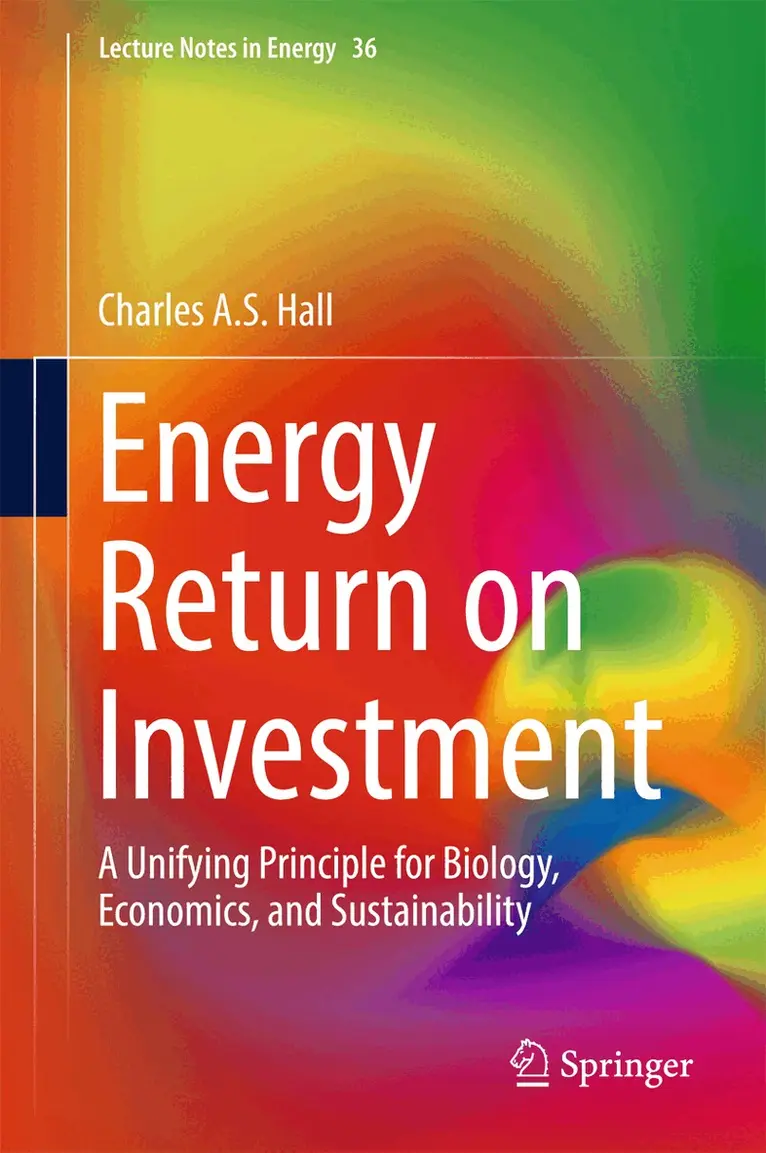
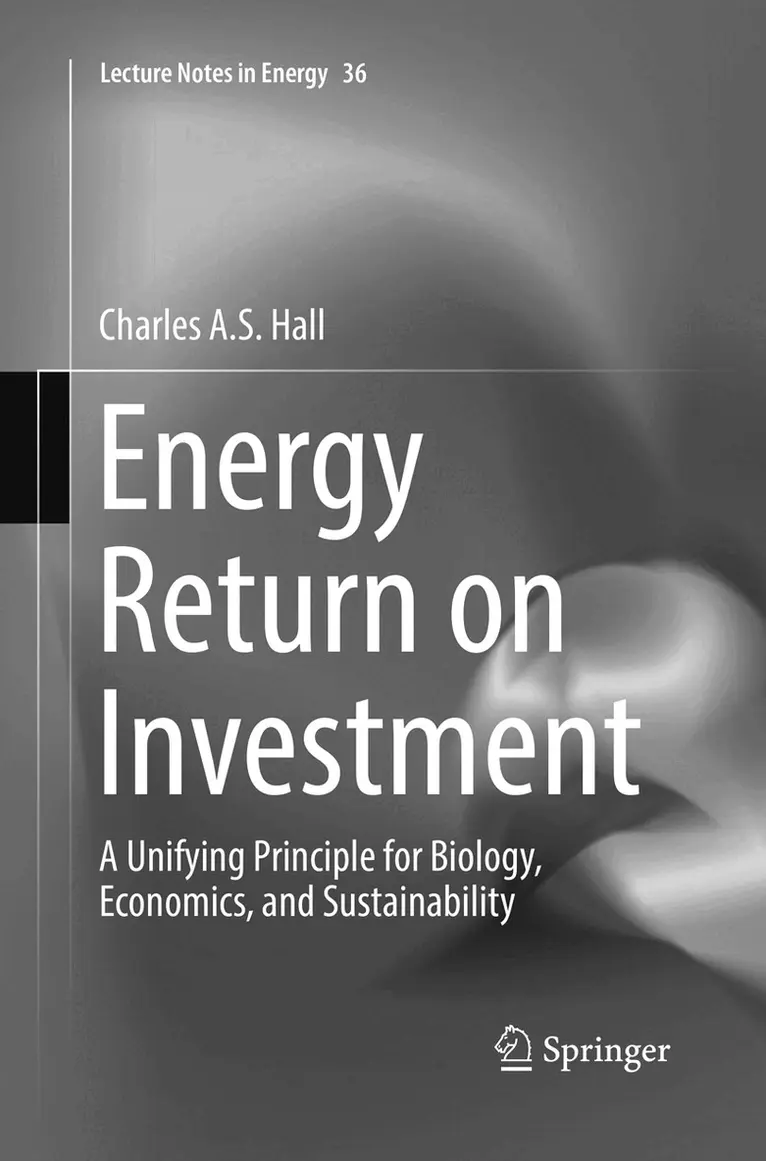
Energy Return on Investment
A Unifying Principle for Biology, Economics, and Sustainability
Inbunden, Engelska, 2016
764 kr
Skickas inom 10-15 vardagar
This authoritative but highly accessible book presents the reader with a powerful framework for understanding the critical role of the energy return on investment (EROI) in the survival and well-being of individuals, ecosystems, businesses, economies and nations.
E-bok
Engelska, 2016924 kr
Läs direkt efter köp
This authoritative but highly accessible book presents the reader with a powerful framework for understanding the critical role of the energy return on investment (EROI) in the survival and well-being of individuals, ecosystems, businesses, economies and nations. Growth and development are fundamental and ubiquitous processes at all scales, from individuals to food crops to national economies. While we are all familiar with the concepts of economic growth and living standards as measured by gross domestic product (GDP), we often take for granted the energy use that underpins GDP and our expectations for year-on-year growth. In this book, you will learn how these measures of “progress” are completely dependent on the balance that can be achieved between energy costs (inputs) and gains. Nothing is made or moved without an energy surplus, and it is the EROI of available energy sources more than any other single factor that determines the shape of civilization.Nearly all politics and economics assume that policy and market forces are the levers upon which future outcomes will hinge. However, this book presents many examples of historical and current events that can be explained much more clearly from an energetic perspective. In addition, a future scenario is developed that gives a central place to EROI in assessing the potential of governmental and private initiatives to substitute so-called renewable energy sources for diminishing stocks of fossil fuels. When cheap fossil fuels are no longer available in the abundance needed to mask economic problems and power business as usual, it will be EROI more than the plethora of “green” technologies that creates the boundary conditions for a sustainable future.
Inbunden, Engelska, 2018
1 456 kr
Skickas inom 10-15 vardagar
In this updated edition of a groundbreaking text, concepts such as energy return on investment (EROI) provide powerful insights into the real balance sheets that drive our “petroleum economy.” Hall and Klitgaard explore the relation between energy and the wealth explosion of the 20th century, and the interaction of internal limits to growth found in the investment process and rising inequality with the biophysical limits posed by finite energy resources. The authors focus attention on the failure of markets to recognize or efficiently allocate diminishing resources, the economic consequences of peak oil, the high cost and relatively low EROI of finding and exploiting new oil fields, including the much ballyhooed shale plays and oil sands, and whether alternative energy technologies such as wind and solar power can meet the minimum EROI requirements needed to run society as we know it.For the past 150 years, economics has been treated as a social science in which economies are modeled as a circular flow of income between producers and consumers. In this “perpetual motion” of interactions between firms that produce and households that consume, little or no accounting is given of the flow of energy and materials from the environment and back again. In the standard economic model, energy and matter are completely recycled in these transactions, and economic activity is seemingly exempt from the Second Law of Thermodynamics. As we enter the second half of the age of oil, when energy supplies and the environmental impacts of energy production and consumption are likely to constrain economic growth, this exemption should be considered illusory at best. This book is an essential read for all scientists and economists who have recognized the urgent need for a more scientific, empirical, and unified approach to economics in an energy-constrained world, and serves as an ideal teaching text for the growing number of courses, such as the authors’ own, onthe role of energy in society.
E-bok
Engelska, 20181 379 kr
Läs direkt efter köp
In this updated edition of a groundbreaking text, concepts such as energy return on investment (EROI) provide powerful insights into the real balance sheets that drive our “petroleum economy.” Hall and Klitgaard explore the relation between energy and the wealth explosion of the 20th century, and the interaction of internal limits to growth found in the investment process and rising inequality with the biophysical limits posed by finite energy resources. The authors focus attention on the failure of markets to recognize or efficiently allocate diminishing resources, the economic consequences of peak oil, the high cost and relatively low EROI of finding and exploiting new oil fields, including the much ballyhooed shale plays and oil sands, and whether alternative energy technologies such as wind and solar power can meet the minimum EROI requirements needed to run society as we know it.For the past 150 years, economics has been treated as a social science in which economies are modeled as a circular flow of income between producers and consumers. In this “perpetual motion” of interactions between firms that produce and households that consume, little or no accounting is given of the flow of energy and materials from the environment and back again. In the standard economic model, energy and matter are completely recycled in these transactions, and economic activity is seemingly exempt from the Second Law of Thermodynamics. As we enter the second half of the age of oil, when energy supplies and the environmental impacts of energy production and consumption are likely to constrain economic growth, this exemption should be considered illusory at best. This book is an essential read for all scientists and economists who have recognized the urgent need for a more scientific, empirical, and unified approach to economics in an energy-constrained world, and serves as an ideal teaching text for the growing number of courses, such as the authors’ own, onthe role of energy in society.
Del 36 - Lecture Notes in Energy
Energy Return on Investment
A Unifying Principle for Biology, Economics, and Sustainability
Häftad, Engelska, 2018
764 kr
Skickas inom 10-15 vardagar
This authoritative but highly accessible book presents the reader with a powerful framework for understanding the critical role of the energy return on investment (EROI) in the survival and well-being of individuals, ecosystems, businesses, economies and nations.