Kent Klitgaard – författare
Visar alla böcker från författaren Kent Klitgaard. Handla med fri frakt och snabb leverans.
5 produkter
5 produkter
Häftad, Engelska, 2018
1 089 kr
Skickas inom 10-15 vardagar
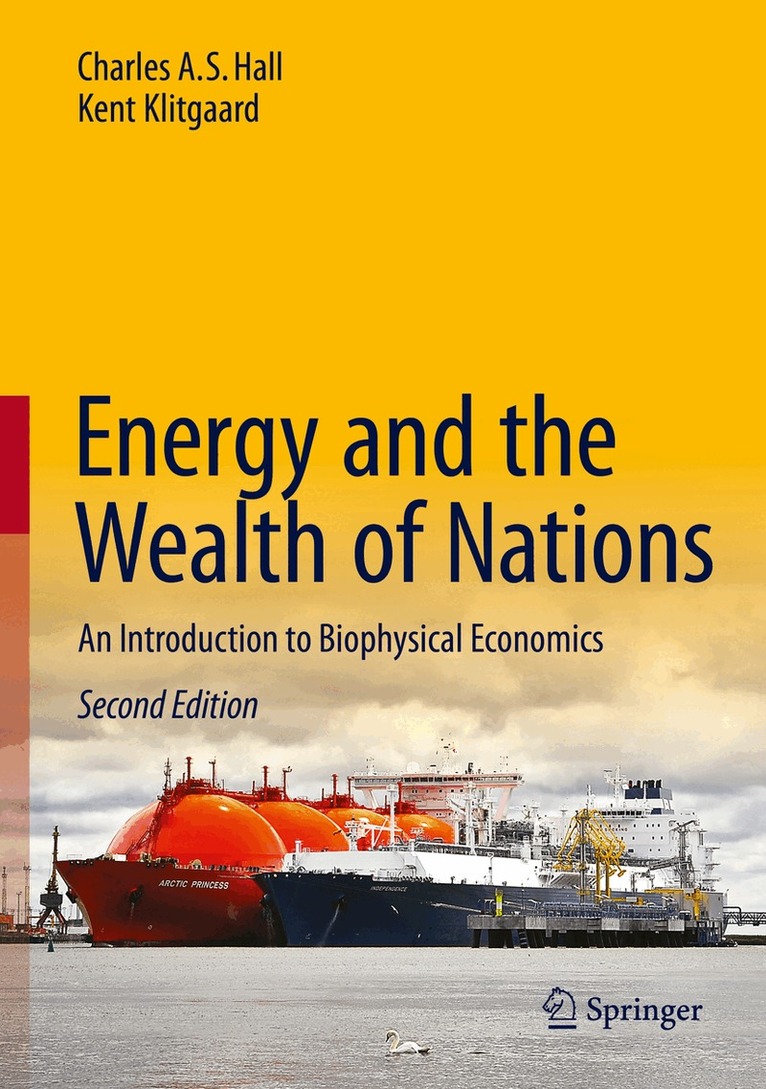
In this updated edition of a groundbreaking text, concepts such as energy return on investment (EROI) provide powerful insights into the real balance sheets that drive our “petroleum economy.” Hall and Klitgaard explore the relation between energy and the wealth explosion of the 20th century, and the interaction of internal limits to growth found in the investment process and rising inequality with the biophysical limits posed by finite energy resources. The authors focus attention on the failure of markets to recognize or efficiently allocate diminishing resources, the economic consequences of peak oil, the high cost and relatively low EROI of finding and exploiting new oil fields, including the much ballyhooed shale plays and oil sands, and whether alternative energy technologies such as wind and solar power can meet the minimum EROI requirements needed to run society as we know it.For the past 150 years, economics has been treated as a social science in which economies are modeled as a circular flow of income between producers and consumers. In this “perpetual motion” of interactions between firms that produce and households that consume, little or no accounting is given of the flow of energy and materials from the environment and back again. In the standard economic model, energy and matter are completely recycled in these transactions, and economic activity is seemingly exempt from the Second Law of Thermodynamics. As we enter the second half of the age of oil, when energy supplies and the environmental impacts of energy production and consumption are likely to constrain economic growth, this exemption should be considered illusory at best. This book is an essential read for all scientists and economists who have recognized the urgent need for a more scientific, empirical, and unified approach to economics in an energy-constrained world, and serves as an ideal teaching text for the growing number of courses, such as the authors’ own, onthe role of energy in society.
Häftad, Engelska, 2022
564 kr
Skickas inom 10-15 vardagar
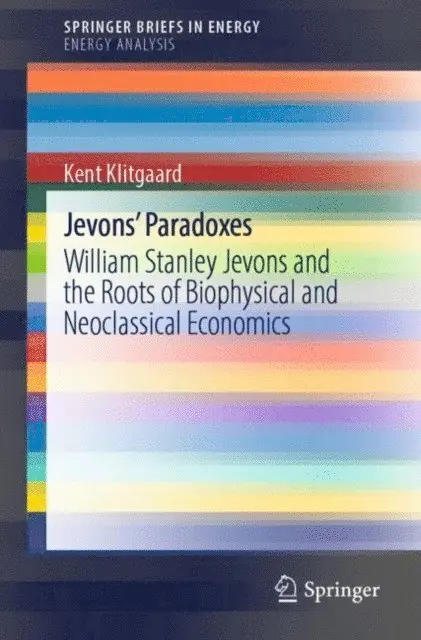
I?n 1865, economist William Stanley Jevons published The Coal Question, describing the crucial role that coal played in British economic development. Jevons could not solve this paradox in light of his belief that coal mines were becoming exhausted and more expensive to operate, and that there was no substitute for coal.
E-bok
Engelska, 2022687 kr
Läs direkt efter köp
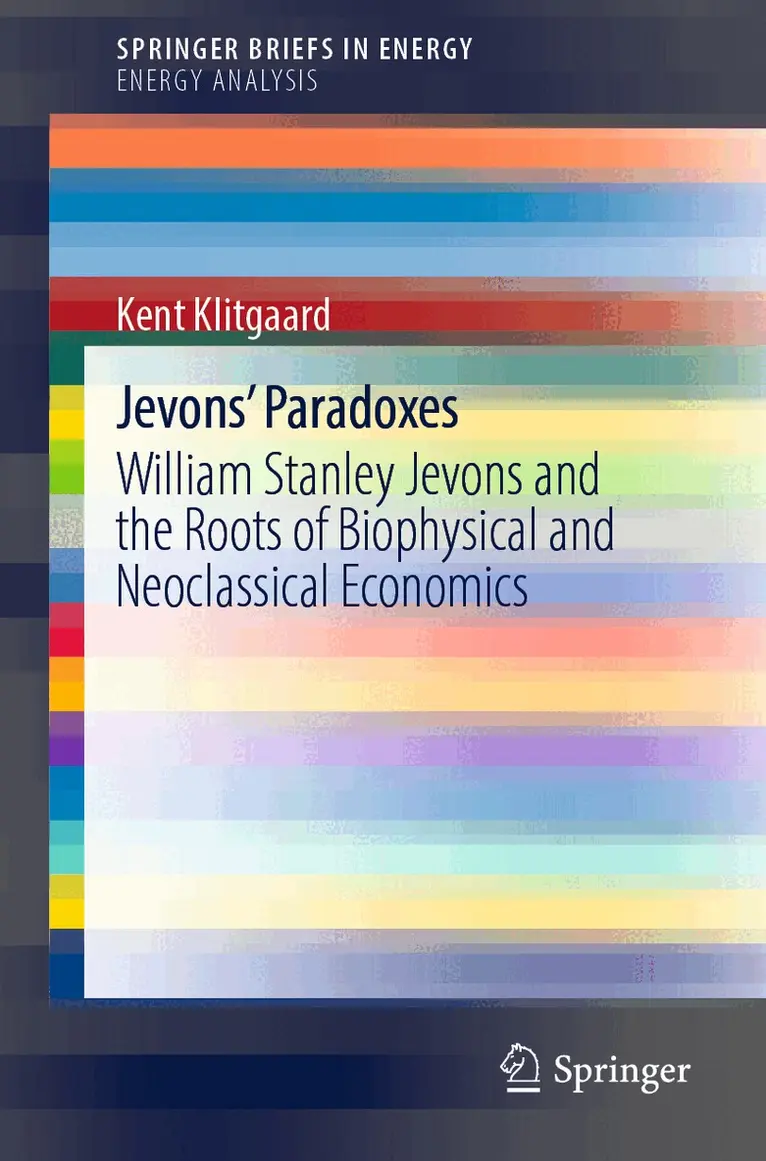
In 1865, economist William Stanley Jevons published The Coal Question, describing the crucial role that coal played in British economic development. Here, he enunciated what has come to be known as the Jevons paradox, which stated that improvements in resource efficiency leads to greater resource use as the expansion of scale occasioned by lower operating costs overwhelms the savings due to greater efficiency. The implications for any sustainability scenario are enormous and a major theme of this book. While The Coal Question provided the theory that was a precursor to peak oil and resource limits to growth, it was followed six years later by the Theory of Political Economy, the first English-language work of neoclassical economics, which denies the importance of energy as a special commodity. In spite of this apparent contradiction, in this book biophysical economist Kent Klitgaard makes clear that there is no epistemological break between The Coal Question and Theory of Political Economy. Indeed, the Jevons paradox makes little sense in the absence of a behavioral theory grounded in marginal utility, which recognizes the satisfaction that each of us gains as consumers of one more unit of a good or service. Jevons could not solve this paradox in light of his belief that coal mines were becoming exhausted and more expensive to operate, and that there was no substitute for coal. However, he was uninterested in questions of sustainability; rather, he wanted to maintain British industrial and imperial dominance. Did the eventual substitution of oil for coal simply allow us to run through other resources at an accelerated rate? Indeed, the petroleum economy of the 20th and early 21st centuries has presented vastly expanded opportunities for the operation of the Jevons Paradox. This book shows the connections among the different paradoxes in Jevons’ work, and exposes the potentially fatal flaws that confound technological solutions to the sustainability challenge.
Inbunden, Engelska, 2018
1 456 kr
Skickas inom 10-15 vardagar
In this updated edition of a groundbreaking text, concepts such as energy return on investment (EROI) provide powerful insights into the real balance sheets that drive our “petroleum economy.” Hall and Klitgaard explore the relation between energy and the wealth explosion of the 20th century, and the interaction of internal limits to growth found in the investment process and rising inequality with the biophysical limits posed by finite energy resources. The authors focus attention on the failure of markets to recognize or efficiently allocate diminishing resources, the economic consequences of peak oil, the high cost and relatively low EROI of finding and exploiting new oil fields, including the much ballyhooed shale plays and oil sands, and whether alternative energy technologies such as wind and solar power can meet the minimum EROI requirements needed to run society as we know it.For the past 150 years, economics has been treated as a social science in which economies are modeled as a circular flow of income between producers and consumers. In this “perpetual motion” of interactions between firms that produce and households that consume, little or no accounting is given of the flow of energy and materials from the environment and back again. In the standard economic model, energy and matter are completely recycled in these transactions, and economic activity is seemingly exempt from the Second Law of Thermodynamics. As we enter the second half of the age of oil, when energy supplies and the environmental impacts of energy production and consumption are likely to constrain economic growth, this exemption should be considered illusory at best. This book is an essential read for all scientists and economists who have recognized the urgent need for a more scientific, empirical, and unified approach to economics in an energy-constrained world, and serves as an ideal teaching text for the growing number of courses, such as the authors’ own, onthe role of energy in society.
E-bok
Engelska, 20181 379 kr
Läs direkt efter köp
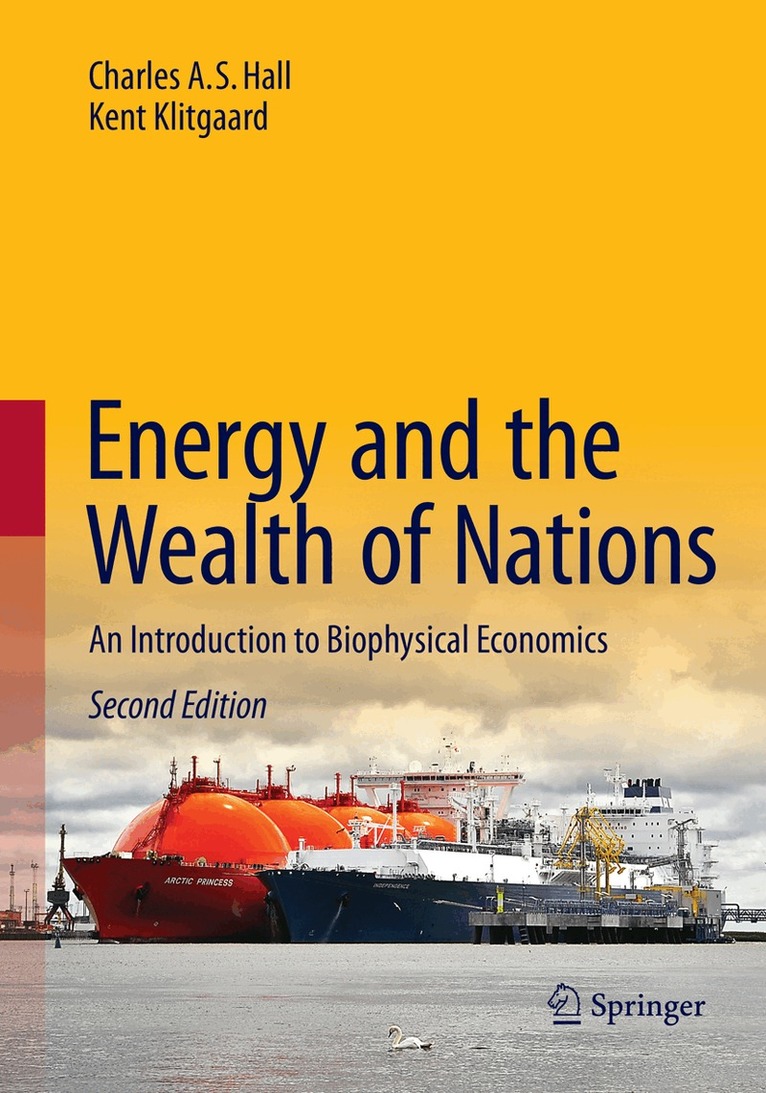
In this updated edition of a groundbreaking text, concepts such as energy return on investment (EROI) provide powerful insights into the real balance sheets that drive our “petroleum economy.” Hall and Klitgaard explore the relation between energy and the wealth explosion of the 20th century, and the interaction of internal limits to growth found in the investment process and rising inequality with the biophysical limits posed by finite energy resources. The authors focus attention on the failure of markets to recognize or efficiently allocate diminishing resources, the economic consequences of peak oil, the high cost and relatively low EROI of finding and exploiting new oil fields, including the much ballyhooed shale plays and oil sands, and whether alternative energy technologies such as wind and solar power can meet the minimum EROI requirements needed to run society as we know it.For the past 150 years, economics has been treated as a social science in which economies are modeled as a circular flow of income between producers and consumers. In this “perpetual motion” of interactions between firms that produce and households that consume, little or no accounting is given of the flow of energy and materials from the environment and back again. In the standard economic model, energy and matter are completely recycled in these transactions, and economic activity is seemingly exempt from the Second Law of Thermodynamics. As we enter the second half of the age of oil, when energy supplies and the environmental impacts of energy production and consumption are likely to constrain economic growth, this exemption should be considered illusory at best. This book is an essential read for all scientists and economists who have recognized the urgent need for a more scientific, empirical, and unified approach to economics in an energy-constrained world, and serves as an ideal teaching text for the growing number of courses, such as the authors’ own, onthe role of energy in society.