Charles D. Thompson - Böcker
Visar alla böcker från författaren Charles D. Thompson. Handla med fri frakt och snabb leverans.
4 produkter
4 produkter
370 kr
Skickas inom 10-15 vardagar
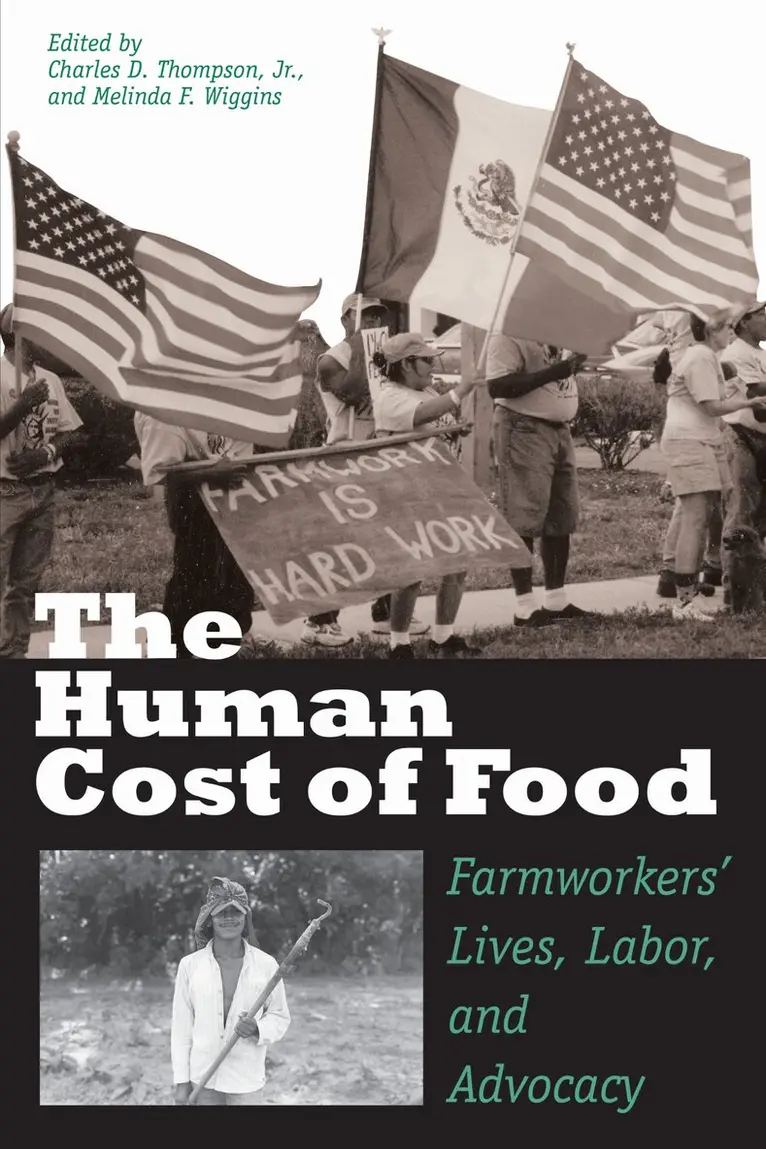
Finding fresh fruits and vegetables is as easy as going to the grocery store for most Americans-which makes it all too easy to forget that our food is cultivated, harvested, and packaged by farmworkers who labor for less pay, fewer benefits, and under more dangerous conditions than workers in almost any other sector of the U.S. economy. Seeking to end the public's ignorance and improve workers' living and working conditions, this book addresses the major factors that affect farmworkers' lives while offering practical strategies for action on farmworker issues. The contributors to this book are all farmworker advocates-student and community activists and farmworkers themselves. Focusing on workers in the Southeast United States, a previously understudied region, they cover a range of issues, from labor organizing, to the rise of agribusiness, to current health, educational, and legal challenges faced by farmworkers. The authors blend coverage of each issue with practical suggestions for working with farmworkers and other advocates to achieve justice in our food system both regionally and nationally.
498 kr
Skickas inom 10-15 vardagar
This title was first published in 2001. Exploring issues of diversity and cross-cultural interaction and understanding, Maya Identities and the Violence of Place offers new perspectives on borderlands and identities, providing an important case study of people from Latin America on the move. Examining issues of indigeneity, diaspora, flights from physical violence and economic repression, and efforts to remain indigenous among a proud but beleaguered people, this book is replete with stories of movement and change that operate as means to maintain identity. Thompson examines how the Jacalteco Maya of Latin America form their identities as indigenous people, despite a long tradition of movement across the rigid constraints of borders of geography, history, race and ethnicity. Religion, language, fiestas, and stories of leaving and return, all serve to bond people to their particularity. Examining the indigenous identity formations and religious convictions among the Maya in places where brutality has dominated the landscape and where violence is commonplace, this book avoids dwelling on centers of culture and explains instead how Maya concepts of identity arise from travel, contact with others, and change. Thompson reveals the ironies of classifying as natives', aboriginal or indigenous the many individuals and families who have become refugees, and explores how Maya have transcended the erroneous image of Guatemalan Indians ensconced within borders of particular land, and how they have overstepped popular portrayals of native peoples clinging tenaciously to their sacred soil as their sole means of surviving culturally and spiritually. Showing bleeding borders to be more than a recent occurrence, Thompson argues that there has never been a time when Maya did not have to travel in order to remain who they are. Exploring ideas of human to land connections and how religion among the indigenous makes change and movement possible, this book offers invaluable insight
1 154 kr
Skickas inom 10-15 vardagar
This title was first published in 2001. Exploring issues of diversity and cross-cultural interaction and understanding, Maya Identities and the Violence of Place offers new perspectives on borderlands and identities, providing an important case study of people from Latin America on the move. Examining issues of indigeneity, diaspora, flights from physical violence and economic repression, and efforts to remain indigenous among a proud but beleaguered people, this book is replete with stories of movement and change that operate as means to maintain identity. Thompson examines how the Jacalteco Maya of Latin America form their identities as indigenous people, despite a long tradition of movement across the rigid constraints of borders of geography, history, race and ethnicity. Religion, language, fiestas, and stories of leaving and return, all serve to bond people to their particularity. Examining the indigenous identity formations and religious convictions among the Maya in places where brutality has dominated the landscape and where violence is commonplace, this book avoids dwelling on centers of culture and explains instead how Maya concepts of identity arise from travel, contact with others, and change. Thompson reveals the ironies of classifying as natives', aboriginal or indigenous the many individuals and families who have become refugees, and explores how Maya have transcended the erroneous image of Guatemalan Indians ensconced within borders of particular land, and how they have overstepped popular portrayals of native peoples clinging tenaciously to their sacred soil as their sole means of surviving culturally and spiritually. Showing bleeding borders to be more than a recent occurrence, Thompson argues that there has never been a time when Maya did not have to travel in order to remain who they are. Exploring ideas of human to land connections and how religion among the indigenous makes change and movement possible, this book offers invaluable insight
201 kr
Skickas inom 10-15 vardagar
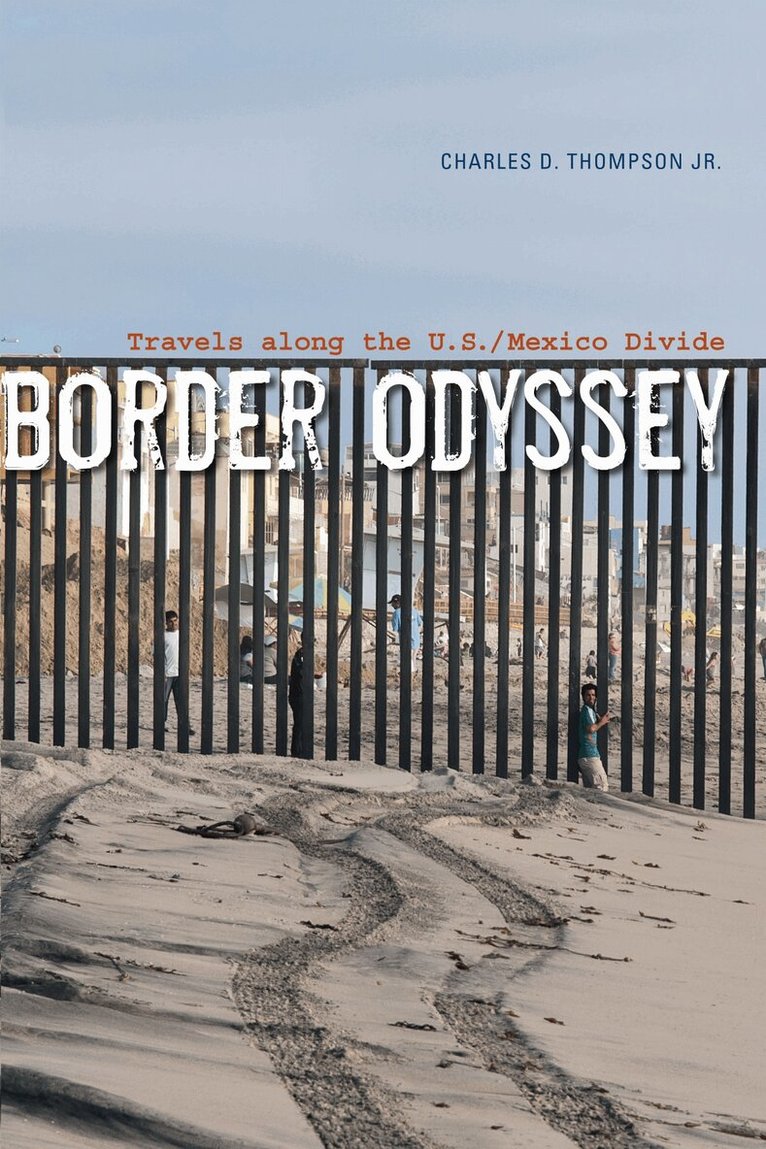
"We were trying to change the vision and the conversation about border fears."Border Odyssey takes us on a drive toward understanding the U.S./Mexico divide: all 1,969 miles—from Boca Chica to Tijuana—pressing on with the useful fiction of a map."We needed to go to the place where countless innocent people had been kicked, cussed, spit on, arrested, detained, trafficked, and killed. It would become clear that the border, la frontera, was more multifaceted and profound than anything we could have invented about it from afar."Along the journey, five centuries of cultural history (indigenous, French, Spanish, Mexican, African American, colonist, and U.S.), wars, and legislation unfold. And through observation, conversation, and meditation, Border Odyssey scopes the stories of the people and towns on both sides."Stories are the opposite of walls: they demand release, retelling, showing, connecting, each image chipping away at boundaries. Walls are full stops. But stories are like commas, always making possible the next clause."Among the terrain traversed: walls and more walls, unexpected roadblocks and patrol officers; a golf course (you could drive a ball across the border); a Civil War battlefield (you could camp there); the southernmost plantation in the United States; a hand-drawn ferry, a road-runner tracked desert, and a breathtaking national park; barbed wire, bridges, and a trucking-trade thoroughfare; ghosts with guns; obscured, unmarked, and unpaved roads; a Catholic priest and his dogs, artwork, icons, and political cartoons; a sheriff and a chain-smoking mayor; a Tex-Mex eatery empty of customers and a B&B shuttering its doors; murder-laden newspaper headlines at breakfast; the kindness of the border-crossing underground; and too many elderly, impoverished, ex-U.S. farmworkers, braceros, lined up to have Thompson take their photograph.