Charles De Paolo – författare
Visar alla böcker från författaren Charles De Paolo. Handla med fri frakt och snabb leverans.
5 produkter
5 produkter
409 kr
Skickas inom 5-8 vardagar
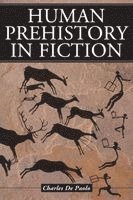
What was the world like for people thousands of years ago? How can we know? Through fiction? This is a work of literary criticism, and more. It begins with a discussion of the problem of authenticity and then considers twelve pieces of fiction that depict human prehistory:H.G. Wells' The Island of Doctor Moreau, Pierre Boulle's The Planet of the Apes, Jules Verne's The Village in the Treetops, Edgar Rice Burroughs' The Land That Time Forgot, the struggle for legitimacy in Wells' "The Grisly Folk," the Tasmanian analogue in Lester Del Rey's "The Day Is Done," William Golding's The Inheritors, "the promise of humanity" in Arthur C. Clarke's 2001: A Space Odyssey, the theme of "a god among the heathen" in Wells' "The Lord of the Dynamos" and other works, Jean Auel's The Clan of the Cave Bear, J.H. Rosny-Aine's Quest for Fire, and Wells' The Time Machine: An Invention.A final chapter considers the paleoanthropologist as literary critic.
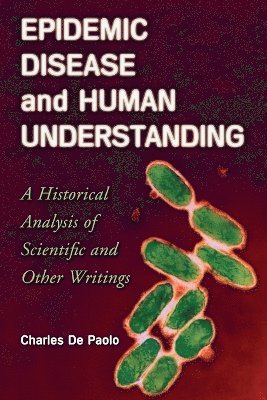
Epidemic Disease and Human Understanding
A Historical Analysis of Scientific and Other Writings
Häftad, Engelska, 2006
478 kr
Skickas inom 5-8 vardagar
For more than three thousand years of recorded history, human beings have struggled to understand the epidemic--the rapid spread of a contagious disease throughout a human population. This book draws on an extensive list of primary texts to present a comprehensive history of epidemiological thought.The book is primarily concerned with the human experience of epidemic disease and the various ways this experience has been conceptualized and communicated. Part I examines ancient religious, mythological and philosophical paradigms used to comprehend and interpret epidemic disease. Following the ancient period, perceptions changed; epidemics were understood as natural phenomena rather than as instruments of divine purpose. This transition is covered in Part II and illuminated by historical documents, such as Thucydides' description of the plague of Athens. Systematic examination of biomedical phenomena, which began in the seventeenth century and developed into modern medicine, is the focus of Part III.Finally, Part IV considers the ways in which epidemic disease has been treated in various works of literature. The discussion includes eyewitness accounts as well as such popular works of fiction as Sinclair Lewis' Arrowsmith and Albert Camus' The Plague. In surveying human responses to endemic disease, the book draws connections between three sub-genres of epidemiological writing: the encyclopedia, the intellectual history, and the biographical collection.
589 kr
Skickas inom 5-8 vardagar
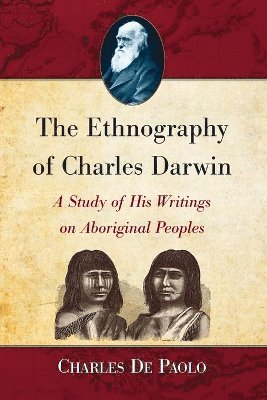
Because of his stature as one of the great minds of the nineteenth century, Darwin and his work have been examined from almost every conceivable angle. This has led to much critical disagreement on his thoughts regarding the dignity of man, particularly of aboriginal peoples. This book attempts to reconcile the prevailing dual visions of Darwin--as racist and as humanitarian. By consolidating Darwin's fragmentary ethnographic writings, the text charts his switch from early resignation regarding the victimization of native tribes to advocacy for their plight. While recognizing the differences between modern Europeans and primitive communities, Darwin developed a firm belief in the dignity of man and ultimately viewed the exploitation of aboriginal peoples as morally indefensible.
533 kr
Skickas inom 5-8 vardagar
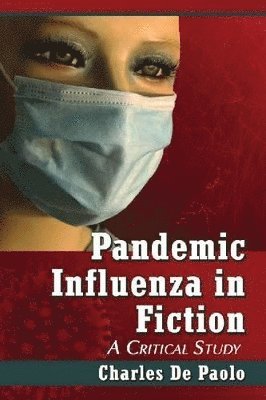
The influenza pandemic of 1918-1919 - the worst widespread outbreak in recorded history - claimed an estimated 100 million lives globally. Yet only in recent decades has it captured the attention of historians, scientists and fiction writers. This study surveys influenza research over the last century in original scientific and historical documents, and establishes a critical paradigm for the appreciation of influenza fiction.Through close readings of 15 imaginative works the author elucidates the contents of and the interaction between the medical and the fictional. Responses to the 1918 pandemic are grouped in five overlapping periods: Discovery (1890-1940), Recovery (1921-1946), Recursion (2005-2006), Characterization (1998-2005), and the Novelistic or avian virus period (1997-2014).Coverage extends from Pfeiffer's 1892 bacillus theory, to the multidisciplinary effort to isolate the virus (1919-1933), to the reconstruction of the H1N1 viral genome from archival and exhumed RNA (1995-2005), to the emergence of H5N1 and H7N9 avian viruses (1997-2014).This book demonstrates that pandemic fiction has been more than a therapeutic medium for survivors. A prodigious resource for the history of medicine, it is also a forum for ethical, social, legal, national defense and public health issues.
Del 58 - American University Studies Series 4: English Language and Literature
Coleridge's Philosophy of Social Reform
Inbunden, Engelska, 1987
570 kr
Tillfälligt slut