Charles H. Harris - Böcker
Visar alla böcker från författaren Charles H. Harris. Handla med fri frakt och snabb leverans.
6 produkter
6 produkter
433 kr
Skickas inom 10-15 vardagar
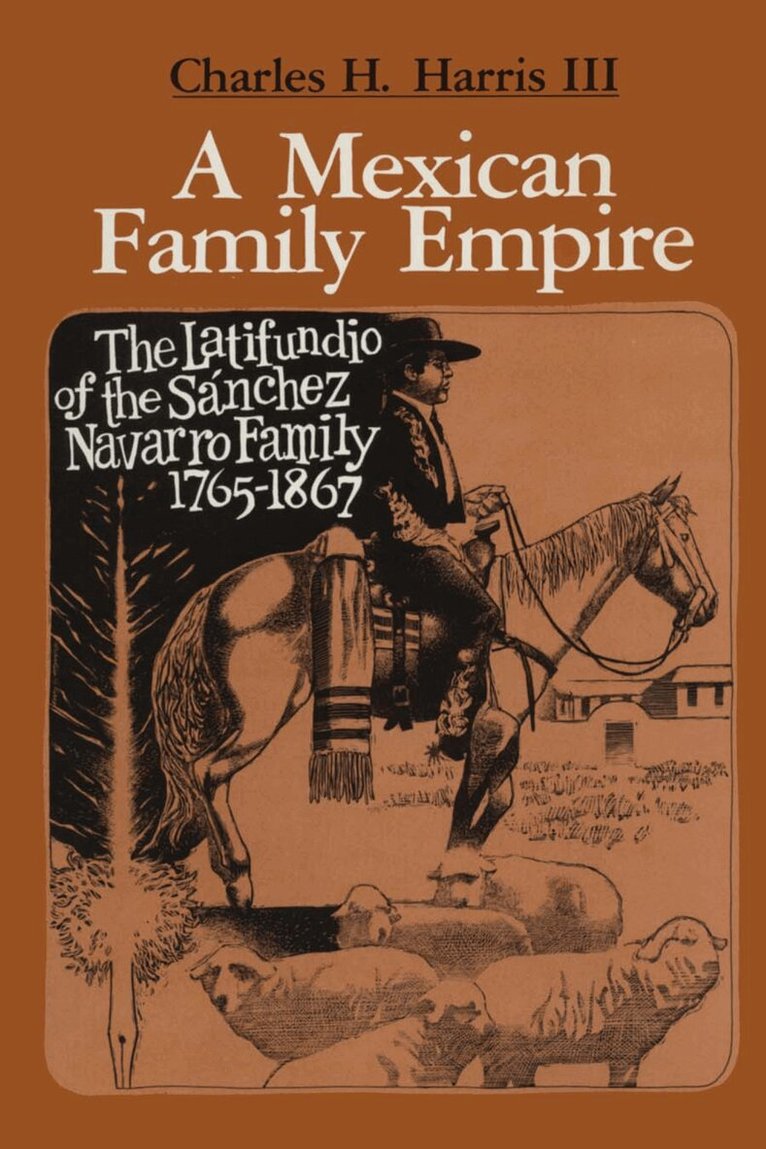
Perhaps no other institution has had a more significant impact on Latin American history than the large landed estate-the hacienda. In Mexico, the latifundio, an estate usually composed of two or more haciendas, dominated the social and economic structure of the country for four hundred years. A Mexican Family Empire is a careful examination of the largest latifundio ever to have existed, not only in Mexico but also in all of Latin America-the latifundio of the SÁnchez Navarros. Located in the northern state of Coahuila, the SÁnchez Navarro family's latifundio was composed of seventeen haciendas and covered more than 16.5 million acres-the size of West Virginia. Charles H. Harris places the history of the latifundio in perspective by showing the interaction between the various activities of the SÁnchez Navarros and the evolution of landholding itself. In his discussion of the acquisition of land, the technology of ranching, labor problems, and production on the SÁnchez Navarro estate, and of the family's involvement in commerce and politics, Harris finds that the development of the latifundio was only one aspect in the SÁnchez Navarros' rise to power. Although the SÁnchez Navarros conformed in some respects to the stereotypes advanced about hacendados, in terms of landownership and the use of debt peonage, in many important areas a different picture emerges. For example, the family's salient characteristic was a business mentality; they built the latifundio to make money, with status only a secondary consideration. Moreover, the family's extensive commercial activities belie the generalization that the objective of every hacendado was to make the estates self-sufficient. Harris emphasizes the great importance of the SÁnchez Navarros' widespread network of family connections in their commercial and political activities. A Mexican Family Empire is based on the SÁnchez Navarro papers-75,000 pages of personal letters, business correspondence, hacienda reports and inventories, wills, land titles, and court records spanning the period from 1658 to 1895. Harris's thorough research of these documents has resulted in the first complete social, economic, and political history of a great estate. The geographical and chronological boundaries of his study permit analysis of both continuity and change in Mexico's evolving socioeconomic structure during one of the most decisive periods in its history-the era of transition from colony to nation.
488 kr
Skickas inom 10-15 vardagar
The Plan of San Diego, a rebellion proposed in 1915 to overthrow the U.S. government in the Southwest and establish a Hispanic republic in its stead, remains one of the most tantalizing documents of the Mexican Revolution. The plan called for an insurrection of Mexicans, Mexican Americans, and African Americans in support of the Mexican Revolution and the waging of a genocidal war against Anglos. The resulting violence approached a race war and has usually been portrayed as a Hispanic struggle for liberation brutally crushed by the Texas Rangers, among others.The Plan de San Diego: Tejano Rebellion, Mexican Intrigue, based on newly available archival documents, is a revisionist interpretation focusing on both south Texas and Mexico. Charles H. Harris III and Louis R. Sadler argue convincingly that the insurrection in Texas was made possible by support from Mexico when it suited the regime of President Venustiano Carranza, who co-opted and manipulated the plan and its supporters for his own political and diplomatic purposes in support of the Mexican Revolution.The study examines the papers of Augustine Garza, a leading promoter of the plan, as well as recently released and hitherto unexamined archival material from the Federal Bureau of Investigation documenting the day-to-day events of the conflict.
282 kr
Skickas inom 10-15 vardagar
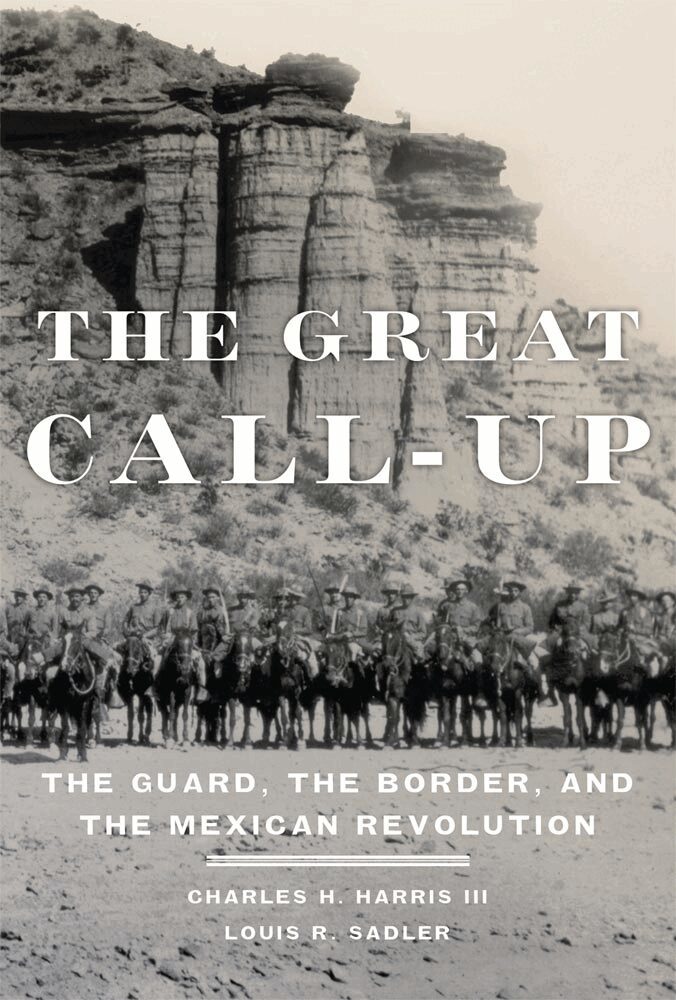
On June 18, 1916, President Woodrow Wilson called up virtually the entire army National Guard, some 150,000 men, to meet an armed threat to the United States: border raids covertly sponsored by a Mexican government in the throes of revolution. The Great Call-Up tells for the first time the complete story of this unprecedented deployment and its significance in the history of the National Guard, World War I, and U.S.-Mexico relations.Often confused with the regular-army operation against Pancho Villa and overshadowed by the U.S. entry into World War I, the great call-up is finally given due treatment here by two premier authorities on the history of the Southwest border. Marshaling evidence drawn from newspapers, state archives, reports to Congress, and War Department documents, Charles H. Harris III and Louis R. Sadler trace the call-up's state-based deployment from San Antonio and Corpus Christi, along the Texas and Arizona borders, to California. Along the way, they tell the story of this mass mobilization by examining each unit as it was called up by state, considering its composition, missions, and internal politics. Through this period of intensive training, the Guard became a truly cohesive national, then international, force. Some units would even go directly from U.S. border service to the battlefields of World War I France, remaining overseas until 1919.Balancing sweeping change over time with a keen eye for detail, The Great Call-Up unveils a little-known yet vital chapter in American military history.
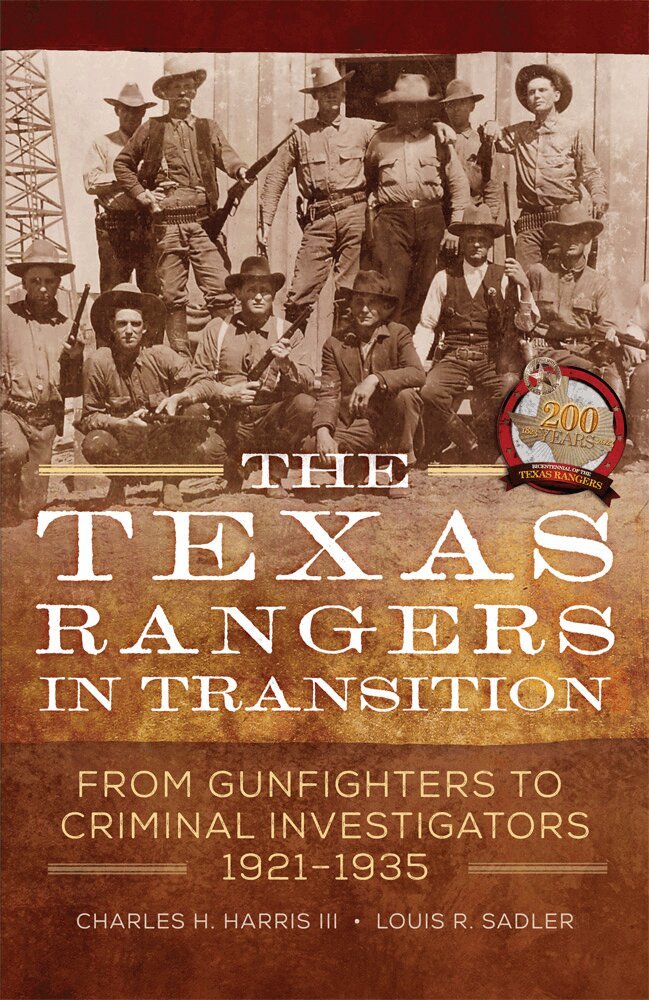
Texas Rangers in Transition
From Gunfighters to Criminal Investigators, 1921-1935
Inbunden, Engelska, 2019
406 kr
Skickas inom 5-8 vardagar
Official Texas Ranger Bicentennial™ Publication Newly rich in oil money, and all the trouble it could buy, Texas in the years following World War I underwent momentous changes - and those changes propelled the transformation of the state's storied Rangers. Charles H. Harris III and Louis R. Sadler explore this important but relatively neglected period in the Texas Rangers' history in this book, a sequel to their award-winning The Texas Rangers and the Mexican Revolution: The Bloodiest Decade, 1910-1920.In a Texas awash in booze and oil in the Prohibition years, the Rangers found themselves riding herd on gamblers and bootleggers, but also tasked with everything from catching murderers to preventing circus performances on Sunday. The Texas Rangers in Transition takes up the Rangers' story at a time of political turmoil, as the largely rural state was rapidly becoming urban. At the same time, law enforcement was facing an epidemic of bank robberies, an increase in organized crime, the growth of the Ku Klux Klan, Prohibition enforcement - new challenges that the Rangers met by transitioning from gunfighters to criminal investigators. Steeped in tradition, reluctant to change, the agency was reduced to its nadir in the depths of the Depression, the victim of slashed appropriations, an antagonistic governor, and mediocre personnel.Harris and Sadler document the further and final change that followed when, in 1935, the Texas Rangers were moved from the governor's control to the newly created Department of Public Safety. This proved a watershed in the Rangers' history, marking their transformation into a modern law enforcement agency, the elite investigative force that they remain to this day.
Archaeologist Was a Spy
Sylvanus G. Morley and the Office of Naval Intelligence
Häftad, Engelska, 2009
373 kr
Skickas inom 7-10 vardagar
441 kr
Skickas inom 7-10 vardagar
The Mexican Revolution was launched from Texas on November 20, 1910, and throughout the following decade the state would remain a hotbed of revolutionary activity and intrigue. It was in Texas that Mexican factions organized juntas, recruited cannon fodder, raised money, smuggled arms and ammunition, marketed loot and, when defeated, fled to regroup. These years also served as a turning point in the history of the Texas Rangers. By 1910 their traditional role of fighting Indians, Mexicans, and outlaws was coming to an end and there was growing support for abolishing the institution. With the advent of the Mexican Revolution and the subsequent border turmoil, the Rangers were once again looked to for protection. Histories of the Texas Rangers tend to focus on only a handful of men who acquired formidable - and usually exaggerated - reputations while the majority of the organization's members remain faceless lawmen. Using material collected over three decades of archival research, Charles and Frances Harris and Louis Sadler have compiled a reference book that presents the biographies of all 1,782 Rangers who served along the Texas-Mexico border during the era of the Mexican Revolution, not just those who achieved notoriety. In so doing, they reveal the diversity and scale of the organization and the importance of each man's role in helping shape one of the enduring legacies of the U.S.-Mexican border.