Charles Rattray - Böcker
Visar alla böcker från författaren Charles Rattray. Handla med fri frakt och snabb leverans.
4 produkter
4 produkter
551 kr
Skickas inom 10-15 vardagar
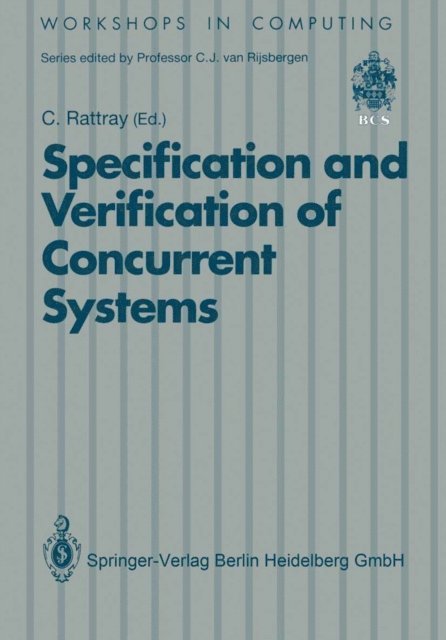
This volume contains papers presented at the BCS-FACS Workshop on Specification and Verification of Concurrent Systems held on 6-8 July 1988, at the University of Stirling, Scotland. Specification and verification techniques are playing an increasingly important role in the design and production of practical concurrent systems. The wider application of these techniques serves to identify difficult problems that require new approaches to their solution and further developments in specification and verification. The Workshop aimed to capture this interplay by providing a forum for the exchange of the experience of academic and industrial experts in the field. Presentations included: surveys, original research, practical experi ence with methods, tools and environments in the following or related areas: Object-oriented, process, data and logic based models and specifi cation methods for concurrent systems Verification of concurrent systems Tools and environments for the analysis of concurrent systems Applications of specification languages to practical concurrent system design and development. We should like to thank the invited speakers and all the authors of the papers whose work contributed to making the Workshop such a success. We were particularly pleased with the international response to our call for papers. Invited Speakers Pierre America Philips Research Laboratories University of Warwick Professor M. Joseph David Freestone British Telecom Organising Committee Charles Rattray Dr Muffy Thomas Dr Simon Jones Dr John Cooke Professor Ken Turner Derek Coleman Maurice Naftalin Dr Peter Scharbach vi Preface We would like to aeknowledge the finaneial eontribution made by SD-Sysems Designers pie, Camberley, Surrey.
551 kr
Skickas inom 10-15 vardagar
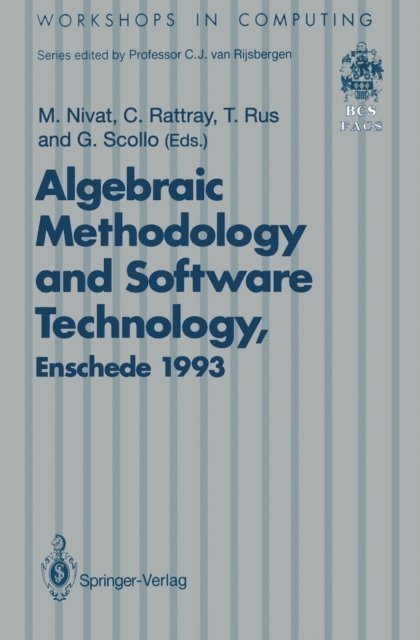
This volume contains papers presented at the Third International Conference on Algebraic Methodology and Software Technology (AMAST'93), held at the University of Twente, the Netherlands, 21-25 June 1993. The AMAST conferences aim to promote the use of algebraic methodology as a foundation for software technology, and to examine how universal algebra can provide practical mathematical alternatives to the ad hoc methods commonly used in software development. They are the only conferences to focus specifically on this important area of research. The resulting volume covers a variety of software development issues, and testifies to the versatility of algebraic methods when used as conceptual tools in the software development process. The papers present original research in a range of areas, and include a distinguished collection of invited papers by leading researchers in the field. The volume also includes descriptions of six software systems which have been developed using algebraic methods, techniques and tools.Among the topics covered in this volume are: Algebraic metamathematics; Functional programming; Category theory in software engineering; Modular system design; Real-time system specification; Testing theory and applications; Algebraic semantics of concurrency; Modal logics and reactive systems; Design and refinement principles; Equational and logic programming; Algebraic specification in software engineering.
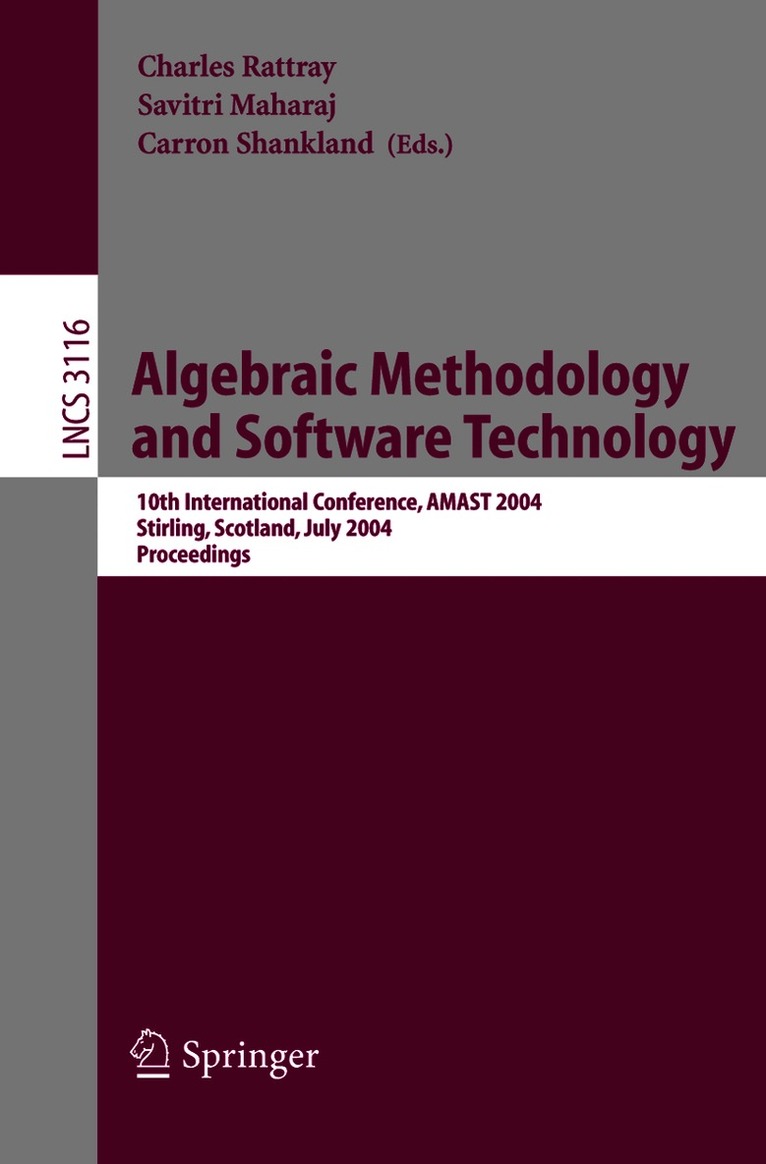
Algebraic Methodology and Software Technology
10th International Conference, AMAST 2004, Stirling, Scotland, UK, July 12-16, 2004, Proceedings
Häftad, Engelska, 2004
551 kr
Skickas inom 10-15 vardagar
This volume contains the proceedings of AMAST 2004, the 10th International Conference on Algebraic Methodology and Software Technology, held during July 12-16,2004,in Stirling, Scotland, UK. The major goalof the AMAST c- ferences is to promote research that may lead to the setting of software techn- ogy on a ?rm, mathematical basis. This goal is achieved by a large international cooperationwith contributions from both academia and industry. The virtues of a software technology developed on a mathematical basis have been envisioned asbeing capableofprovidingsoftwarethatis(a)correct,andthecorrectnesscan be provedmathematically, (b) safe, so that it can be used in the implementation of critical systems, (c) portable, i. e. , independent of computing platforms and language generations, and (d) evolutionary, i. e. , it is self-adaptable and evolves with the problem domain. PreviousAMASTmeetingswereheldinIowaCity(1989,1991,2000),Twente (1993), Montreal (1995), Munich (1996), Sydney (1997), Manaus (1999), and Reunion Island (2002), and contributed to the AMAST goals by reporting and disseminating academic and industrial achievements within the AMAST area of interest.During these meetings, AMAST attracted an international following among researchersand practitioners interested in software technology, progr- ming methodology and their algebraic and logical foundations. For AMAST 2004therewere63 submissionsof overallhigh quality, authored by researchers from Australia, Canada, China, the Czech Republic, Denmark, France, Germany, India, Iran, Israel, Italy, Korea, Portugal,Spain, Taiwan, The Netherlands, Turkey, the UK, and the USA. All submissions were thoroughly evaluated, and an electronic programcommittee meeting was held to discuss the reviewers' reports. The program committee selected 35 papers to be presented.
Del 2 - Amast Series In Computing
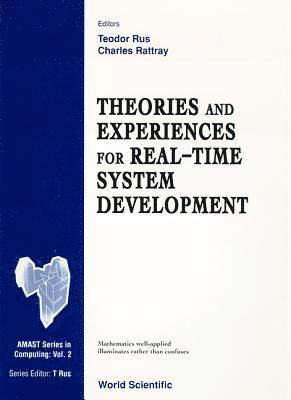
Theories And Experiences For Real-time System Development
Inbunden, Engelska, 1995
2 375 kr
Tillfälligt slut
Our understanding of real-time systems is rapidly approaching a level of maturity which calls for a consolidation of our present knowledge and experience. Particularly effective in influencing our understanding has been the conjoining of universal algebra with the theory and practice of real-time system development. This interplay between algebraic methodology and software technology (AMAST) for real-time systems is the theme for this text.Each chapter, derived from papers presented at the all-invitation 1st AMAST International Workshop on Real-Time Systems (Iowa, 1993), is written by leaders in their field. The chapters form an intriguing mix of modeling, specification, verification, and implementation of “real” real-time systems. They cover untimed and timed systems, sequential, concurrent and embedded real-time processes, integrated models using state machines, temporal logic and algebraic data models, real-time CSP, verification tools, system design using temporal logic, symbolic checking of discrete time models, iterative symbolic approximation in timing verification and verification of audio protocols, timed full LOTOS and timed LOTOS extensions, LOTOS specification of telephone services and flight warning computers, and performance analysis.