Charles S. Maier – författare
Visar alla böcker från författaren Charles S. Maier. Handla med fri frakt och snabb leverans.
15 produkter
15 produkter
Inbunden, Engelska, 1900
495 kr
Skickas inom 10-15 vardagar
This book comes out of a conference in April of 1999 at the Center for European Studies at Harvard University on the topic of "Gender Parity and the Liberal Tradition: Proposals and Debates in Europe and the United States." The essays are divided into three sections, each of which approaches from a different angle the central question of whether liberalism has failed women. The first section aims to frame the discussion by outlining the theoretical arguments for the amendments or revisions implied by the proponents of the Parity Movement in Europe and for the concerns raised by critics. The second describes recent changes in party rules, European legal framework, and national constitutions, as well as the gains made by women in response to rule change. The third section provides American perspectives on the lessons that parity advocates might draw from affirmative action policies and speculations about how parity rules would work in the American context.
Inbunden, Engelska, 1988
1 264 kr
Skickas inom 7-10 vardagar
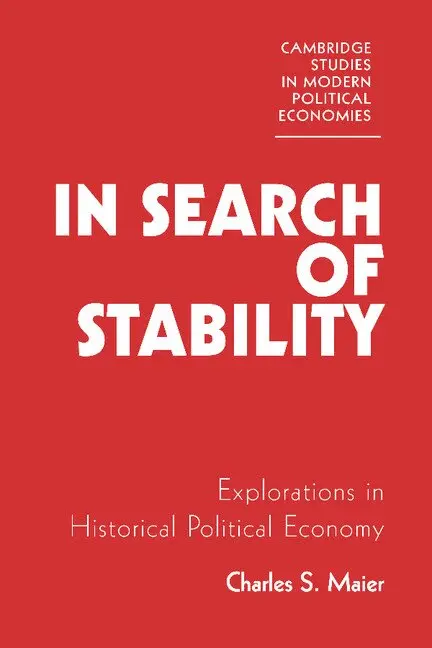
In Search of Stability: Explorations in Historical Political Economy ponders the issue of how Western industrial societies overcame major challenges to political and economic stability in the twentieth century. Successive essays ask: what ideological messages did American influence transmit to Europe after World War I, then again after World War II? Did Nazis and Italian fascists share an economic ideology or impose a unique economic system in the interwar period and during World War II? How do their accomplishments stack up comparatively against those of the liberal democracies? After 1945, what was the relationship between concepts of productivity and class division? How have the major experiences of twentieth-century inflation arisen out of class and interest-group rivalry? Most generally, what has been the representation of interests in capitalist political economies?
Inbunden, Engelska, 1987
825 kr
Skickas inom 7-10 vardagar
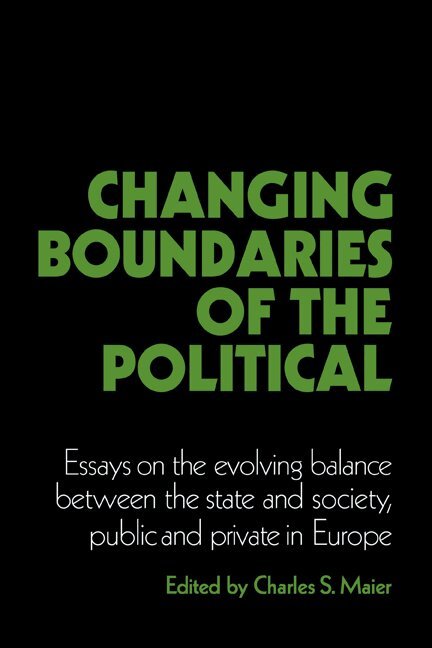
An understanding of the nature of advanced industrial economies is derived from this extensive investigation of the ways in which the boundaries of the political have changed in Europe since the 1960s.
Häftad, Engelska, 1988
462 kr
Skickas inom 7-10 vardagar
In Search of Stability: Explorations in Historical Political Economy ponders the issue of how Western industrial societies overcame major challenges to political and economic stability in the twentieth century. Successive essays ask: what ideological messages did American influence transmit to Europe after World War I, then again after World War II? Did Nazis and Italian fascists share an economic ideology or impose a unique economic system in the interwar period and during World War II? How do their accomplishments stack up comparatively against those of the liberal democracies? After 1945, what was the relationship between concepts of productivity and class division? How have the major experiences of twentieth-century inflation arisen out of class and interest-group rivalry? Most generally, what has been the representation of interests in capitalist political economies?
Häftad, Engelska, 1987
417 kr
Skickas inom 7-10 vardagar
An understanding of the nature of advanced industrial economies is derived from this extensive investigation of the ways in which the boundaries of the political have changed in Europe since the 1960s.
Häftad, Engelska, 2007
312 kr
Skickas inom 10-15 vardagar
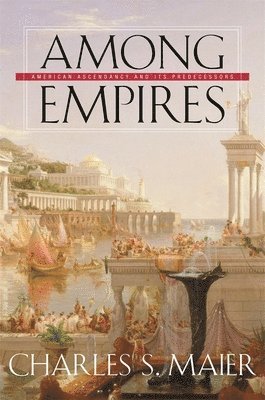
Contemporary America, with its unparalleled armaments and ambition, seems to many commentators a new empire. Others angrily reject the designation. What stakes would being an empire have for our identity at home and our role abroad?A preeminent American historian addresses these issues in light of the history of empires since antiquity. This elegantly written book examines the structure and impact of these mega-states and asks whether the United States shares their traits and behavior. Eschewing the standard focus on current U.S. foreign policy and the recent spate of pro- and anti-empire polemics, Charles S. Maier uses comparative history to test the relevance of a concept often invoked but not always understood. Marshaling a remarkable array of evidence—from Roman, Ottoman, Moghul, Spanish, Russian, Chinese, and British experience—Maier outlines the essentials of empire throughout history. He then explores the exercise of U.S. power in the nineteenth and twentieth centuries, carefully analyzing its economic and strategic sources and the nation’s relationship to predecessors and rivals.To inquire about empire is to ask what the United States has become as a result of its wealth, inventiveness, and ambitions. It is to confront lofty national aspirations with the realities of the violence that often attends imperial politics and thus to question both the costs and the opportunities of the current U.S. global ascendancy. With learning, dispassion, and clarity, Among Empires offers bold comparisons and an original account of American power. It confirms that the issue of empire must be a concern of every citizen.
Inbunden, Engelska, 2016
290 kr
Skickas inom 10-15 vardagar
Throughout history, human societies have been organized preeminently as territories—politically bounded regions whose borders define the jurisdiction of laws and the movement of peoples. At a time when the technologies of globalization are eroding barriers to communication, transportation, and trade, Once Within Borders explores the fitful evolution of territorial organization as a worldwide practice of human societies. Master historian Charles S. Maier tracks the epochal changes that have defined territories over five centuries and draws attention to ideas and technologies that contribute to territoriality’s remarkable resilience.Territorial boundaries transform geography into history by providing a framework for organizing political and economic life. But properties of territory—their meanings and applications—have changed considerably across space and time. In the West, modern territoriality developed in tandem with ideas of sovereignty in the seventeenth century. Sovereign rulers took steps to fortify their borders, map and privatize the land, and centralize their sway over the populations and resources within their domain. The arrival of railroads and the telegraph enabled territorial expansion at home and abroad as well as the extension of control over large spaces. By the late nineteenth century, the extent of a nation’s territory had become an index of its power, with overseas colonial possessions augmenting prestige and wealth and redefining territoriality.Turning to the geopolitical crises of the twentieth century, Maier pays close attention to our present moment, asking in what ways modern nations and economies still live within borders and to what degree our societies have moved toward a post-territiorial world.
Häftad, Engelska, 2011
278 kr
Skickas inom 5-8 vardagar
From the vantage point of the United States or Western Europe, the 1970s was a time of troubles: economic “stagflation,” political scandal, and global turmoil. Yet from an international perspective it was a seminal decade, one that brought the reintegration of the world after the great divisions of the mid-twentieth century. It was the 1970s that introduced the world to the phenomenon of “globalization,” as networks of interdependence bound peoples and societies in new and original ways.The 1970s saw the breakdown of the postwar economic order and the advent of floating currencies and free capital movements. Non-state actors rose to prominence while the authority of the superpowers diminished. Transnational issues such as environmental protection, population control, and human rights attracted unprecedented attention. The decade transformed international politics, ending the era of bipolarity and launching two great revolutions that would have repercussions in the twenty-first century: the Iranian theocratic revolution and the Chinese market revolution.The Shock of the Global examines the large-scale structural upheaval of the 1970s by transcending the standard frameworks of national borders and superpower relations. It reveals for the first time an international system in the throes of enduring transformations.
Häftad, Engelska, 2014
278 kr
Skickas inom 5-8 vardagar
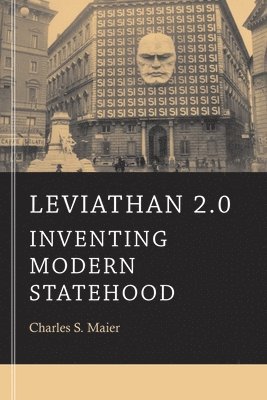
Thomas Hobbes laid the theoretical groundwork of the nation-state in Leviathan, his tough-minded treatise of 1651. Leviathan 2.0 updates this classic account to explain how modern statehood took shape between the mid-nineteenth and mid-twentieth centuries, before it unraveled into the political uncertainty that persists today.Modern states were far from immune to the modernizing forces of war, technology, and ideology. From 1845 to 1880, the United States, Canada, Mexico, and Argentina were all reconstituted through territorial violence. Europe witnessed the unification of Germany and Italy, while Asian nations such as Japan tried to mitigate foreign incursions through state-building reforms. A global wave of revolution at the turn of the century pushed the modernization process further in China, Russia, Iran, and Ottoman Turkey. By the late 1930s, with the rise of the Soviet Union and Nazi Germany, the momentum of history seemed to shift toward war-glorifying totalitarian states. But several variants of the modern state survived World War II: the welfare states of Western democracies; single-party socialist governments; and governments dominated by the military, especially prevalent in Latin America, Asia, and the Middle East.Toward the end of the twentieth century, all of these forms stood in growing tension with the transformative influences of globalized capitalism. Modern statehood recreated itself in many ways, Charles S. Maier concludes, but finally had to adopt a precarious equilibrium with ever more powerful economic forces.
Inbunden, Engelska, 2023
388 kr
Skickas inom 5-8 vardagar
A new and original history of the forces that shaped the twentieth and twenty-first centuries.We thought we knew the story of the twentieth century. For many in the West, after the two world conflicts and the long cold war, the verdict was clear: democratic values had prevailed over dictatorship. But if the twentieth century meant the triumph of liberalism, as many intellectuals proclaimed, why have the era’s darker impulses—ethnic nationalism, racist violence, and populist authoritarianism—revived?The Project-State and Its Rivals offers a radical alternative interpretation that takes us from the transforming challenges of the world wars to our own time. Instead of the traditional narrative of domestic politics and international relations, Charles S. Maier looks to the political and economic impulses that propelled societies through a century when territorial states and transnational forces both claimed power, engaging sometimes as rivals and sometimes as allies. Maier focuses on recurring institutional constellations: project-states including both democracies and dictatorships that sought not just to retain power but to transform their societies; new forms of imperial domination; global networks of finance; and the international associations, foundations, and NGOs that tried to shape public life through allegedly apolitical appeals to science and ethics.In this account, which draws on the author’s studies over half a century, Maier invites a rethinking of the long twentieth century. His history of state entanglements with capital, the decline of public projects, and the fragility of governance explains the fraying of our own civic culture—but also allows hope for its recovery.
Häftad, Engelska, 1998
369 kr
Skickas inom 10-15 vardagar
Bringing his book up to date with reflections since its first publication a decade ago, Charles S. Maier writes that the historians’ controversy gave Germany a chance to air the issues immediately before unification and, in effect, the controversy substituted for the constitutional debate that a united Germany never got around to holding. The premises of national community, whether formulated in terms of legal culture, inherited collective responsibilities, or patriotic habits of the heart, had already been subjects for vigorous discussion.
Häftad, Engelska, 1999
625 kr
Skickas inom 5-8 vardagar
Against the backdrop of one of the great transformations of our century, the sudden and unexpected fall of communism as a ruling system, Charles Maier recounts the history and demise of East Germany. Dissolution is his poignant, analytically provocative account of the decline and fall of the late German Democratic Republic. This book explains the powerful causes for the disintegration of German communism as it constructs the complex history of the GDR. Maier looks at the turning points in East Germany's forty-year history and at the mix of coercion and consent by which the regime functioned. He analyzes the GDR as it evolved from the purges of the 1950s to the peace movements and emerging youth culture of the 1980s, and then turns his attention to charges of Stasi collaboration that surfaced after 1989. In the context of describing the larger collapse of communism, Maier analyzes German elements that had counterparts throughout the Soviet bloc, including its systemic and eventually terminal economic crisis, corruption and privilege in the SED, the influence of the Stasi and the plight of intellectuals and writers, and the slow loss of confidence on the part of the ruling elite.He then discusses the mass protests and proliferation of dissident groups in 1989, the collapse of the ruling party, and the troubled aftermath of unification. Dissolution is the first book that spans the communist collapse and the ensuing process of unification, and that draws on newly available archival documents from the last phases of the GDR, including Stasi reports, transcripts of Politburo and Central Committee debates, and papers from the Economic Planning Commission, the Council of Ministers, and the office files of key party officials. This book is further bolstered by Maier's extensive knowledge of European history and the Cold War, his personal observations and conversations with East Germans during the country's dramatic transition, and memoirs and other eyewitness accounts published during the four-decade history of the GDR.
Häftad, Engelska, 2015
314 kr
Skickas inom 5-8 vardagar
Charles Maier, one of the most prominent contemporary scholars of European history, published Recasting Bourgeois Europe as his first book in 1975. Based on extensive archival research, the book examines how European societies progressed from a moment of social vulnerability to one of political and economic stabilization. Arguing that a common trajectory calls for a multi country analysis, Maier provides a comparative history of three European nations and argues that they did not simply return to a prewar status quo, but achieved a new balance of state authority and interest group representation. While most previous accounts presented the decade as a prelude to the Depression and dictatorships, Maier suggests that the stabilization of the 1920s, vulnerable as it was, foreshadowed the more enduring political stability achieved after World War II. The immense and ambitious scope of this book, its ability to follow diverse histories in detail, and its effort to explain stabilization--and not just revolution or breakdown--have made it a classic of European history.
Häftad, Engelska, 2010
352 kr
Skickas inom 3-6 vardagar
Inbunden, Svenska, 2021
255 kr
Skickas
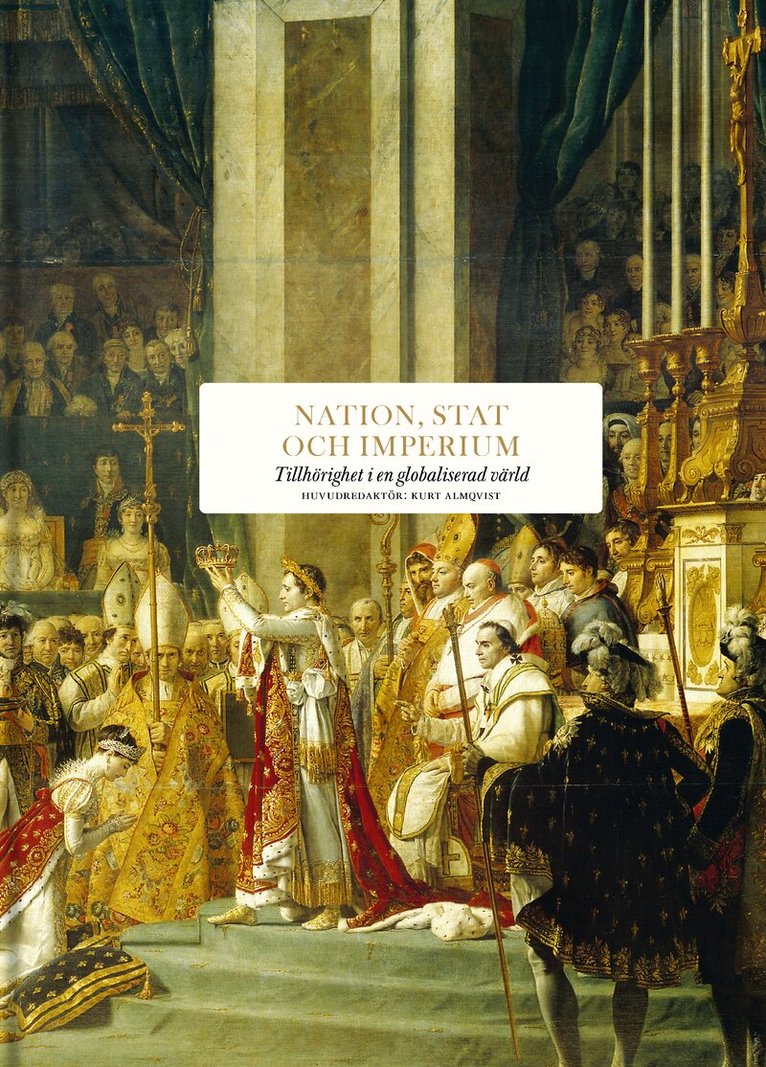
Med det kalla krigets slut och globaliseringens segertåg trodde många att nationalism hörde till historien. Men det visade sig vara tvärtom. Idag ser vi hur nationalismen sprids över hela världen. Samtidigt växer sig populistiska och anti-demokratiska rörelser starka. Att höra hemma någonstans tycks bli allt viktigare i en tid av ekonomisk och social osäkerhet. I en globaliserad värld förknippas därför identitet, medborgarskap och tillhörighet med födelseort och en fast plats att bo på. Essäerna i denna antologi är baserade på Engelsbergsseminariet 2017 där olika former av identitet knutna till olika samhällsbildningar granskades. Hur uppstår en nation? Hur skapas enighet i ett imperium med en mångfald av folk?Huvudredaktör för denna illustrerade antologi är Kurt Almqvist.