Charlotte Scott - Böcker
Visar alla böcker från författaren Charlotte Scott. Handla med fri frakt och snabb leverans.
5 produkter
5 produkter
418 kr
Skickas inom 5-8 vardagar
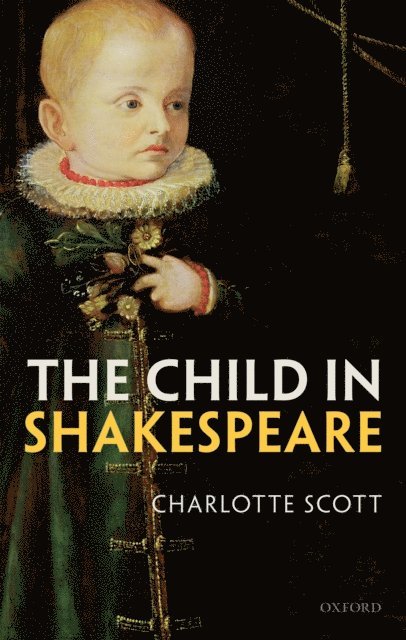
This volume explores the character and representation of the child in Shakespeare's drama, not as a specific life stage but as a role.As a life force, an impassioned plea for justice, a legacy, history, memory or image of love or violence, children are everywhere in Shakespeare's plays. Focusing on Shakespeare's unique interest in the young body, the life stage, and the parental and social dynamic, this book offers an account of the role and representation of the child in Shakespeare's dramatic imagination. Drawing on a vast range of contemporary texts, including parenting manuals and household and pedagogic texts, as well as books on nursing and maternity, child birth, and child rearing, The Child in Shakespeare explores the contexts in which the idea of the child is mobilised as a body and image on the early modern stage. Understanding the child, not only as a specific life stage, but also as a role and an abstraction of feeling, this book examines why Shakespeare, who showed little interest in writing for children in the playing companies, wrote so powerfully about them on his stage.
1 720 kr
Skickas inom 5-8 vardagar
This book examines the child on Shakespeare's stage. As a life force, an impassioned plea for justice, a legacy, history, memory or image of love or violence, children are everywhere in Shakespeare's plays. Focusing on Shakespeare's unique interest in the young body, the life stage, and the parental and social dynamic, this book offers the first sustained account of the role and representation of the child in Shakespeare's dramatic imagination. Drawing on a vast range of contemporary texts, including parenting manuals and household and pedagogic texts, as well as books on nursing and maternity, child birth, and child rearing, The Child in Shakespeare explores the contexts in which the idea of the child is mobilised as a body and image on the early modern stage. Understanding the child, not only as a specific life stage, but also as a role and an abstraction of feeling, this book examines why Shakespeare, who showed little interest in writing for children in the playing companies, wrote so powerfully about them on his stage.
2 371 kr
Skickas inom 5-8 vardagar
The 'book' - both material and metaphoric - is strewn throughout Shakespeare's plays: it is held by Hamlet as he turns through revenge to madness; buried deep in the mudded ooze by Prospero when he has shaken out his art like music and violence; it is forced by Richard II to withstand the mortality of deposition, fetishised by lovers, tormented by pedagogues, lost by kings, written by the alienated, and hung about war with the blood of lost voices. The 'book' begins and ends Shakespeare's dramatic career as change itself, standing the distance between violence and hope, between holding and losing. Shakespeare and the Idea of the Book is about the book in Shakespeare's plays. Focusing on seven plays, not only for the chronology and range they present, but also for their particular relationship to the book - whether it is political or humanist, cognitive or illusory, satirical or sexual, spiritual or secular, social or subjective - Scott argues that the book on stage, its literal and semantic presence, offers one of the most articulate and developed hermeneutic tools available for the study of early modern English culture.
1 340 kr
Skickas inom 5-8 vardagar
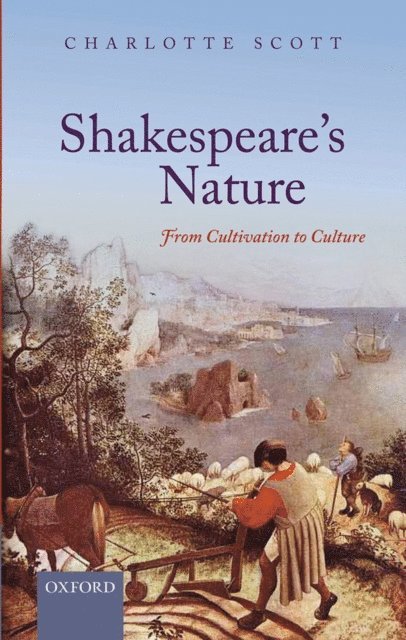
Shakespeare's Nature offers the first sustained account of the impact of the language and practice of husbandry on Shakespeare's work. It shows how the early modern discourse of cultivation changes attitude to the natural world, and traces the interrelationships between the human and the natural worlds in Shakespeare's work through dramatic and poetic models of intervention, management, prudence and profit. Ranging from the Sonnets to The Tempest, the book explains how cultivation of the land responds to and reinforces social welfare, and reveals the extent to which the dominant industry of Shakespeare's time shaped a new language of social relations. Beginning with an examination of the rise in the production of early modern printed husbandry manuals, Shakespeare's Nature draws on the varied fields of economic, agrarian, humanist, Christian and literary studies, showing how the language of husbandry redefined Elizabethan attitudes to both the human and non-human worlds. In a series of close readings of specific plays and poems, this book explains how cultivation forms and develops social and economic value systems, and how the early modern imagination was dependent on metaphors of investment, nurture and growth. By tracing this language of intervention and creation in Shakespeare's work, this book reveals a fundamental discourse in the development of early modern social, political and personal values.
2 033 kr
Skickas inom 10-15 vardagar
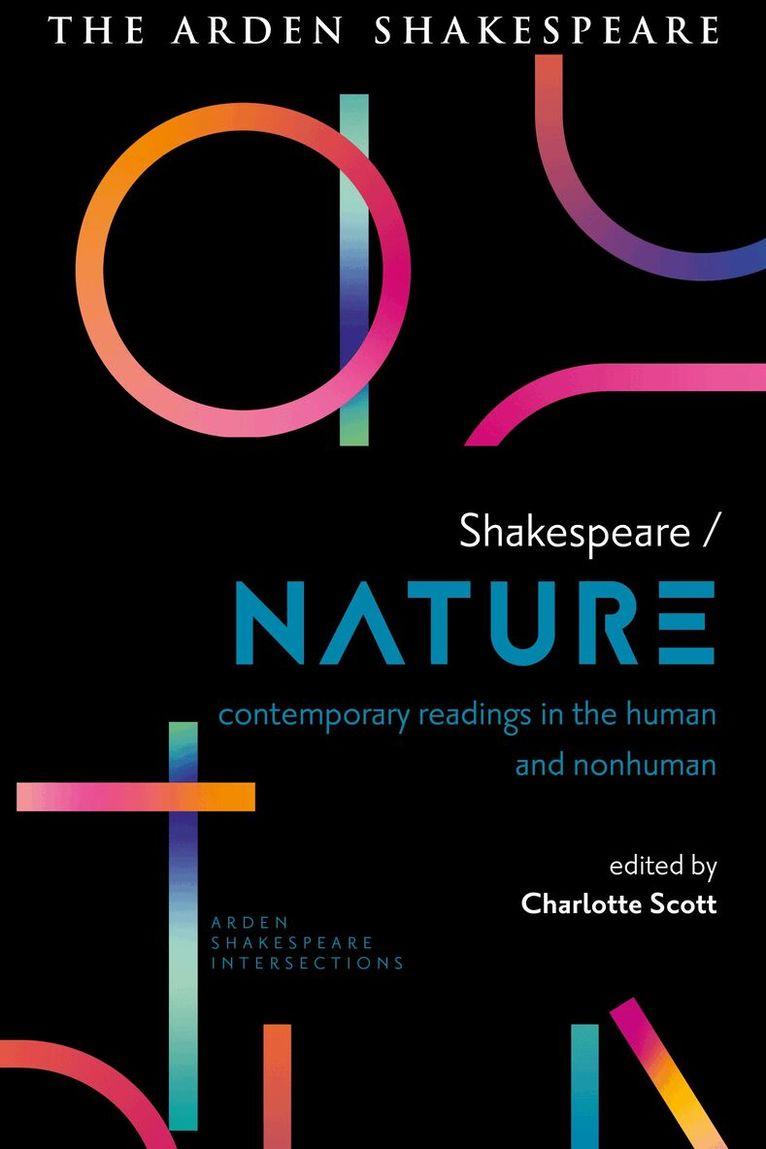
Shakespeare / Nature sets new agendas for the study of nature in Shakespeare’s work. Offering a rich exploration of the intersections between the human and non-human worlds, the chapters focus on the contested and persuasive language of nature, both as organic matter and cultural conditioning.Rooted in close textual analysis and historical acuity, this collection addresses Shakespeare’s works through the many ways in which ‘nature’ performs, as a cultural category, a moral marker and a set of essential conditions through which the human may pass, as well as affect. Addressing the complex conditions of the play worlds, the chapters explore the assorted forms through which Shakespeare’s nature makes sense of its narratives and supports, upholds or contests its story-telling. Over the course of the collection, the contributors examine plays including Macbeth, Julius Caesar, The Tempest, The Taming of the Shrew, Othello, Love’s Labour’s Lost, Hamlet, Timon of Athens and many more. They discuss them through the various lenses of philosophy, historicism, psychoanalysis, gender studies, cosmography, geography, sexuality, linguistics, environmentalism, feminism and robotics, to provide new and nuanced readings of the intersectional terms of both meaning and matter.Approaching ‘nature’ in all its multiplicity, this collection sets out to examine the divergent and complex ways in which the human and non-human worlds intersect and the development of a language of symbiosis that attempts to both control and create the terms of human authority. It offers an entirely new approach to the subject of nature, bringing together disparate methods that have previously been pursued independently to offer a shared investment in the intersections between the human and non-human worlds and how these discourses shape and condition the emotional, organic, cultural and psychological landscapes of Shakespeare’s play worlds.