Charlotte Walker–said - Böcker
Visar alla böcker från författaren Charlotte Walker–said. Handla med fri frakt och snabb leverans.
3 produkter
3 produkter
266 kr
Skickas inom 7-10 vardagar
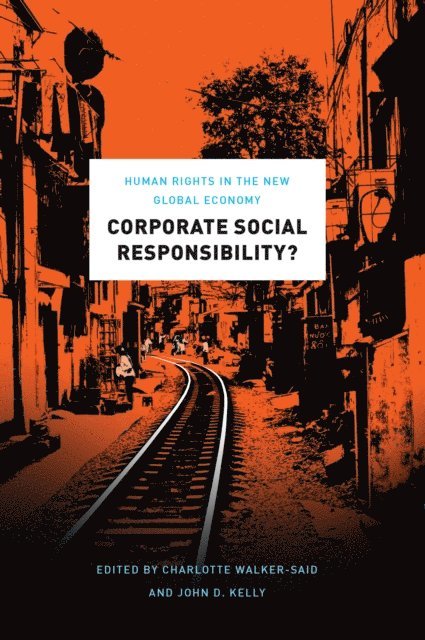
With this book, Charlotte Walker-Said and John D. Kelly have assembled an essential toolkit to better understand how the notoriously ambiguous concept of corporate social responsibility (CSR) functions in practice within different disciplines and settings. Bringing together cutting-edge scholarship from leading figures in human rights programs around the United States, they vigorously engage some of the major political questions of our age: what is CSR, and how might it render positive political change in the real world? The book examines the diverse approaches to CSR, with a particular focus on how those approaches are siloed within discrete disciplines such as business, law, the social sciences, and human rights. Bridging these disciplines and addressing and critiquing all the conceptual domains of CSR, the book also explores how CSR silos develop as a function of the competition between different interests. Ultimately, the contributors show that CSR actions across all arenas of power are interdependent, continually in dialogue, and mutually constituted.Organizing a diverse range of viewpoints, this book offers a much-needed synthesis of a crucial element of today's globalized world and asks how businesses can, through their actions, make it better for everyone.
Del 3 - Religion in Transforming Africa
Faith, Power and Family
Christianity and Social Change in French Cameroon
Inbunden, Engelska, 2018
1 160 kr
Skickas inom 7-10 vardagar
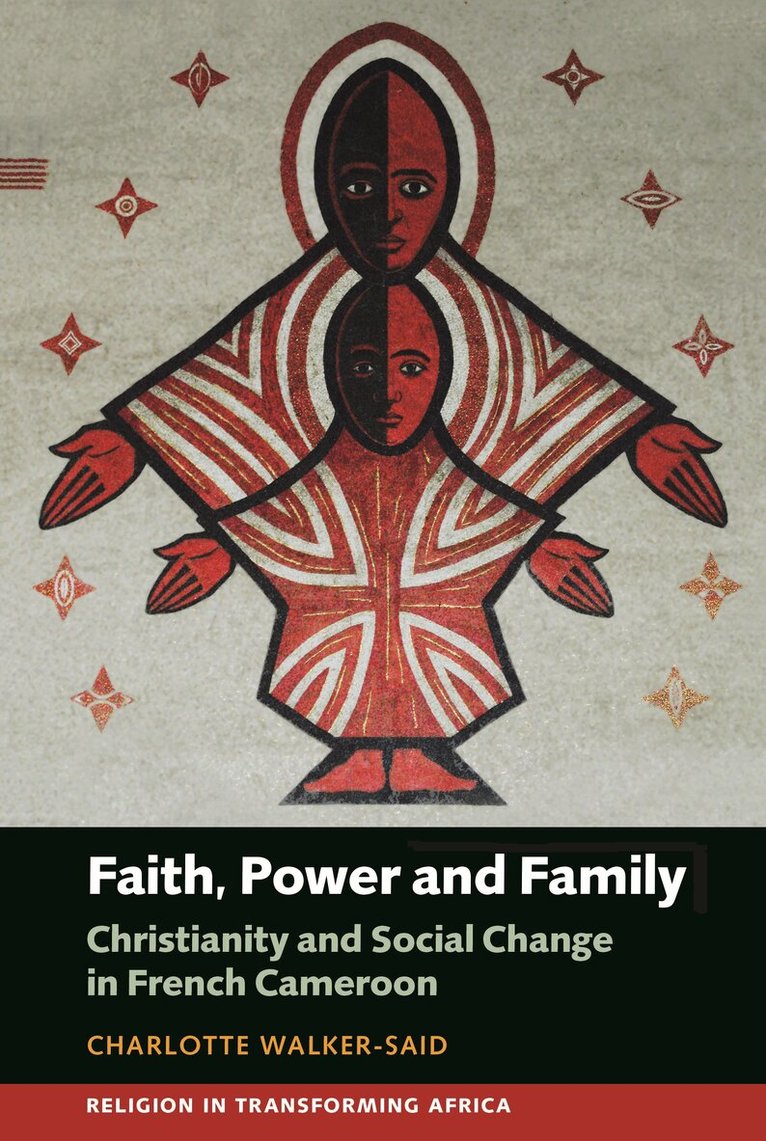
An innovative study of Christianity and society in Cameroon that illuminates the history of faith and cultural transformation among societies living under French rule 1914 to 1939.Finalist for the 2019 Albert J. Raboteau Prize for Best Book in Africana ReligionsBetween the two World Wars, the radical innovations of African Catholic and Protestant evangelists repurposed Christianity to challenge local and foreign governments operating in the French-administered League of Nations Mandate of Cameroon. Walker-Said explores how African believers transformed foreign missionary societies into profoundly local religious institutions with indigenous ecclesiastical hierarchies and devotional social and charitable networks,devising novel authority structures to control resources and govern cultural and social life. She analyses how African Christian religious leaders transformed social and labour relations, contesting forced labour and authoritarian decentralized governance as threats to family stability and community integrity. Inspired by Catholic and Protestant doctrines on conjugal complementarity and social equilibrium, as well as by local spiritual and charismatic movements, African Christians re-evaluated and renovated family and community authority structures to address the devastating changes colonialism wrought in the private sphere. The history of these reform-minded believers reveals howfamily intimacies and kinship ties constituted the force of community resistance to oppression and also demonstrates the relevance of faith in the midst of a tumultuous series of forces arising out of the colonial situation peculiar to Cameroon.
Del 3 - Religion in Transforming Africa
Faith, Power and Family
Christianity and Social Change in French Cameroon
Häftad, Engelska, 2022
335 kr
Skickas inom 7-10 vardagar
An innovative study of Christianity and society in Cameroon that illuminates the history of faith and cultural transformation among societies living under French rule 1914 to 1939.Finalist for the 2019 Albert J. Raboteau Prize for Best Book in Africana ReligionsBetween the two World Wars, the radical innovations of African Catholic and Protestant evangelists repurposed Christianity to challenge local and foreign governments operating in the French-administered League of Nations Mandate of Cameroon. Walker-Said explores how African believers transformed foreign missionary societies into profoundly local religious institutions with indigenous ecclesiastical hierarchies and devotional social and charitable networks,devising novel authority structures to control resources and govern cultural and social life. She analyses how African Christian religious leaders transformed social and labour relations, contesting forced labour and authoritarian decentralized governance as threats to family stability and community integrity. Inspired by Catholic and Protestant doctrines on conjugal complementarity and social equilibrium, as well as by local spiritual and charismatic movements, African Christians re-evaluated and renovated family and community authority structures to address the devastating changes colonialism wrought in the private sphere. The history of these reform-minded believers reveals howfamily intimacies and kinship ties constituted the force of community resistance to oppression and also demonstrates the relevance of faith in the midst of a tumultuous series of forces arising out of the colonial situation peculiar to Cameroon.