Cheow Thia Chan - Böcker
Visar alla böcker från författaren Cheow Thia Chan. Handla med fri frakt och snabb leverans.
4 produkter
4 produkter
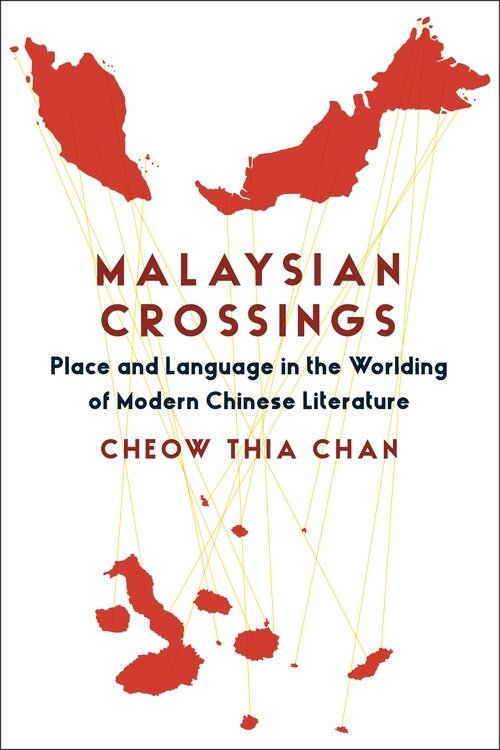
Malaysian Crossings
Place and Language in the Worlding of Modern Chinese Literature
Inbunden, Engelska, 2022
1 273 kr
Skickas inom 7-10 vardagar
Malaysian Chinese (Mahua) literature is marginalized on several fronts. In the international literary space, which privileges the West, Malaysia is considered remote. The institutions of modern Chinese literature favor mainland China, Taiwan, and Hong Kong. Within Malaysia, only texts in Malay, the national language, are considered national literature by the state. However, Mahua authors have produced creative and thought-provoking works that have won growing critical recognition, showing Malaysia to be a laboratory for imaginative Chinese writing.Highlighting Mahua literature’s distinctive mode of evolution, Cheow Thia Chan demonstrates that authors’ grasp of their marginality in the world-Chinese literary space has been the impetus for—rather than a barrier to—aesthetic inventiveness. He foregrounds the historical links between Malaysia and other Chinese-speaking regions, tracing how Mahua writers engage in the “worlding” of modern Chinese literature by navigating interconnected literary spaces. Focusing on writers including Lin Cantian, Han Suyin, Wang Anyi, and Li Yongping, whose works craft signature literary languages, Chan examines narrative representations of multilingual social realities and authorial reflections on colonial Malaya or independent Malaysia as valid literary terrain. Delineating the inter-Asian “crossings” of Mahua literary production—physical journeys, interactions among social groups, and mindset shifts—from the 1930s to the 2000s, he contends that new perspectives from the periphery are essential to understanding the globalization of modern Chinese literature. By emphasizing the inner diversities and connected histories in the margins, Malaysian Crossings offers a powerful argument for remapping global Chinese literature and world literature.
Malaysian Crossings
Place and Language in the Worlding of Modern Chinese Literature
Häftad, Engelska, 2022
324 kr
Skickas inom 7-10 vardagar
Malaysian Chinese (Mahua) literature is marginalized on several fronts. In the international literary space, which privileges the West, Malaysia is considered remote. The institutions of modern Chinese literature favor mainland China, Taiwan, and Hong Kong. Within Malaysia, only texts in Malay, the national language, are considered national literature by the state. However, Mahua authors have produced creative and thought-provoking works that have won growing critical recognition, showing Malaysia to be a laboratory for imaginative Chinese writing.Highlighting Mahua literature’s distinctive mode of evolution, Cheow Thia Chan demonstrates that authors’ grasp of their marginality in the world-Chinese literary space has been the impetus for—rather than a barrier to—aesthetic inventiveness. He foregrounds the historical links between Malaysia and other Chinese-speaking regions, tracing how Mahua writers engage in the “worlding” of modern Chinese literature by navigating interconnected literary spaces. Focusing on writers including Lin Cantian, Han Suyin, Wang Anyi, and Li Yongping, whose works craft signature literary languages, Chan examines narrative representations of multilingual social realities and authorial reflections on colonial Malaya or independent Malaysia as valid literary terrain. Delineating the inter-Asian “crossings” of Mahua literary production—physical journeys, interactions among social groups, and mindset shifts—from the 1930s to the 2000s, he contends that new perspectives from the periphery are essential to understanding the globalization of modern Chinese literature. By emphasizing the inner diversities and connected histories in the margins, Malaysian Crossings offers a powerful argument for remapping global Chinese literature and world literature.
189 kr
Skickas inom 7-10 vardagar
Contributors to this special issue examine a wide-ranging body of literature produced by ethnically Chinese populations of Southeast Asia. While much previous work on Chinese literature from that region has tended to focus on literature from Malaysia and former British Malaya, and particularly Chinese-language literature, the authors also consider literature from regions that are now Singapore, Indonesia, and the Philippines. The issue features analyses of works written in various Sinitic languages and creoles by authors with links to diasporic or post-diasporic Chinese communities. The contributors to the issue propose a set of interpretive methodologies for analyzing this post-national cultural formation, including inter-imperiality, posthumanism, and mesology-the study of the mutual relationships between living creatures and their biosocial environments. To this end, the authors examine not only canonical works but also genres that have often received less critical attention such as popular literature, flash fiction, genre fiction, and Sino-Malay poetry.Contributors. Brian Bernards, Cheow Thia Chan, Ng Kim Chew, Ko Chia-cian, Khor Boon Eng, Tom Hoogervorst, Shirley O. Lua, Carlos Rojas, Shuang Shen, Josh Stenberg, Nicolai Volland, David Der-wei Wang, Nicholas Y. H. Wong
506 kr
Tillfälligt slut
The first part of the book contains documentation of a groundbreaking exhibition held in 2007 on student activities and societal engagements during post-war Singapore 1945-1965 and transcripts of forums held in conjunction with it. The second half centres on oral history accounts of mostly former Chinese school students who shared about their social, cultural and political activities in complex but exciting times.Education-at-large broadens our understanding of Singapore's educational history in the transitional period between the end of the Second World War and the country's independence; examines the ways in which student activities and activism resonated with, and contributed to, the country's wider social, political and cultural life, as well as the decolonisation process; and stimulates debates about Chinese education and student activism in Singapore.