Chiara Giaccardi – författare
Visar alla böcker från författaren Chiara Giaccardi. Handla med fri frakt och snabb leverans.
3 produkter
3 produkter
Inbunden, Engelska, 2026
1 359 kr
Kommande
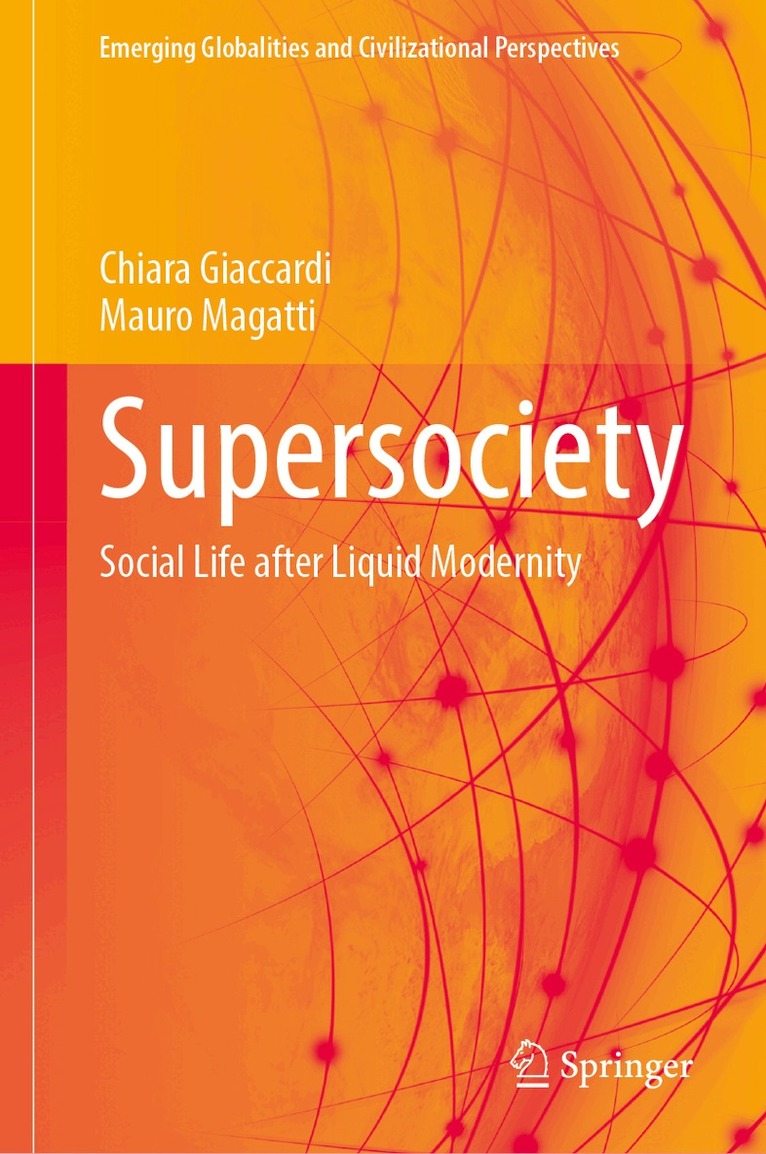
This book extends Zygmunt Bauman's concept of liquid modernity and introduces the concept of the supersociety to signify an era of unprecedented convergence and interconnection of three dimensions at a global scale. These dimensions are: the techno-economic sphere, the ecosphere, and the noosphere (the realm of culture, information, and knowledge production). The authors state that this shift necessitates a nuanced and complex analytical framework to comprehend the dynamics at play, as the traditional notion of “society” is no longer adequate. In contrast to the process of globalisation, the authors view this supersociety as engendering a non-linear integration and greater verticalisation, while simultaneously increasing inequalities and igniting novel conflicts. This raises the risk of entering a phase of systemic irrationality, as reflected in the contemporary polycrisis. According to the authors, a turning point lies in recognising the relational character of human life, as conceived by science in the past century. This recognition necessitates investing in living intelligence and social generativity as potential avenues for addressing the challenges emerging in supersociety.Written in an engaging style, this book is meant for academic and general readers interested in political and social transformations, social and cultural life, and globalisation.
Häftad, Italienska, 2020
178 kr
Skickas inom 5-8 vardagar
Inbunden, Engelska, 2013
1 160 kr
Tillfälligt slut
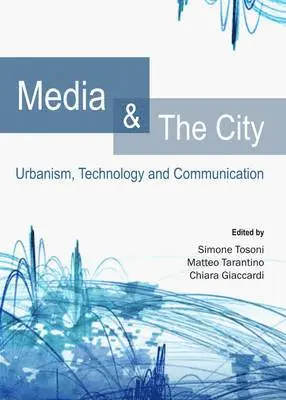
The percentage of people living in cities and the adoption rates of communication technologies continue to grow across the planet. Our age has come to be defined as one of urbanism and communication; but how are those two intertwined? How do they shape each other? Where and in which ways do they diverge, support or fold into each other? As new tensions emerge and old ones find new solutions, social sciences are forced into a dialogue with media studies and urban studies in order to make sense of the new reality. New theoretical and methodological paradigms are urgently needed, and can be produced only through a fertile and eclectic dialogue. This volume presents some of the latest research in this exciting, cross-disciplinary field. Issues of conflict, mobility, crime, art, memory, ethnicity, identity, and city marketing and branding come under rigorous scrutiny in their mutual and constitutive relationship with urban space and communicative technologies and practices. The volume is divided into three broad sections. The first section deals with the role of media in the social production of urban space – that is, with how media interact with other forces in giving shape to the materiality of the city. The second section deals with how urban space acts as a context for a variety of media-related practices – especially in relation to the popularization of mobile geo-localization technologies which have given us mass phenomena such as Foursquare. The third and final section deals with how urban space is mediatised and communicated through ICTs – or in other terms, how urban space is represented by specific media through specific discursive strategies.