Chirantan Chatterjee - Böcker
Visar alla böcker från författaren Chirantan Chatterjee. Handla med fri frakt och snabb leverans.
2 produkter
2 produkter
Del 4 - World Scientific Series In Grand Public Policy Challenges Of The 21st Century
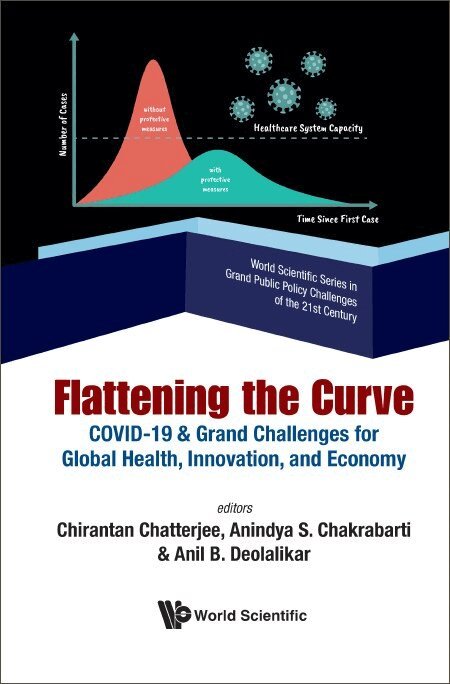
Flattening The Curve: Covid-19 & Grand Challenges For Global Health, Innovation, And Economy
Inbunden, Engelska, 2023
2 373 kr
Skickas inom 3-6 vardagar
One of the key issues the world grappled with during COVID-19 was the distributional implications of lockdowns globally. The shadow of lockdown policies continues when nations still try to emerge out of the pandemic. Heterogeneity herein over time, country and even within nations in policy making resulted in unintended consequences and debates between citizens, scientists, policy makers and civil society. Responses to COVID-19 meanwhile tried to balance a long run approach which involved the health sector, built on an innovation-oriented mindset and kept in mind the broader economic implications of policy decisions for the future.Flattening the Curve is an effort to summarize these learnings from COVID-19, especially for future pandemics in this age of zoonotic diseases and the Anthropocene. Assembling scholars, scientists, innovators and entrepreneurs from across a variety of fields, this edited volume brings an interdisciplinary understanding to how the world can better respond socially to pandemics. It should be of immense value for students, scholars, policy makers and researchers in public policy, global health, economics, science and innovation policy, as well as regulation and business.
Governing The Asian Century: Innovation, Human Capital, And Inclusive Development In 21st Century China And India
Inbunden, Engelska, 2026
1 091 kr
Kommande
The book Governing the Asian Century: Innovation, Human Capital, and Inclusive Development in 21st Century China and India examines the parallel and increasingly interconnected paths of China and India as they transition from manufacturing to innovation-driven economies. The volume argues that true progress must be measured by human factors — such as education quality, health systems, and mental health — rather than just traditional economic indicators like GDP or patent counts, which often mask growing inequality. Covering topics from intellectual property and industrial digitalization to education and healthcare reform, the analysis highlights that while both nations' systems offer unique advantages — China's centralized engineering skills versus India's pluralistic flexibility — rapid growth has often come at the cost of human well-being, aligning with the Easterlin paradox. The book concludes by emphasizing the need for targeted co-specialization and a shift toward fair, purpose-driven growth for sustainable development in the 21st century Asia and the world.