Anil B. Deolalikar - Böcker
Visar alla böcker från författaren Anil B. Deolalikar. Handla med fri frakt och snabb leverans.
7 produkter
7 produkter
1 061 kr
Skickas inom 10-15 vardagar
The theme of this book is that economic growth is key, but institutions and other national and subnational attributes matter as well. They are critical to explaining differences in social development and poverty reduction across countries and subnational areas that cannot be accounted for by growth alone. The book concludes that a more complete strategy needs to consider various institutional factors at the national and subnational levels to achieve rapid and sustained poverty reduction. Indeed, paying attention to these factors will benefit both growth and poverty reduction.
3 505 kr
Skickas inom 7-10 vardagar
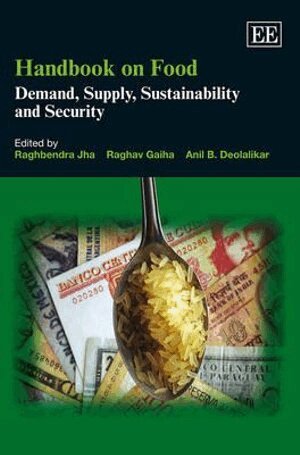
The global population is forecasted to reach 9.4 billion by 2050, with much of this increase concentrated in developing regions and cities. Ensuring adequate food and nourishment to this large population is a pressing economic, moral and even security challenge and requires research (and action) from a multi-disciplinary perspective.This book provides the first such integrated approach to tackling this problem by addressing the multiplicity of challenges posed by rising global population, diet diversification and urbanization in developing countries and climate change.It examines key topics such as:the impact of prosperity on food demandthe role of international trade in addressing food insecuritythe challenge posed by greenhouse gas emissions from agriculture and land degradationthe implication on labor markets of severe under-nutritionviability of small scale farmsstrategies to augment food availability.The Handbook on Food would be a welcome supplementary text for courses on development economics, particularly those concentrating on agricultural development, climate change and food availability, as well as nutrition.Contributors include: Anshuman Adheleya, Alok Adheleya, M. Das, D. Dawe, O. Ecker, C.L. Gilbert, D. Goswami, J.E. Gready, D. Headey, K.S. Imai, S. Jha, N. Kaicker, S. Kaur, V.S. Kulkarni, A. Mahal, K. Mathur, K. Otsuka, S. Pfuderer, A. Sarris, C. Sathyamala, J. Schmidhuber, P.V. Srinivasan, L. Sutton, G. Thapa, P. Timmer, J.-F. Trinh Tan, F.N. Tubiello, P. Warr, J. You
754 kr
Skickas inom 7-10 vardagar
The global population is forecasted to reach 9.4 billion by 2050, with much of this increase concentrated in developing regions and cities. Ensuring adequate food and nourishment to this large population is a pressing economic, moral and even security challenge and requires research (and action) from a multi-disciplinary perspective.This book provides the first such integrated approach to tackling this problem by addressing the multiplicity of challenges posed by rising global population, diet diversification and urbanization in developing countries and climate change.It examines key topics such as:the impact of prosperity on food demandthe role of international trade in addressing food insecuritythe challenge posed by greenhouse gas emissions from agriculture and land degradationthe implication on labor markets of severe under-nutritionviability of small scale farmsstrategies to augment food availability.The Handbook on Food would be a welcome supplementary text for courses on development economics, particularly those concentrating on agricultural development, climate change and food availability, as well as nutrition.Contributors include: Anshuman Adheleya, Alok Adheleya, M. Das, D. Dawe, O. Ecker, C.L. Gilbert, D. Goswami, J.E. Gready, D. Headey, K.S. Imai, S. Jha, N. Kaicker, S. Kaur, V.S. Kulkarni, A. Mahal, K. Mathur, K. Otsuka, S. Pfuderer, A. Sarris, C. Sathyamala, J. Schmidhuber, P.V. Srinivasan, L. Sutton, G. Thapa, P. Timmer, J.-F. Trinh Tan, F.N. Tubiello, P. Warr, J. You
2 183 kr
Skickas inom 7-10 vardagar
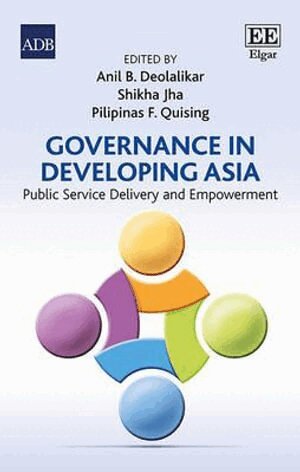
Governance in Developing Asia is one of the first books of its kind to provide an overview of the role that better governance and citizen empowerment can play in improving public service delivery in developing Asia. The World Development Report 2004 set a framework for public service delivery in terms of the short and long roads to accountability of service providers to citizens. More than a decade on, this important book revisits the issue and departs from the WDR framework, highlighting its shortcomings and offering alternative solutions.The contributors present fresh evidence on the relationship between governance and development outcomes, including growth and indicators of living standards. They argue that the Asia-Pacific region must do better in delivering essential public services if it wishes to continue improving the quality of life for millions of its people. They show how the quantity and quality of public services in a country can be improved if the government actively solicits citizen involvement in service delivery.Researchers and students of public policy and Asian studies will find this to be a useful read. Public policymakers and practitioners in government and non-government agencies will draw important lessons from the issues raised and solutions proposed in this book.Contributors: Y. Aiyar, B. Babajanian, S. Bhatnagar, G. Brosio, J.J. Capuno, J. de Ree, A.B. Deolalikar, X. Han, S. Jha, H.A. Khan, M. Pradhan, M.G Quibria, P.F. Quising, K. Sen, M. Walton, Z. Zhuang
571 kr
Skickas inom 7-10 vardagar
Governance in Developing Asia is one of the first books of its kind to provide an overview of the role that better governance and citizen empowerment can play in improving public service delivery in developing Asia. The World Development Report 2004 set a framework for public service delivery in terms of the short and long roads to accountability of service providers to citizens. More than a decade on, this important book revisits the issue and departs from the WDR framework, highlighting its shortcomings and offering alternative solutions.The contributors present fresh evidence on the relationship between governance and development outcomes, including growth and indicators of living standards. They argue that the Asia-Pacific region must do better in delivering essential public services if it wishes to continue improving the quality of life for millions of its people. They show how the quantity and quality of public services in a country can be improved if the government actively solicits citizen involvement in service delivery.Researchers and students of public policy and Asian studies will find this to be a useful read. Public policymakers and practitioners in government and non-government agencies will draw important lessons from the issues raised and solutions proposed in this book.Contributors: Y. Aiyar, B. Babajanian, S. Bhatnagar, G. Brosio, J.J. Capuno, J. de Ree, A.B. Deolalikar, X. Han, S. Jha, H.A. Khan, M. Pradhan, M.G Quibria, P.F. Quising, K. Sen, M. Walton, Z. Zhuang
Del 4 - World Scientific Series In Grand Public Policy Challenges Of The 21st Century
Flattening The Curve: Covid-19 & Grand Challenges For Global Health, Innovation, And Economy
Inbunden, Engelska, 2023
2 373 kr
Skickas inom 3-6 vardagar
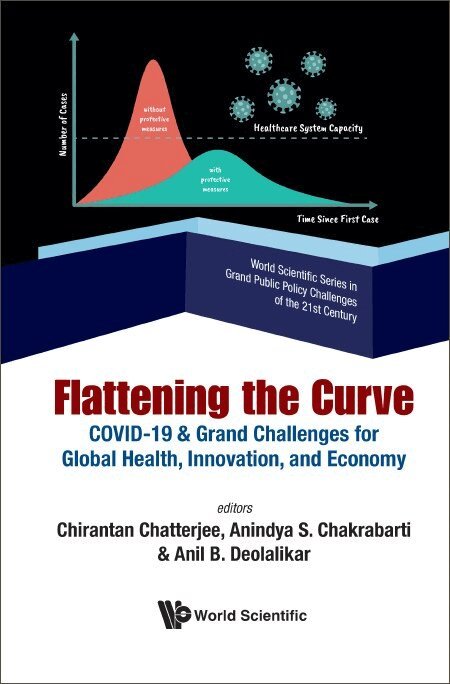
One of the key issues the world grappled with during COVID-19 was the distributional implications of lockdowns globally. The shadow of lockdown policies continues when nations still try to emerge out of the pandemic. Heterogeneity herein over time, country and even within nations in policy making resulted in unintended consequences and debates between citizens, scientists, policy makers and civil society. Responses to COVID-19 meanwhile tried to balance a long run approach which involved the health sector, built on an innovation-oriented mindset and kept in mind the broader economic implications of policy decisions for the future.Flattening the Curve is an effort to summarize these learnings from COVID-19, especially for future pandemics in this age of zoonotic diseases and the Anthropocene. Assembling scholars, scientists, innovators and entrepreneurs from across a variety of fields, this edited volume brings an interdisciplinary understanding to how the world can better respond socially to pandemics. It should be of immense value for students, scholars, policy makers and researchers in public policy, global health, economics, science and innovation policy, as well as regulation and business.
Governing The Asian Century: Innovation, Human Capital, And Inclusive Development In 21st Century China And India
Inbunden, Engelska, 2026
1 091 kr
Kommande
The book Governing the Asian Century: Innovation, Human Capital, and Inclusive Development in 21st Century China and India examines the parallel and increasingly interconnected paths of China and India as they transition from manufacturing to innovation-driven economies. The volume argues that true progress must be measured by human factors — such as education quality, health systems, and mental health — rather than just traditional economic indicators like GDP or patent counts, which often mask growing inequality. Covering topics from intellectual property and industrial digitalization to education and healthcare reform, the analysis highlights that while both nations' systems offer unique advantages — China's centralized engineering skills versus India's pluralistic flexibility — rapid growth has often come at the cost of human well-being, aligning with the Easterlin paradox. The book concludes by emphasizing the need for targeted co-specialization and a shift toward fair, purpose-driven growth for sustainable development in the 21st century Asia and the world.