Chris Pearson - Böcker
Visar alla böcker från författaren Chris Pearson. Handla med fri frakt och snabb leverans.
9 produkter
9 produkter
855 kr
Skickas inom 7-10 vardagar
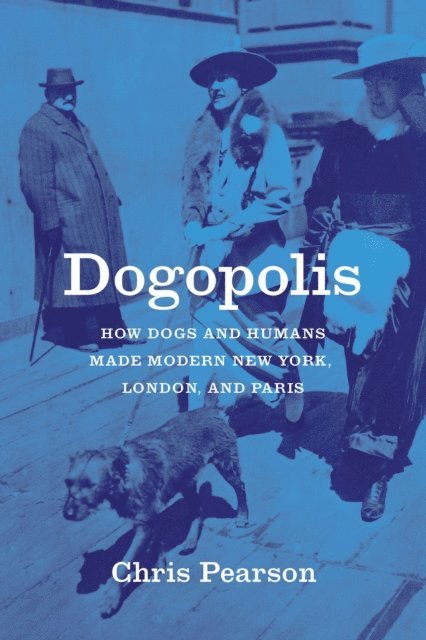
Stroll through any American or European city today and you probably won’t get far before seeing a dog being taken for a walk. It’s expected that these domesticated animals can easily navigate sidewalks, streets, and other foundational elements of our built environment. But what if our cities were actually shaped in response to dogs more than we ever realized?Chris Pearson’s Dogopolis boldly and convincingly asserts that human-canine relations were a crucial factor in the formation of modern urban living. Focusing on New York, London, and Paris from the early nineteenth century into the 1930s, Pearson shows that human reactions to dogs significantly remolded them and other contemporary western cities. It’s an unalterable fact that dogs—often filthy, bellicose, and sometimes off-putting—run away, spread rabies, defecate, and breed wherever they like, so as dogs became a more and more common in nineteenth-century middle-class life, cities had to respond to people’s fear of them and revulsion at their least desirable traits. The gradual integration of dogs into city life centered on disgust at dirt, fear of crime and vagrancy, and the promotion of humanitarian sentiments. On the other hand, dogs are some people’s most beloved animal companions, and human compassion and affection for pets and strays were equally powerful forces in shaping urban modernity. Dogopolis details the complex interrelations among emotions, sentiment, and the ways we manifest our feelings toward what we love—showing that together they can actually reshape society.
238 kr
Skickas inom 7-10 vardagar
Stroll through any American or European city today and you probably won’t get far before seeing a dog being taken for a walk. It’s expected that these domesticated animals can easily navigate sidewalks, streets, and other foundational elements of our built environment. But what if our cities were actually shaped in response to dogs more than we ever realized?Chris Pearson’s Dogopolis boldly and convincingly asserts that human-canine relations were a crucial factor in the formation of modern urban living. Focusing on New York, London, and Paris from the early nineteenth century into the 1930s, Pearson shows that human reactions to dogs significantly remolded them and other contemporary western cities. It’s an unalterable fact that dogs—often filthy, bellicose, and sometimes off-putting—run away, spread rabies, defecate, and breed wherever they like, so as dogs became a more and more common in nineteenth-century middle-class life, cities had to respond to people’s fear of them and revulsion at their least desirable traits. The gradual integration of dogs into city life centered on disgust at dirt, fear of crime and vagrancy, and the promotion of humanitarian sentiments. On the other hand, dogs are some people’s most beloved animal companions, and human compassion and affection for pets and strays were equally powerful forces in shaping urban modernity. Dogopolis details the complex interrelations among emotions, sentiment, and the ways we manifest our feelings toward what we love—showing that together they can actually reshape society.
Mobilizing Nature
The Environmental History of War and Militarization in Modern France
Inbunden, Engelska, 2012
1 100 kr
Tillfälligt slut
Mobilizing nature traces the environmental history of war and militarisation in France, from the creation of Châlons Camp in 1857 to military environmentalist policies in the twentieth century. It offers a fresh perspective on the well-known histories of the Franco-Prussian War, Western Front (1914-18), Second World War, Cold War and the anti-base campaign at Larzac, whilst uncovering the largely 'hidden' history of the numerous military bases and other installations that pepper the French countryside. Mobilising nature argues that the history of war and militarisation can only be fully understood if human and environmental histories are considered in tandem. Preparing for and conducting wars were only made possible through the active manipulation and mobilisation of topographies, climatic conditions, vegetation and animals. But the military has not monopolised the mobilisation of nature. Protesters against militarisation have consistently drawn on images of peaceful and productive civilian environments as the preferable alternative to destructive tanks and bombs. Written in an accessible style, Mobilizing nature will appeal to readers interested in modern France, environmental history, military geographies and histories, anti-military protests, and environmentalism.
2 157 kr
Skickas inom 10-15 vardagar
Preparation for warfare materially reshapes rural landscapes and environments; this is a comparative history and geography of militarized landscapes. The black smoke billowing from burning oil wells during the Gulf War of 1990-91 directed media and public attention towards war's devastating environmental impact. Yet even before the first bomb is dropped, preparation for warfare materially and imaginatively reshapes rural landscapes and environments. This volume is the first to explore the comparative histories and geographies of militarized landscapes. Moving beyond the narrow definition of militarized landscapes as theatres of war, it treats them as simultaneously material and cultural sites that have been partially or fully mobilized to achieve military aims. Ranging from the Korean DMZ to nuclear testing sites in the American West, and from Gettysburg to Salisbury Plain, "Militarized Landscapes" focuses on these often secretive, hidden, dangerous and invariably controversial sites that occupy huge swathes of national territories.
154 kr
Skickas inom 5-8 vardagar
Mobilizing nature
The environmental history of war and militarization in modern France
Häftad, Engelska, 2015
364 kr
Skickas inom 5-8 vardagar
Mobilizing nature traces the environmental history of war and militarization in France, from the creation of Châlons Camp in 1857 to military environmentalist policies in the twentieth century. It offers a fresh perspective on the well-known histories of the Franco-Prussian War, Western Front (1914-18), Second World War, Cold War and the anti-base campaign at Larzac, whilst uncovering the largely 'hidden' history of the numerous military bases and other installations that pepper the French countryside. Mobilizing nature argues that the history of war and militarization can only be fully understood if human and environmental histories are considered in tandem. Preparing for and conducting wars were only made possible through the active manipulation and mobilization of topographies, climatic conditions, vegetation and animals. But the military has not monopolized the mobilization of nature. Protesters against militarization have consistently drawn on images of peaceful and productive civilian environments as the preferable alternative to destructive tanks and bombs. Written in an accessible style, Mobilizing nature will appeal to readers interested in modern France, environmental history, military geographies and histories, anti-military protests, and environmentalism.
121 kr
Skickas
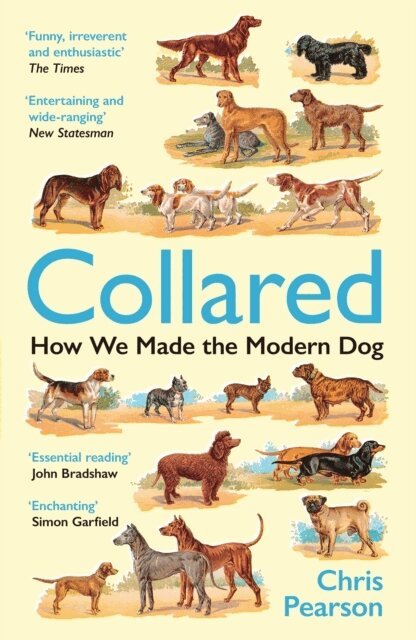
A Church Times Book of the Year 2024'Essential reading' John Bradshaw, author of In Defence of Dogs'Fascinating' Telegraph'Funny, irreverent and enthusiastic, [Pearson] parades his love for all things canine' The Times'Thought-provoking and often surprising' Country LifeThe Week magazine 'Book of the Week'Dogs are our constant companions: models of loyalty and unconditional love for millions around the world. But these beloved animals are much more than just our pets - and our shared history is far richer and more complex than you might assume.Here, historian and dog lover Chris Pearson reveals how the shifting fortunes of dogs hold a mirror to our changing society, from the evolution of breeding standards to the fight for animal rights. Wherever humans have gone, dogs have followed, changing size, appearance and even jobs along the way - from the forests of medieval Europe, where greyhounds chased down game for royalty, to the frontlines of twentieth-century conflicts, where dogs carried messages and hauled gun carriages.Despite vast social change, however, the power of the human-canine bond has never diminished. By turns charming, thought-provoking and surprising, Collared reveals the fascinating tale of how we made the modern dog.
253 kr
Skickas
A Church Times Book of the Year 2024'Essential reading' John Bradshaw, author of In Defence of Dogs'Fascinating' Telegraph'Funny, irreverent and enthusiastic, [Pearson] parades his love for all things canine' The Times'Thought-provoking and often surprising' Country LifeThe Week magazine 'Book of the Week'Dogs are our constant companions: models of loyalty and unconditional love for millions around the world. But these beloved animals are much more than just our pets - and our shared history is far richer and more complex than you might assume.Here, historian and dog lover Chris Pearson reveals how the shifting fortunes of dogs hold a mirror to our changing society, from the evolution of breeding standards to the fight for animal rights. Wherever humans have gone, dogs have followed, changing size, appearance and even jobs along the way - from the forests of medieval Europe, where greyhounds chased down game for royalty, to the frontlines of twentieth-century conflicts, where dogs carried messages and hauled gun carriages.Despite vast social change, however, the power of the human-canine bond has never diminished. By turns charming, thought-provoking and surprising, Collared reveals the fascinating tale of how we made the modern dog.
502 kr
Skickas inom 7-10 vardagar
This fully updated Reader provides a comprehensive review of recent research and legislation relating to domestic violence and its consequences for children, and identifies the implications for practice.It is divided into three parts. Part One describes evidence for the links between domestic violence and the concomitant abuse of children and assesses the effects on children's future well-being. Part Two is a comprehensive and accessible guide to relevant current criminal and civil legislation. Highlighting the success of multi-agency approaches, the final part details practical issues for interventions with children and their carers, male perpetrators, and, new to this edition, women.Endorsed by children's charities including the NSPCC and Barnardo's, Making an Impact enables professionals working with children to develop informed, sophisticated and collaborative child care and protection responses for children who are experiencing domestic violence.