Christian Bouville – författare
Visar alla böcker från författaren Christian Bouville. Handla med fri frakt och snabb leverans.
5 produkter
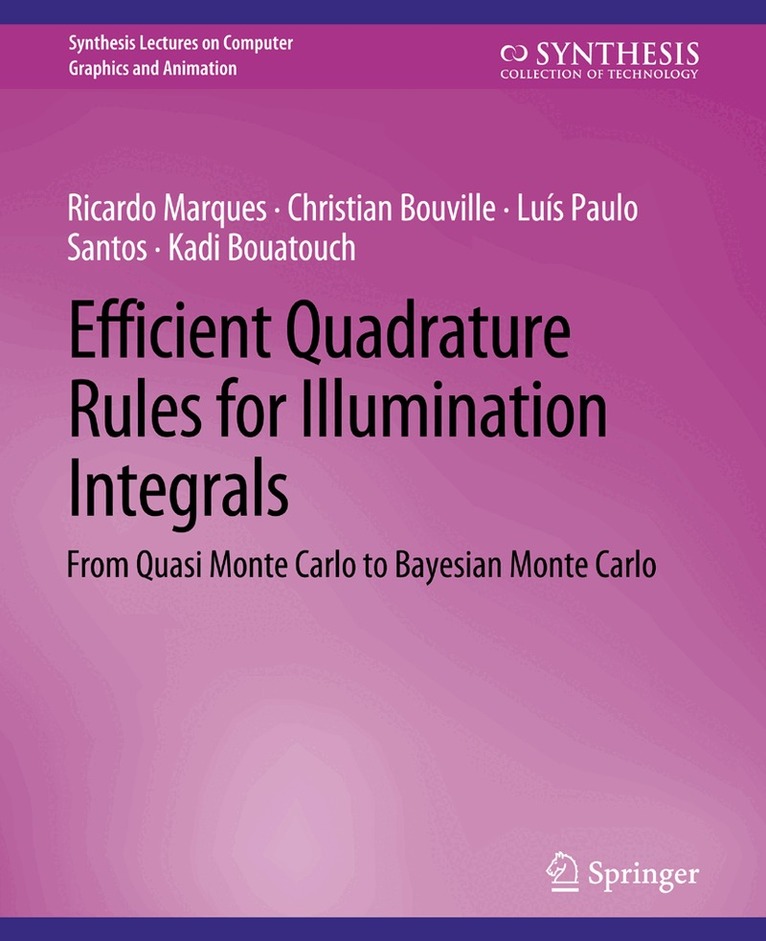
Efficient Quadrature Rules for Illumination Integrals
From Quasi Monte Carlo to Bayesian Monte Carlo
Av Ricardo Marques, Christian Bouville m. fl.
Häftad, 2015
388 kr
Lägg i varukorg
Rendering photorealistic images is a costly process which can take up to several days in the case of high quality images. In most cases, the task of sampling the incident radiance function to evaluate the illumination integral is responsible for an important share of the computation time. …
Efficient Quadrature Rules for Illumination Integrals
From Quasi Monte Carlo to Bayesian Monte Carlo
Av Kadi Bouatouch, Luis Paulo Santos m. fl.
E-bok, 2022
489 kr
Lägg i varukorg
Rendering photorealistic images is a costly process which can take up to several days in the case of high quality images. In most cases, the task of sampling the incident radiance function to evaluate the illumination integral is responsible for an important share of the computation time. …
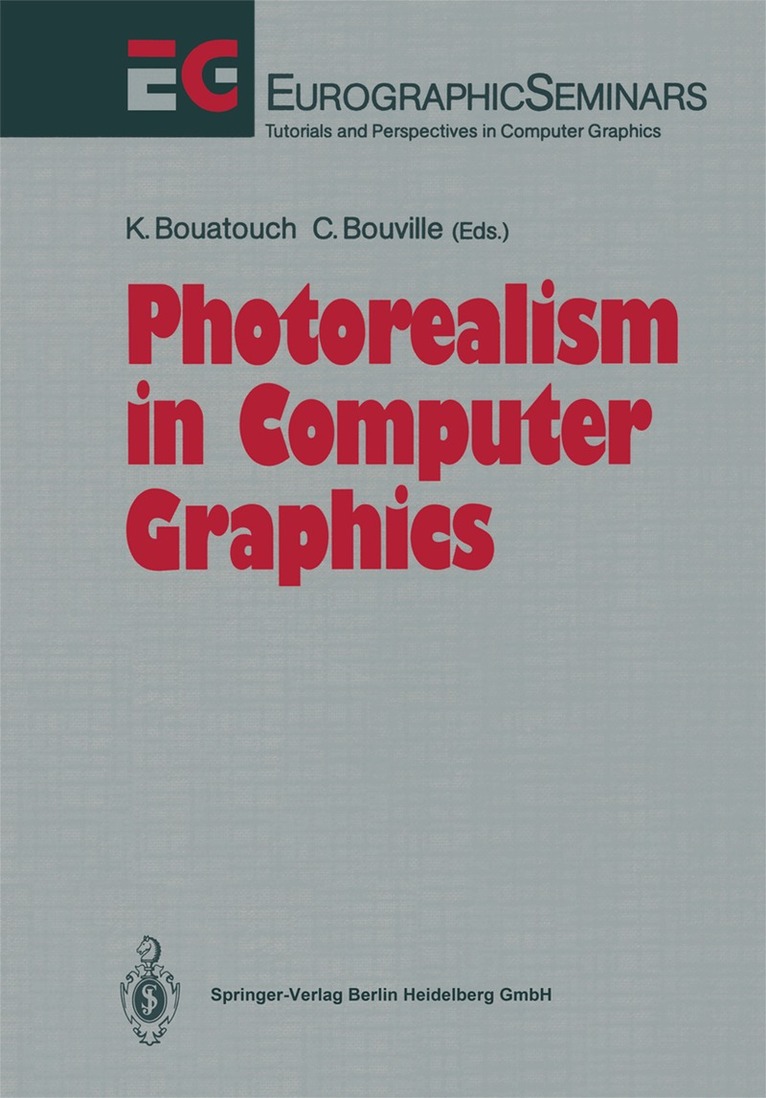
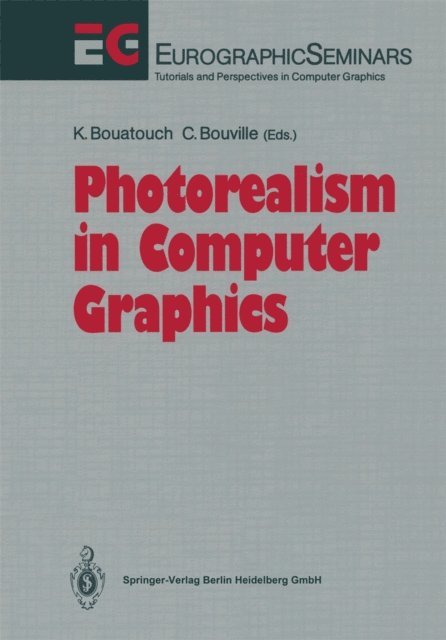
Photorealism in Computer Graphics
Av Kadi Bouatouch, Christian Bouville
Inbunden, 1992
1690 kr
Lägg i varukorg
The goal of this book is to present the most advanced research works in realistic computer generated images. It is made up of the papers presented during a Eurographics workshop that has been held in Rennes (France) on June 1990. Although realism in computer graphics has existed for many years, we …
Photorealism in Computer Graphics
Av Kadi Bouatouch, Christian Bouville
Häftad, 2010
1690 kr
Lägg i varukorg
The goal of this book is to present the most advanced research works in realistic computer generated images. It is made up of the papers presented during a Eurographics workshop that has been held in Rennes (France) on June 1990. Although realism in computer graphics has existed for many years, we …
Photorealism in Computer Graphics
Av Christian Bouville, Kadi Bouatouch
E-bok, 2013
2174 kr
Lägg i varukorg
The goal of this book is to present the most advanced research works in realistic computer generated images. It is made up of the papers presented during a Eurographics workshop that has been held in Rennes (France) on June 1990. Although realism in computer graphics has existed for many years, we …