Christian Knoeller – författare
Visar alla böcker från författaren Christian Knoeller. Handla med fri frakt och snabb leverans.
2 produkter
2 produkter
433 kr
Tillfälligt slut
Using Bakhtinian theory, this study reveals how and why readers routinely refer to the words and ideas of others to interpret the meanings and implications of the books they read.In a public high school classroom in the San Francisco Bay area, a group of twelfth graders have decided themselves to enroll for Advanced-Placement English. Faced with unprecedented diversity for such a class in terms of academic and ethnic backgrounds, veteran teacher Joan Cone dared to trust her students to lead their own discussions of a variety of provocative authors including Baldwin, Didion, Malcolm X, and Woolf. Voicing Ourselves examines a year's worth of such sessions, revealing how a teacher's role is transformed, and, moreover, offering an important component in any teacher's repertoire of instructional strategies: student-led discussion. Above all, the book shows the startling success of students licensed to engage one another directly in talk about books, revealing the richly social tapestry of such conversations.
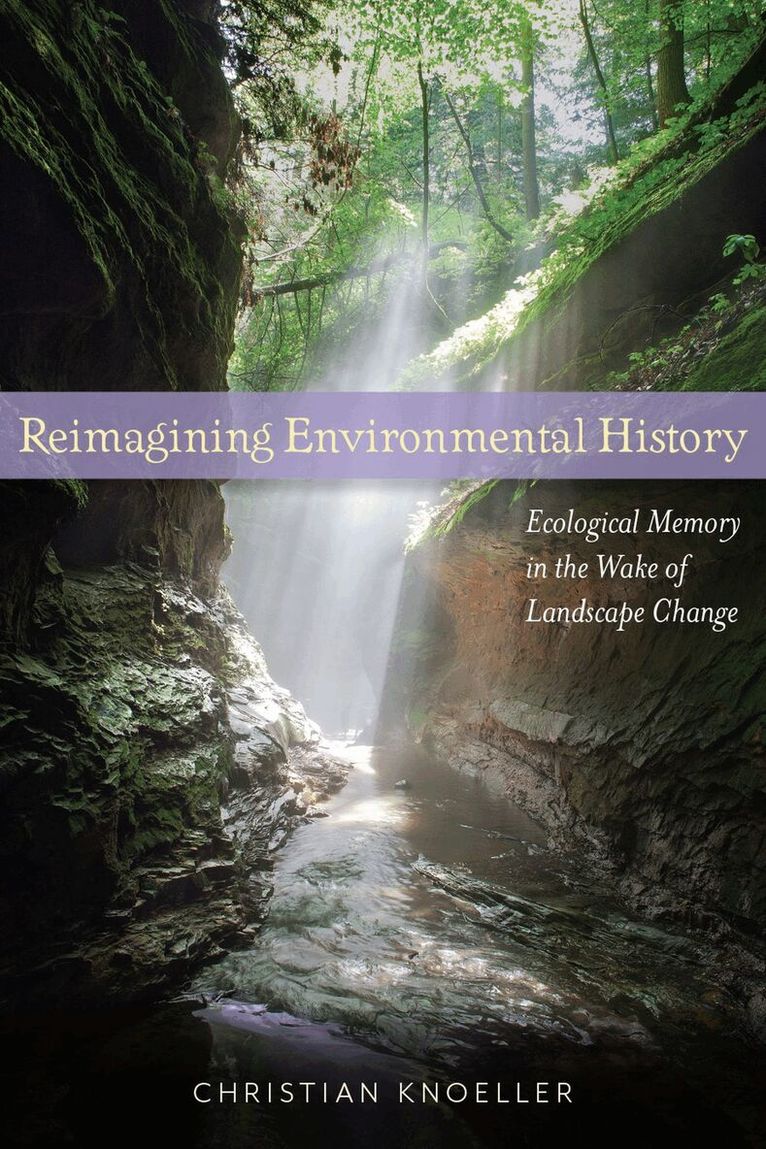
Reimagining Environmental History
Ecological Memory in the Wake of Landscape Change
Häftad, Engelska, 2017
388 kr
Skickas inom 5-8 vardagar
Christian Knoeller presents a radical reinterpretation of environmental history set in the heartland of America. In an excellent model of narrative-based scholarship, this book dynamically reimagines American environmentalism across generations of writers, artists, and scientists. Knoeller starts out with Audubon, and cites Thoreau’s journals in the 1850s as he assesses an early 17th century account of New England’s natural resources by William Wood, showing the epic decline in game and bird populations in Concord. This reading of environmental history is replicated throughout with a gallery of novelists, poets, essayists, and other commentators as they explore ecological memory and environmental destruction. In apt discussions of Matthiessen, Lopez, Wendell Berry, William Stafford and many others, Knoeller offers vibrant insights into literary history. He also cites his own memoir of perpetual development on his family’s farm in Indiana, enriching the scholarship and making an urgent plea for the healing aesthetics of the imagination. Reading across centuries and genres, Knoeller gives us a vibrant new appraisal of Midwestern/North American interior literary traditions and makes clear how vital environmental writing is to this region. To date, no one has written such an eloquent and comprehensive cross-genre analysis of Midwestern environmental literature.