Christian R. Hirsch – författare
Visar alla böcker från författaren Christian R. Hirsch. Handla med fri frakt och snabb leverans.
5 produkter
5 produkter
Häftad, Engelska, 2016
619 kr
Skickas inom 5-8 vardagar
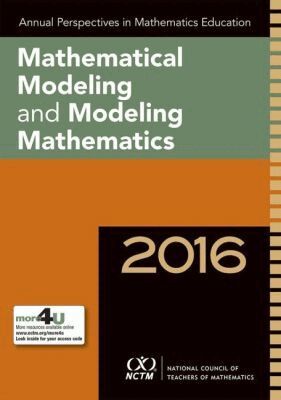
Employing Mathematical Modeling to Engage Students at All LevelsMathematical modeling plays an increasingly important role both in real-life applications—in engineering, business, the social sciences, climate study, advanced design, and more—and within mathematics education itself. This 2016 volume of Annual Perspectives in Mathematics Education (APME) focuses on this key topic from a wide variety of perspectives and distinguishes it from modeling mathematics. The book’s 25 chapters are grouped into seven sections:Understanding Models and ModelingUsing Models to Represent MathematicsTeaching and Learning about Mathematical ModelingMathematical Modeling as a Vehicle for STEM LearningDesigning Modeling-Oriented Tasks and CurriculaAssessing Mathematical ModelingSupporting Teachers’ Learning about Mathematical ModelingWritten by leading mathematics educators, mathematicians, and researchers, the chapters in this volume include reflections on the meaning and practice of modeling, case studies, research observations, and proven strategies for implementation in the classroom and in teacher education. With its thorough consideration of this essential subject, this year’s volume of APME supports educators at all levels as they incorporate modeling in their instructional practice to improve the learning of mathematics and its applications for all students.
Häftad, Engelska, 2010
672 kr
Skickas inom 5-8 vardagar
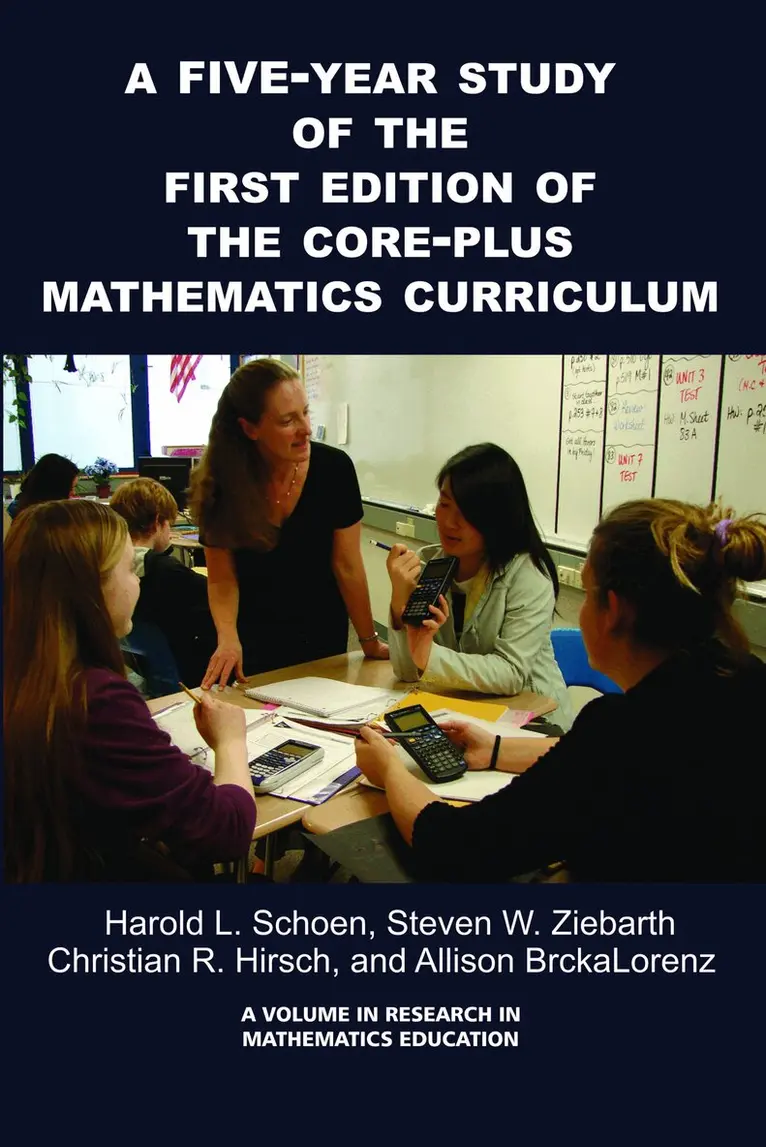
The study reported in this volume adds to the growing body of evaluation studies that focus on the use of NSF-funded Standards-based high school mathematics curricula. Most previous evaluations have studied the impact of field-test versions of a curriculum. Since these innovative curricula were so new at the time of many of these studies, students and teachers were relative novices in their use. These earlier studies were mainly one year or less in duration. Students in the comparison groups were typically from schools in which some classes used a Standards-based curriculum and other classes used a conventional curriculum, rather than using the Standards-based curriculum with all students as curriculum developers intended.The volume reports one of the first studies of the efficacy of Standards-based mathematics curricula with all of the following characteristics:· The study focused on fairly stable implementations of a first-edition Standards-based high school mathematics curriculum that was used by all students in each of three schools.· It involved students who experienced up to seven years of Standards-based mathematics curricula and instruction in middle school and high school.· It monitored students’ mathematical achievement, beliefs, and attitudes for four years of high school and one year after graduation.· Prior to the study, many of the teachers had one or more years of experience teaching the Standards-based curriculum and/or professional development focusing on how to implement the curriculum well.· In the study, variations in levels of implementation of the curriculum are described and related to student outcomes and teacher behavior variables.
Inbunden, Engelska, 2010
1 138 kr
Skickas inom 5-8 vardagar
The study reported in this volume adds to the growing body of evaluation studies that focus on the use of NSF-funded Standards-based high school mathematics curricula. Most previous evaluations have studied the impact of field-test versions of a curriculum. Since these innovative curricula were so new at the time of many of these studies, students and teachers were relative novices in their use. These earlier studies were mainly one year or less in duration. Students in the comparison groups were typically from schools in which some classes used a Standards-based curriculum and other classes used a conventional curriculum, rather than using the Standards-based curriculum with all students as curriculum developers intended.The volume reports one of the first studies of the efficacy of Standards-based mathematics curricula with all of the following characteristics:· The study focused on fairly stable implementations of a first-edition Standards-based high school mathematics curriculum that was used by all students in each of three schools.· It involved students who experienced up to seven years of Standards-based mathematics curricula and instruction in middle school and high school.· It monitored students’ mathematical achievement, beliefs, and attitudes for four years of high school and one year after graduation.· Prior to the study, many of the teachers had one or more years of experience teaching the Standards-based curriculum and/or professional development focusing on how to implement the curriculum well.· In the study, variations in levels of implementation of the curriculum are described and related to student outcomes and teacher behavior variables.
E-bok
Engelska, 2010481 kr
Läs direkt efter köp
The study reported in this volume adds to the growing body of evaluation studies that focus on the use of NSF-funded Standards-based high school mathematics curricula. Most previous evaluations have studied the impact of field-test versions of a curriculum. Since these innovative curricula were so new at the time of many of these studies, students and teachers were relative novices in their use. These earlier studies were mainly one year or less in duration. Students in the comparison groups were typically from schools in which some classes used a Standards-based curriculum and other classes used a conventional curriculum, rather than using the Standards-based curriculum with all students as curriculum developers intended.The volume reports one of the first studies of the efficacy of Standards-based mathematics curricula with all of the following characteristics:* The study focused on fairly stable implementations of a first-edition Standards-based high school mathematics curriculum that was used by all students in each of three schools.* It involved students who experienced up to seven years of Standards-based mathematics curricula and instruction in middle school and high school.* It monitored students' mathematical achievement, beliefs, and attitudes for four years of high school and one year after graduation.* Prior to the study, many of the teachers had one or more years of experience teaching the Standards-based curriculum and/or professional development focusing on how to implement the curriculum well.* In the study, variations in levels of implementation of the curriculum are described and related to student outcomes and teacher behavior variables.
E-bok
Engelska, 2010721 kr
Läs direkt efter köp
The study reported in this volume adds to the growing body of evaluation studies that focus on the use of NSF-funded Standards-based high school mathematics curricula. Most previous evaluations have studied the impact of field-test versions of a curriculum. Since these innovative curricula were so new at the time of many of these studies, students and teachers were relative novices in their use. These earlier studies were mainly one year or less in duration. Students in the comparison groups were typically from schools in which some classes used a Standards-based curriculum and other classes used a conventional curriculum, rather than using the Standards-based curriculum with all students as curriculum developers intended.The volume reports one of the first studies of the efficacy of Standards-based mathematics curricula with all of the following characteristics:* The study focused on fairly stable implementations of a first-edition Standards-based high school mathematics curriculum that was used by all students in each of three schools.* It involved students who experienced up to seven years of Standards-based mathematics curricula and instruction in middle school and high school.* It monitored students' mathematical achievement, beliefs, and attitudes for four years of high school and one year after graduation.* Prior to the study, many of the teachers had one or more years of experience teaching the Standards-based curriculum and/or professional development focusing on how to implement the curriculum well.* In the study, variations in levels of implementation of the curriculum are described and related to student outcomes and teacher behavior variables.