Christian Raffensperger – författare
293 kr
Skickas
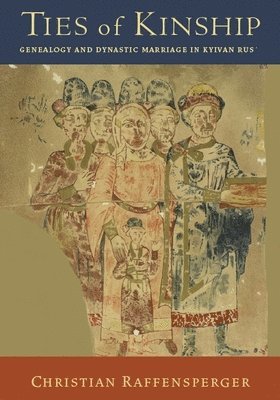
Ties of Kinship
Genealogy and Dynastic Marriage in Kyivan Rus´
434 kr
Skickas inom 5-8 vardagar
246 kr
Skickas inom 7-10 vardagar
2 479 kr
Skickas inom 10-15 vardagar
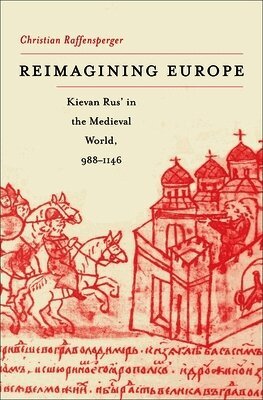
Reimagining Europe
Kievan Rus’ in the Medieval World, 988–1146
614 kr
Skickas inom 5-8 vardagar
706 kr
Läs direkt efter köp
What did medieval authors know about their world? Were they parochial and focused on just their monastery, town, or kingdom? Or were they aware of the broader medieval Europe that modern historians write about? This collection brings the focus back to medieval authors to see how they described their world. While we see that each author certainly had their own biases, the vast majority of them did not view the world as constrained to their small piece of it. Instead, they talked about the wider world, and often they had informants or textual sources that informed them about the world, even if they did not visit it themselves. This volume shows that they also used similar ideas to create space and identity – whether talking about the desert, the holy land, or food practices in their texts. By examining medieval authors and their own perceptions of their world, this collection offers a framework for discussions of medieval Europe in the twenty-first century.
706 kr
Läs direkt efter köp
What did medieval authors know about their world? Were they parochial and focused on just their monastery, town, or kingdom? Or were they aware of the broader medieval Europe that modern historians write about? This collection brings the focus back to medieval authors to see how they described their world. While we see that each author certainly had their own biases, the vast majority of them did not view the world as constrained to their small piece of it. Instead, they talked about the wider world, and often they had informants or textual sources that informed them about the world, even if they did not visit it themselves. This volume shows that they also used similar ideas to create space and identity – whether talking about the desert, the holy land, or food practices in their texts. By examining medieval authors and their own perceptions of their world, this collection offers a framework for discussions of medieval Europe in the twenty-first century.
710 kr
Läs direkt efter köp
Rulers and Rulership in the Arc of Medieval Europe challenges the dominant paradigm of what rulership is and who rulers are by decentering the narrative and providing a broad swath of examples from throughout medieval Europe. Within that territory, the prevalent idea of monarchy and kingship is overturned in favor of a broad definition of rulership.
This book will demonstrate to the reader that the way in which medieval Europe has been constructed in both the popular and scholarly imaginations is incorrect. Instead of a king we have multiple rulers, male and female, ruling concurrently. Instead of an independent church or a church striving for supremacy under the Gregorian Reform, we have a pope and ecclesiastical leaders making deals with secular rulers and an in-depth interconnection between the two. Finally, instead of a strong centralizing polity growing into statehood we see weak rulers working hand in glove with weak subordinates to make the polity as a whole function.
Medievalists, Byzantinists, and Slavists typically operate in isolation from one another. They do not read each other’s books, or engage with each other’s work. This book requires engagement from all of them to point out that the medieval Europe that they work in is one and the same and demands collaboration to best understand it.
710 kr
Läs direkt efter köp
Rulers and Rulership in the Arc of Medieval Europe challenges the dominant paradigm of what rulership is and who rulers are by decentering the narrative and providing a broad swath of examples from throughout medieval Europe. Within that territory, the prevalent idea of monarchy and kingship is overturned in favor of a broad definition of rulership.
This book will demonstrate to the reader that the way in which medieval Europe has been constructed in both the popular and scholarly imaginations is incorrect. Instead of a king we have multiple rulers, male and female, ruling concurrently. Instead of an independent church or a church striving for supremacy under the Gregorian Reform, we have a pope and ecclesiastical leaders making deals with secular rulers and an in-depth interconnection between the two. Finally, instead of a strong centralizing polity growing into statehood we see weak rulers working hand in glove with weak subordinates to make the polity as a whole function.
Medievalists, Byzantinists, and Slavists typically operate in isolation from one another. They do not read each other’s books, or engage with each other’s work. This book requires engagement from all of them to point out that the medieval Europe that they work in is one and the same and demands collaboration to best understand it.
762 kr
Läs direkt efter köp
The vast majority of studies on rulership in medieval Europe focus on one kingdom; one type of rule; or one type of ruler. This volume attempts to break that mold and demonstrate the breadth of medieval Europe and the various kinds of rulership within it.
How Medieval Europe was Ruled aims to demonstrate the multiplicity of types of rulers and polities that existed in medieval Europe. The contributors discuss not just kings or queens, but countesses, dukes, and town leadership. We see that rulers worked collaboratively with one another both across political boundaries and within their own borders in ways that are not evident in most current studies of kingship, inhibited by too narrow a focus. The volume also covers the breadth of medieval Europe from Scandinavia in the north to the Italian peninsula in the south, Iberia and the Anglo-Normans in the west to Rus, Byzantium and the Khazars in the east.
This book is geared towards a wide audience and thus provides a broad base of understanding via a clear explanation of concepts of rule in each of the areas that is covered. The book can be utilized in the classroom, to enhance the presentation of a medieval Europe survey or to discuss rulership more specifically for a region or all of Europe. Beyond the classroom, the book is accessible to all scholars who are interested in continuing to learn and expand their horizons.
762 kr
Läs direkt efter köp
The vast majority of studies on rulership in medieval Europe focus on one kingdom; one type of rule; or one type of ruler. This volume attempts to break that mold and demonstrate the breadth of medieval Europe and the various kinds of rulership within it.
How Medieval Europe was Ruled aims to demonstrate the multiplicity of types of rulers and polities that existed in medieval Europe. The contributors discuss not just kings or queens, but countesses, dukes, and town leadership. We see that rulers worked collaboratively with one another both across political boundaries and within their own borders in ways that are not evident in most current studies of kingship, inhibited by too narrow a focus. The volume also covers the breadth of medieval Europe from Scandinavia in the north to the Italian peninsula in the south, Iberia and the Anglo-Normans in the west to Rus, Byzantium and the Khazars in the east.
This book is geared towards a wide audience and thus provides a broad base of understanding via a clear explanation of concepts of rule in each of the areas that is covered. The book can be utilized in the classroom, to enhance the presentation of a medieval Europe survey or to discuss rulership more specifically for a region or all of Europe. Beyond the classroom, the book is accessible to all scholars who are interested in continuing to learn and expand their horizons.
793 kr
Läs direkt efter köp
This volume provides a collection of ‘imagined lives’ – individuals who, no matter their position on the social hierarchy, were crucial to the development of medieval Europe and the modern period that followed.
Based on primary source materials and the latest historical research, these literary accounts of otherwise unsourced or under-sourced individuals are written by leading scholars in the field. The book’s approach transcends the limitations of both historical narrative and literary fiction, offering a research-informed presentation of real people that is enriched by informed speculation and creative storytelling. This enriched presentation of the lives of these individuals offers the quickest route to understanding medieval culture, society, and intellectual thought. Crucially, the book treats the whole of Europe, broadly defined: both conventional areas of study such as England and France, and also lesser studied but no less important areas such as eastern Europe, Iberia, and the Balkans. The reader of Portraits of Medieval Europe encounters the diversity present in the European past: the resulting portraits – unique, personal, and engaging – offer not only a wide geographical scope but also perspective on the formation of European society in its fullest form.
This book is accessible and engaging for students new to medieval history as well as those wishing to expand their knowledge of medieval society.
732 kr
Läs direkt efter köp
This volume provides a collection of ‘imagined lives’ – individuals who, no matter their position on the social hierarchy, were crucial to the development of medieval Europe and the modern period that followed.
Based on primary source materials and the latest historical research, these literary accounts of otherwise unsourced or under-sourced individuals are written by leading scholars in the field. The book’s approach transcends the limitations of both historical narrative and literary fiction, offering a research-informed presentation of real people that is enriched by informed speculation and creative storytelling. This enriched presentation of the lives of these individuals offers the quickest route to understanding medieval culture, society, and intellectual thought. Crucially, the book treats the whole of Europe, broadly defined: both conventional areas of study such as England and France, and also lesser studied but no less important areas such as eastern Europe, Iberia, and the Balkans. The reader of Portraits of Medieval Europe encounters the diversity present in the European past: the resulting portraits – unique, personal, and engaging – offer not only a wide geographical scope but also perspective on the formation of European society in its fullest form.
This book is accessible and engaging for students new to medieval history as well as those wishing to expand their knowledge of medieval society.
294 kr
Läs direkt efter köp
791 kr
Skickas inom 7-10 vardagar
294 kr
Läs direkt efter köp
648 kr
Skickas inom 10-15 vardagar
2 511 kr
Skickas inom 10-15 vardagar
619 kr
Skickas inom 10-15 vardagar
2 333 kr
Skickas inom 10-15 vardagar
623 kr
Skickas inom 10-15 vardagar
2 511 kr
Skickas inom 10-15 vardagar
633 kr
Skickas inom 10-15 vardagar
2 438 kr
Skickas inom 10-15 vardagar
629 kr
Skickas inom 10-15 vardagar
2 511 kr
Skickas inom 10-15 vardagar
604 kr
Skickas inom 10-15 vardagar
745 kr
Läs direkt efter köp
Name Unknown: The Life of a Rusian Queen offers an example of an eastern European queen as a corrective to the western European focus of medieval queenship studies.
Through a chronological approach, this book looks beyond the popular biographies of royal women such as Eleanor of Aquitaine and Berengaria of Castile and gathers material from sources throughout Europe. It engages with modern queenship studies literature to create a collective biography of a Rusian queen through the various cycles of her life from the marriage of eight-year-old Verkhuslava to the death of the ruler of Minsk whose generosity is recorded, but not her name. For medievalists interested in women and queens, Name Unknown: The Life of a Rusian Queen provides an entry point to an area of Europe rarely studied in that literature. For Slavists, it presents a way of looking at medieval Rusian women that has not yet appeared in this scholarly tradition. Ultimately, this biography integrates Rus, and eastern Europe, into the medieval world and acts as an important reminder that women are essential to our history and thus to our overall understanding of the past.
This book is of great use to students and scholars interested in the history of women, queenship, and medieval Europe.
745 kr
Läs direkt efter köp
Name Unknown: The Life of a Rusian Queen offers an example of an eastern European queen as a corrective to the western European focus of medieval queenship studies.
Through a chronological approach, this book looks beyond the popular biographies of royal women such as Eleanor of Aquitaine and Berengaria of Castile and gathers material from sources throughout Europe. It engages with modern queenship studies literature to create a collective biography of a Rusian queen through the various cycles of her life from the marriage of eight-year-old Verkhuslava to the death of the ruler of Minsk whose generosity is recorded, but not her name. For medievalists interested in women and queens, Name Unknown: The Life of a Rusian Queen provides an entry point to an area of Europe rarely studied in that literature. For Slavists, it presents a way of looking at medieval Rusian women that has not yet appeared in this scholarly tradition. Ultimately, this biography integrates Rus, and eastern Europe, into the medieval world and acts as an important reminder that women are essential to our history and thus to our overall understanding of the past.
This book is of great use to students and scholars interested in the history of women, queenship, and medieval Europe.
762 kr
Läs direkt efter köp
Providing an inclusive history of the entire territory and people of medieval Europe from 250-1450, this volume examines not just the political history but the rich social and cultural history, too.
European history has functioned as a defining force in the modern worldview of many countries and their citizens. Whether viewed positively or negatively, that history has shaped the world in many ways. To understand Europe, it is essential to have a clear view of its medieval history. Proceeding from the decline of the Roman Empire, with the arrival of Germanic and Turkic peoples, through the development of polities in medieval Europe from Iberia to Ireland, Scandinavia to Sicily, and all the way to the taiga, European history grows and changes over the medieval period which we bring to a close with the final fall of Rome, the capture of Constantinople by the Ottomans in 1453. Traditional histories of medieval Europe focus primarily on the West. This history attempts to include the breadth of the continent, from Scandinavia to the Mediterranean and from the Atlantic to the Urals, from the nomads of the steppe to the Sami herders in the north and from the vernacular literacies of Alfred the Great of Wessex to Boris’s kingdom in Bulgaria. The chapters pair eastern and western elements to help make the point that all of Europe was undergoing changes, not only the west, who then pushed those changes onto the east which has been the common narrative.
Medieval Europe 250-1450 is essential reading for all students of Medieval Europe and, in particular, those who wish to understand the interactions and parallels between east and west, north and south.