Christiane Gruber - Böcker
Visar alla böcker från författaren Christiane Gruber. Handla med fri frakt och snabb leverans.
7 produkter
7 produkter
658 kr
Skickas inom 11-20 vardagar
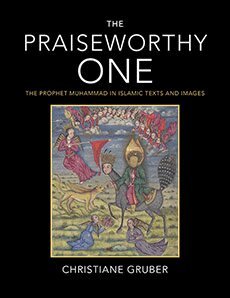
In the wake of controversies over printing or displaying images of the Prophet Muhammad, Christiane Gruber's aim is to bring back into scholarly and public discussion the 'lost' history of imagining the Prophet in Islamic cultures. By studying the various verbal and visual constructions of the Prophet's character and persona over the course of more than one thousand years, Gruber seeks to correct public misconceptions and restore to Islam its rich artistic heritage, illuminating the critical role Muhammad has played in Muslim constructions of self and community at different times and in various cultural contexts. The Praiseworthy One is an exploration of the Prophet Muhammad's significance in Muslim life and thought from the beginning of Islam to today. It pays particular attention to procedures of narration, veneration, and sacralization. Gruber stresses that a fruitful approach to extant textual and visual materials is one that emphasizes the harnessing of Muhammad's persona as a larger metaphor to explain both past and present historical events, to build and delineate a sense of community, and to help individuals conceive of and communicate with the realm of the sacred. The Praiseworthy One shows that Muhammad has served as a polyvalent symbol rather than a historical figure with fixed significance.
744 kr
Skickas inom 10-15 vardagar
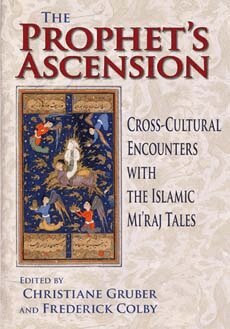
The tales of the mi'raj describe the prophet Muhammad's journey through the heavens, his encounters with prophets and angels, and his visit to heaven and hell. The tales are among Islam's most popular, appearing in Arabic, Persian, and Turkish literature, and in later adaptations throughout the Muslim world. Often serving as narratives designed to promote the worldview of particular Muslim groups, the tales were also a means for communities to construct rules of normative behavior and ritual practices, and were used to assert the superiority of Islam over other religions. The essays in this collection discuss the formation of this narrative, the mi'raj as a missionary text, its various adaptations, its application to esoteric thought, and its use in performance and ritual.
Del 10 - Kelsey Museum Publication
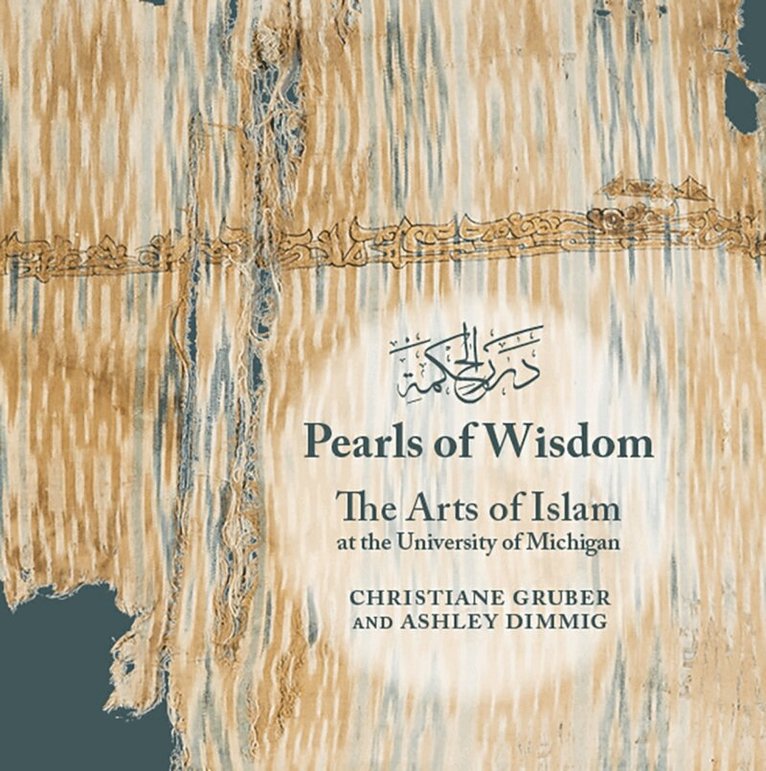
Pearls of Wisdom
The Arts of Islam at the University of Michigan
Häftad, Engelska, 2014
370 kr
Skickas inom 5-8 vardagar
This catalogue of a Kelsey Museum of Archaeology exhibition showcases a selection of Islamic art works held in the University of Michigan's collections. Rather than arranged chronologically, geographically, or by media, the objects are organized thematically and conceptually. Themes include the intersections between function and decoration, the aesthetic power of everyday objects, visual play, wit, and magic, connections and interrelationships across art forms, and light symbolism and illumination. The volume not only highlights the strengths of the university's collections of Islamic art but also explores various issues integral to the conception and production of art in the Islamic world from the medieval period until the present day. With 115 colour illustrations.
Del 17 - Kelsey Museum Publication
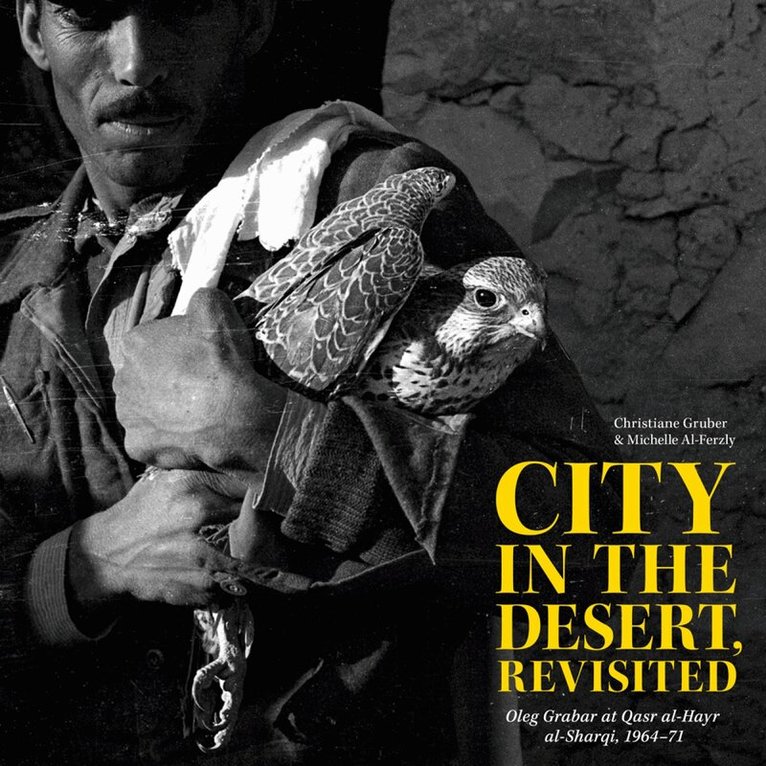
City in the Desert, Revisited
Oleg Grabar at Qasr al-Hayr al-Sharqi, 1964-71
Häftad, Engelska, 2022
539 kr
Skickas inom 5-8 vardagar
City in the Desert, Revisited features previously unpublished documents and reproduces over fifty photographs from the archaeological excavations at Qasr al-Hayr in Syria. The book recounts the personal experiences and professional endeavours that shaped the fields of Islamic archaeology, art and architectural history as the significance of these fields of study expanded during the 1960s and 1970s. Between 1964 and 1971, renowned Islamic art historian Oleg Grabar directed a large-scale archaeological excavation at the site of Qasr al-Hayr al-Sharqi. Drawn to the remote eighth-century complex in the hopes of uncovering a princely Umayyad palace, Grabar and his team instead stumbled upon a new type of urban settlement in the Syrian steppe. A rich lifeworld emerged in the midst of their discoveries, and over the course of the excavation's six seasons, close relationships formed between the American and Syrian archaeologists, historians, and workers who laboured and lived at the site.
Del 2 - Critical Studies in Architecture of the Middle East
Islamic Architecture on the Move
Motion and Modernity
Inbunden, Engelska, 2016
1 147 kr
Skickas inom 5-8 vardagar
Even a casual observer can spy traces of Islamic architecture and design on buildings all over the world, a reminder that artistic traditions and visual culture have never been limited to their region or country of origin, but rather are highly diffusible.This book brings together scholars from architectural studies, design, art history and other fields to challenge and expand concepts of Islamic architecture. Ranging from eighteenth-century Ottoman tents to manifestations of Islamic motifs in 1960s Hawaii, this richly illustrated volume raises key questions about Islamic architecture, and, more broadly, about how we can rethink our understanding of material, artistic and cultural mobility in the modern world.
820 kr
Skickas inom 7-10 vardagar
The images released by Islamic State of militants smashing statues at ancient sites were a horrifying aspect of their advance across Northern Iraq and Syria during 2015-16. Their leaders justified this iconoclasm (destruction of images) by arguing that such actions were divinely decreed in Islam, a notion that has remained fixed in the public consciousness. The Image Debate: Figural Representation in Islam and Across the World is a collection of thirteen essays which examine the controversy surrounding the use of images in Islamic and other religious cultures and seek to redress some of the misunderstandings that have arisen. Written by leading academics from the United States, Australia, Turkey, Israel and the United Kingdom, the book has a foreword by Stefano Carboni, Director of the Art Gallery of Western Australia, followed by an introduction by the editor Christiane Gruber, who sets the subject in context with a detailed examination of the debates over idols and the production offigural images in Islamic traditions. Twelve further articles are divided into three sections: the first deals with pre-modern Islam:Mika Natif looks at tensions between the Hadith prohibition on images and the praxis of image-making under the Umayyad dynasty and argues that the Umayyad rulers used imagery to establish their political and religious authority; Finbarr Barry Flood examines the practice of epigraphic erasure, i.e., the removal of names of rulers and patrons from historical inscriptions from the medieval Islamic world; and Oya Pancaroglu focuses on the figural conventions of an illustrated manuscript of Varqa and Gulshah, a medieval Persian romance composed in the masnavi (rhyming couplet) form by the 11th-century poet `Ayyuqi.The second section addresses the situation outside Islam: Alicia Walker surveys attitudes toward the production and veneration of religious images in Byzantium from the earliest years of the Christian Roman Empire (early 4th century) to the aftermath of the Iconoclast controversy (late 9th century); Steven Fine explores the history of Jewish engagement with`art' from Roman antiquity through the high middle ages through a detailed exploration of the 3rd-century Dura Europos synagogue and its wall paintings; Michael Shenkar examines evidence for the employment of figural images in the cultic practices of some of the major ancient Iranian cultural and political entities, offering a broad perspective on perceptions ofimages in ancient Iranian worship; and Robert DeCaroli delves into the question of why no image of the Buddha was made during the first five hundred years of Buddhism. The third section brings the reader back to Islamic lands with five articles examining aspects of the issue in the modern and contemporary periods: Yousuf Saaed investigates South Asian mass-produced images, especially posters that include illustrations of local Sufi shrines, portraits of saints and Shi`i iconography; James Bennett explores the visual depiction of Javanese shadow puppets (wayang kulit), including the sage Begawan Abiyasa, whose narratives convey key elements of Sufi mystical philosophy; Allen and Mary Roberts consider images of Cheikh Amadu Bamba, the founding Sufi saint of the Senegalese Mouride order; Rose Issa addresses how the term `Islamic' relates to contemporary art, how artists manage to create work in countries in constant turmoil and to what extent such works reflect their conceptual, aesthetic, and socio-political concerns; and finally Shiva Balaghi traces the use of the figure, along its symbolic shadows and silhouettes, in works by notable Iranian artists living in Iran and in diaspora.
705 kr
Skickas inom 7-10 vardagar
The nine essays in this volume were first presented at the Historians of Islamic Art Association's (HIAA) seventh biennial symposium entitled 'Regime Change' and they highlight some of the regimes of thought and changing trends that structure the field of Islamic art history. The authors present new research exploring the intentions of patrons, the agency of craftsmen and their responses to previous artistic production, thereby allowing artefacts and monuments to be set within their historical, social and artistic contexts. In their contributions Annabel Teh Gallop, Dmitry Bondarev and Umberto Bongianino discuss significant changes to Qur'an production due to dynastic and political regime changes in Sumatra and the Malay peninsula, and in Borno and Morocco in Africa. Corinne Mu hlemann looks at changes in the role and status of designers and weavers making silk in Khurasan in the post-Mongol period. Lisa Golombek, Michael Chagnon, and Farshid Emami explore Safavid art and architecture, focusing on the material and sensorial qualities of a group of tiled arch panels with narrative scenes, a delicately painted vase and the clocks of the main square of seventeenth-century Isfahan. Regime change also comes about through technological shifts and in their essays Ulrich Marzolph and Yasemin Gencer ask how the rise of photography and new printing techniques shaped the production, exchange and transmission of images in Iran and Turkey.