Christiane Weber - Böcker
Visar alla böcker från författaren Christiane Weber. Handla med fri frakt och snabb leverans.
7 produkter
7 produkter
248 kr
Skickas inom 3-6 vardagar
388 kr
Skickas inom 3-6 vardagar
235 kr
Skickas inom 3-6 vardagar
232 kr
Skickas inom 3-6 vardagar
778 kr
Skickas inom 5-8 vardagar
408 kr
Skickas inom 3-6 vardagar
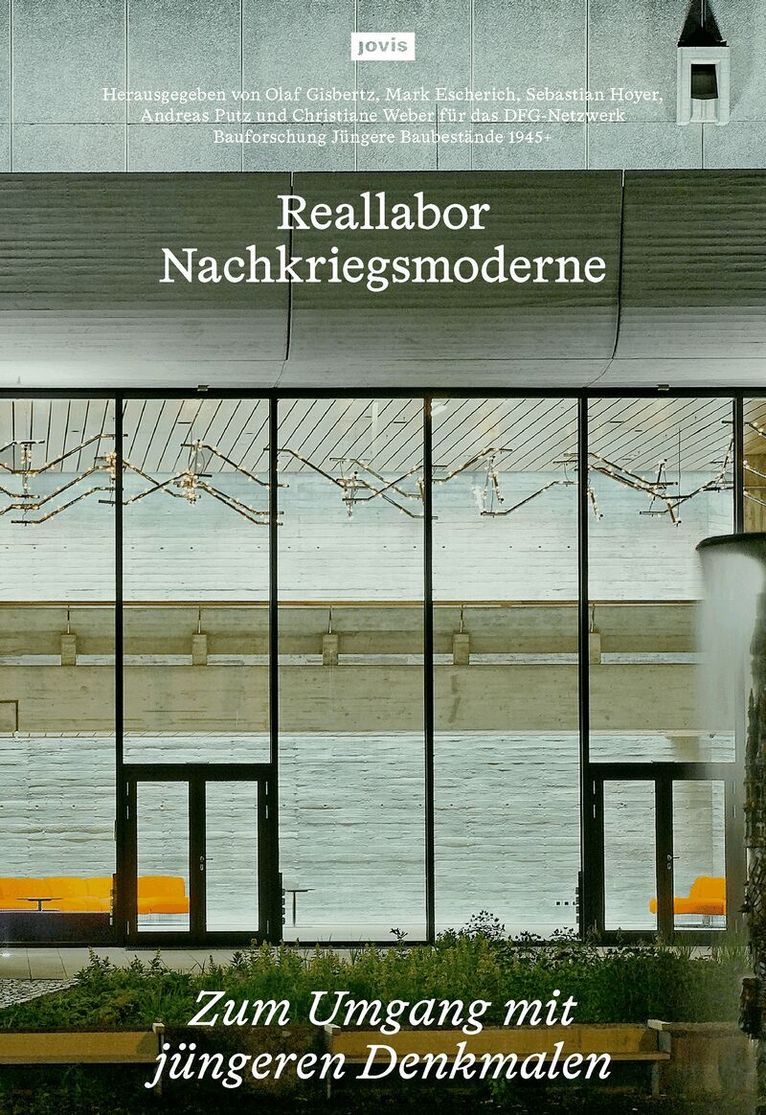
The built heritage of postwar modernism has been under threat from climate change and the high expectations of society for years. The tremendous volume of building stock was erected with high hopes for the future within just a short period of time—and frequently using construction techniques that were as yet unproven. Despite the many research efforts focusing on spatial concepts and societal utopias between the 1950s and 1970s, the practice-oriented field of construction research lacks binding recording and evaluation strategies for buildings, materials, and construction methods for the majority of buildings of all types. This affects projects from solitary churches, residential settlements, and green spaces right through to large cultural, sporting, and education constructions, as well as the engineering structures of the urban and peripheral infrastructure.In order to preserve this existing stock as a resource for the future, new recording and evaluation tools that take into account technical, construction, ecological, and economic factors are necessary. This book presents possibilities for the management of our recent constructed heritage on the basis of ongoing projects by the DFG-Netzwerk Bauforschung Jungere Baubestande 1945+ buildings preservation network.
833 kr
Skickas inom 11-20 vardagar
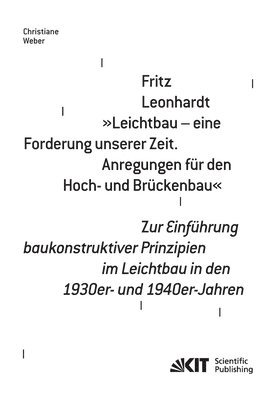
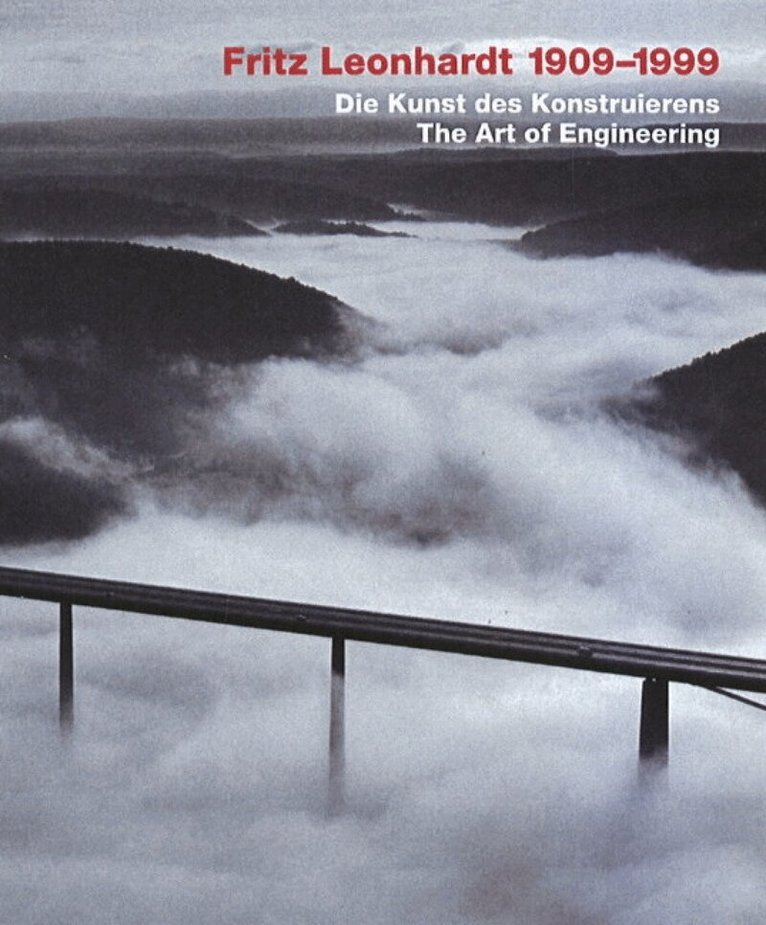
Text in English & German. Fritz Leonhardt would have been 100 years old in 2009. The Südwestdeutsches Archiv für Architektur und Ingenieurbau (saai) at the University of Karlsruhe is presenting the first full retrospective of this famous structural engineer's work, which holds his exten-sive estate. Leonhardt studied at the Technische Hochschule in Stuttgart and then travelled in the USA. He made his professional début with the German autobahn, for which he designed the Rodenkirchen suspension bridge in 1938-41. Leonhardt supported Herrmann Giesler's plans for the "capital of the movement" with a domed structure for the new main station in Munich, a project that was never realised. In the post-war period he worked mainly on reinforced and pre-stressed concrete structures. He combined pioneering structural innovations with a high standard of creative design. The television tower in Stuttgart, which he designed in 1953/54, is a good example of this. It has had countless successors all over the world. Leonhardt made important technical innovations in bridge-building in particular. He and his colleagues worked on the Düsseldorf family of bridges from the 1950s to the 1970s, diagonal cable bridges with an aesthetic shaping the urban landscape, and the Leonhardt, Andrä und Partner practice founded by him created wide-span bridges all over the world based on these models. Leonhardt was involved as a structural engineer on the first post-war high-rise buildings in Germany. He worked with the architects concerned on the cable-net structures for the German Pavilion at the 1967 Montreal World's Fair, and for the roofs of the 1972 Munich Olympics buildings. The interplay between science and practice was crucial to Leonhardt. With texts by Hans-Peter Andrä, Wolfgang Eilzer, Holger Svens-son and Thomas Wickbold, Ursula Baus, Norbert Becker, Dirk Bühler, Hans-Wolf Reinhardt and Christoph Gehlen, Theresia Gürtler Berger, Gerhard Kabierske, Joachim Kleinmanns, Karl-Eugen Kurrer, Alfred Pauser, Eberhard Pelke, Jörg Peter, Klaus Jan Philipp, Jörg Schlaich, Dietrich W. Schmidt, Werner Sobek, Elisabeth Spieker, Christiane Weber and Friedmar Voormann, Fritz Weller, and Fritz Wenzel.