Christine Adams - Böcker
Visar alla böcker från författaren Christine Adams. Handla med fri frakt och snabb leverans.
9 produkter
9 produkter
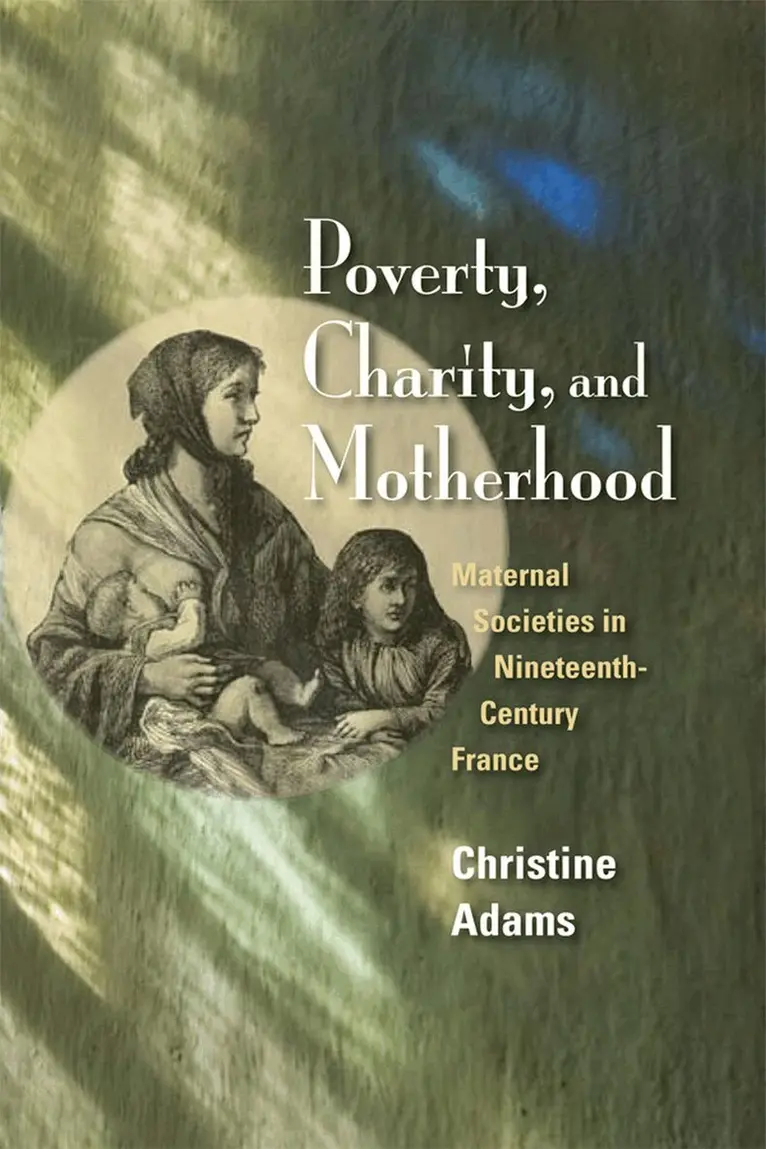
Poverty, Charity, and Motherhood
Maternal Societies in Nineteenth-Century France
Inbunden, Engelska, 2010
522 kr
Skickas inom 7-10 vardagar
This far-reaching study of maternal societies in post-revolutionary France focuses on the philanthropic work of the Society for Maternal Charity, the most prominent organization of its kind. Administered by middle-class and elite women and financed by powerful families and the government, the Society offered support to poor mothers, helping them to nurse and encouraging them not to abandon their children. In Poverty, Charity, and Motherhood, Christine Adams traces the Society's key role in shaping notions of maternity and in shifting the care of poor families from the hands of charitable volunteers with religious-tinged social visions to paid welfare workers with secular goals such as population growth and patriotism. Adams plumbs the origin and ideology of the Society and its branches, showing how elite women in Paris, Lyon, Bordeaux, Rouen, Marseille, Dijon, and Limoges tried to influence the maternal behavior of women and families with lesser financial means and social status. A deft analysis of the philosophy and goals of the Society details the members' own notions of good mothering, family solidarity, and legitimate marriages that structured official, elite, and popular attitudes concerning gender and poverty in France. These personal attitudes, Adams argues, greatly influenced public policy and shaped the country's burgeoning social welfare system.
384 kr
Skickas inom 7-10 vardagar
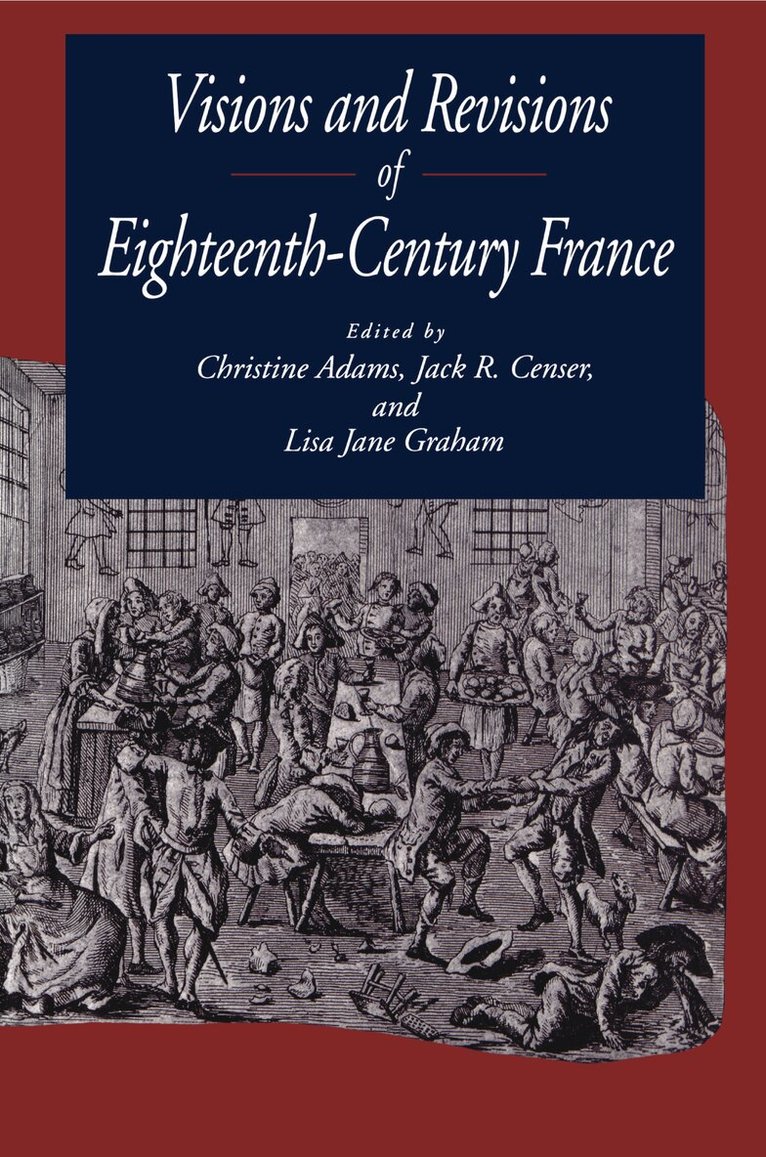
This volume brings together eight essays (all but one previously unpublished) that offer innovative strategies for studying society and culture in eighteenth-century France. Divided into three sections, the chapters map out current research paths in social, cultural, and political history. The authors engage the most heated subjects of debate in the field today, including the changing nature of political life in the age of Enlightenment, the role of public opinion in undermining absolutism, and the impact of gender on social relationships and political language in the late eighteenth century. They demonstrate a marked interest in the lives of ordinary and humble French people, finding that exclusion from the main corridors of power fostered cunning and resourcefulness, not political indifference or ignorance.The articles encompass the Old Regime and the revolutionary era without falling into the teleological trap of using the former as the backdrop for the events of 1789. On the contrary, many of the authors consciously avoid this bias by investigating the Old Regime in its own right or by consciously linking the pre- and postrevolutionary eras. This decision alone marks an important turning of the tide. By establishing a dialogue between the Old Regime and the revolution, this volume implicitly pays homage to those historians who insist on the structural continuities that underlay the rupture of 1789.Contributors are Cissie Fairchilds, Christine Adams, Orest Ranum, Lisa Jane Graham, Harvey Chisick, John Garrigus, Lenard Berlanstein, and Jack Censer.
517 kr
Skickas inom 5-8 vardagar
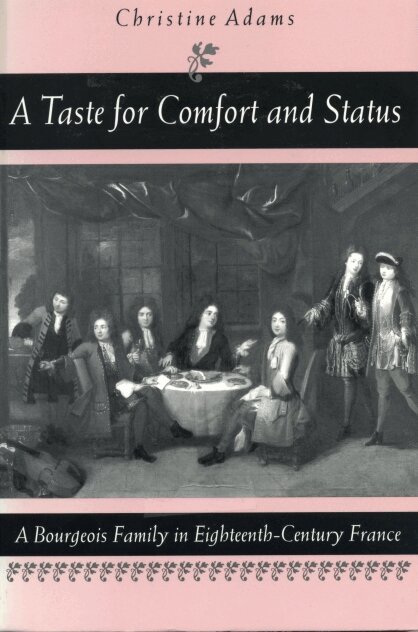
The Lamothes were an ordinary family in eighteenth-century Bordeaux. Well-to-do and well respected by their neighbors, they were local notables whose private and public lives suggest the importance of family, kin, and friendship networks, professional activities and cultural interests, as well as a desire to serve the public good. In this portrait of the Lamothes, Christine Adams explores the development of middle-class identity among urban professionals and reconsiders the role of this social group in the coming French Revolution.The most striking feature of this family history is that it is based on more than three hundred personal letters that circulated among the Lamothes—parents and seven siblings—over a period of twenty-five years. Such a collection is rare for this period, and Adams makes the most of it. Her study lends remarkable texture to provincial middle-class life. She weaves these letters into every aspect of the Lamothes' experience—professional, literary, intellectual, social, and civic. She demonstrates a sustained mobilization of all family skills and resources to maintain the status of the males of the family and preserve (rather than risk) the family's emotional and material stability.While their conservative lifestyle suggests that the Lamothes were not "revolutionary," they were, nonetheless, part of the bourgeoisie. Adams thus taps into a potent debate about middle-class consciousness and identity in the eighteenth century, arguing against those historians who doubt that such a social class existed in France before 1789.
396 kr
Skickas inom 7-10 vardagar
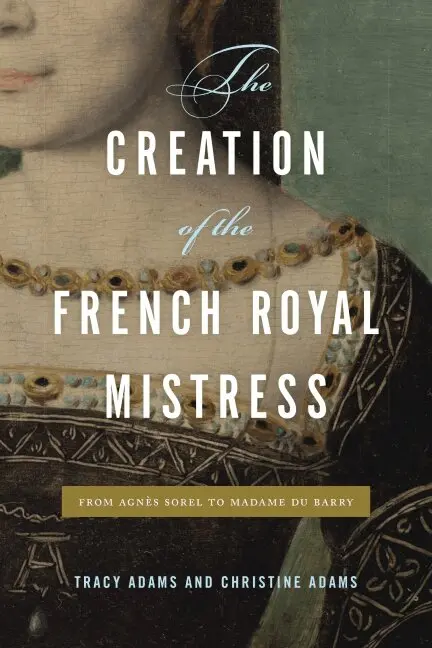
Kings throughout medieval and early modern Europe had extraconjugal sexual partners. Only in France, however, did the royal mistress become a quasi-institutionalized political position. This study explores the emergence and development of the position of French royal mistress through detailed portraits of nine of its most significant incumbents: Agnès Sorel, Anne de Pisseleu d’Heilly, Diane de Poitiers, Gabrielle d’Estrées, Françoise Louise de La Baume Le Blanc, Françoise Athénaïs de Rochechouart de Mortemart, Françoise d’Aubigné, Jeanne-Antoinette Poisson, and Jeanne Bécu.Beginning in the fifteenth century, key structures converged to create a space at court for the royal mistress. The first was an idea of gender already in place: that while women were legally inferior to men, they were men’s equals in competence. Because of their legal subordinacy, queens were considered to be the safest regents for their husbands, and, subsequently, the royal mistress was the surest counterpoint to the royal favorite. Second, the Renaissance was a period during which people began to experience space as theatrical. This shift to a theatrical world opened up new ways of imagining political guile, which came to be positively associated with the royal mistress. Still, the role had to be activated by an intelligent, charismatic woman associated with a king who sought women as advisors. The fascinating particulars of each case are covered in the chapters of this book.Thoroughly researched and compellingly narrated, this important study explains why the tradition of a politically powerful royal mistress materialized at the French court, but nowhere else in Europe. It will appeal to anyone interested in the history of the French monarchy, women and royalty, and gender studies.
223 kr
Skickas inom 7-10 vardagar
Kings throughout medieval and early modern Europe had extraconjugal sexual partners. Only in France, however, did the royal mistress become a quasi-institutionalized political position. This study explores the emergence and development of the position of French royal mistress through detailed portraits of nine of its most significant incumbents: Agnès Sorel, Anne de Pisseleu d’Heilly, Diane de Poitiers, Gabrielle d’Estrées, Françoise Louise de La Baume Le Blanc, Françoise Athénaïs de Rochechouart de Mortemart, Françoise d’Aubigné, Jeanne-Antoinette Poisson, and Jeanne Bécu.Beginning in the fifteenth century, key structures converged to create a space at court for the royal mistress. The first was an idea of gender already in place: that while women were legally inferior to men, they were men’s equals in competence. Because of their legal subordinacy, queens were considered to be the safest regents for their husbands, and, subsequently, the royal mistress was the surest counterpoint to the royal favorite. Second, the Renaissance was a period during which people began to experience space as theatrical. This shift to a theatrical world opened up new ways of imagining political guile, which came to be positively associated with the royal mistress. Still, the role had to be activated by an intelligent, charismatic woman associated with a king who sought women as advisors. The fascinating particulars of each case are covered in the chapters of this book.Thoroughly researched and compellingly narrated, this important study explains why the tradition of a politically powerful royal mistress materialized at the French court, but nowhere else in Europe. It will appeal to anyone interested in the history of the French monarchy, women and royalty, and gender studies.
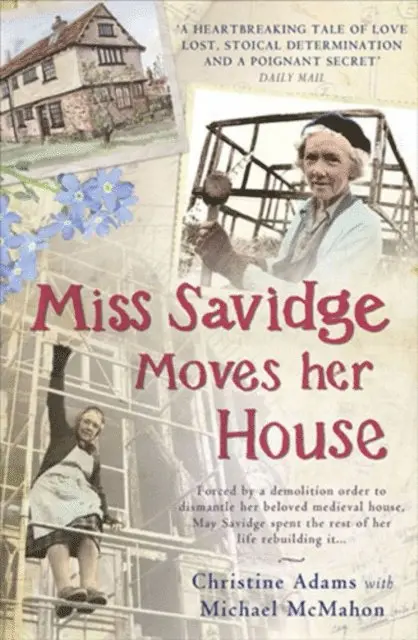
Miss Savidge Moves Her House
The Extraordinary Story of May Savidge and her House of a Lifetime
Häftad, Engelska, 2010
136 kr
Skickas
‘ This story will appeal to those who still believe that an Englishman’ s home is his castle, and to those who have a soft spot for indomitable old women’ Daily TelegraphThe hardback edition of this book, published in 2009 under the title A Lifetime in the Building, saw its extraordinary story featured not only in the Daily Mail but also Hello magazine – and quickly sold out two printings. Now it is re-launched in paperback under a new title to highlight its appeal as the tale of an extraordinary, maverick woman and her even more remarkable achievement.May Savidge lived in a half-timbered house in Hertfordshire. When the council served her with a compulsory purchase notice to make way for a roundabout, May decided she had to move – but so did the house. So she had the whole thing dismantled and shipped to the North Norfolk coast… and then spent the rest of her life rebuilding it, single-handed. Her fame spread around the world. Antiques Roadshow broadcast, unprecedentedly, two features about her house.Now her niece, Christine Adams, who inherited May’ s house and completed it – at the cost of her own marriage - tells her aunt’ s life story from the voluminous diaries and letters she left behind. Christine Adams now runs a Bed and Breakfast in May Savidge’ s old house in Norfolk. Michael McMahon is also the co-author of My Friend the Enemy (978 1 84513 316 0).
287 kr
Skickas inom 5-8 vardagar
258 kr
Skickas inom 5-8 vardagar
427 kr
Skickas inom 5-8 vardagar