Christine Mallinson - Böcker
Visar alla böcker från författaren Christine Mallinson. Handla med fri frakt och snabb leverans.
12 produkter
12 produkter
1 024 kr
Skickas inom 7-10 vardagar
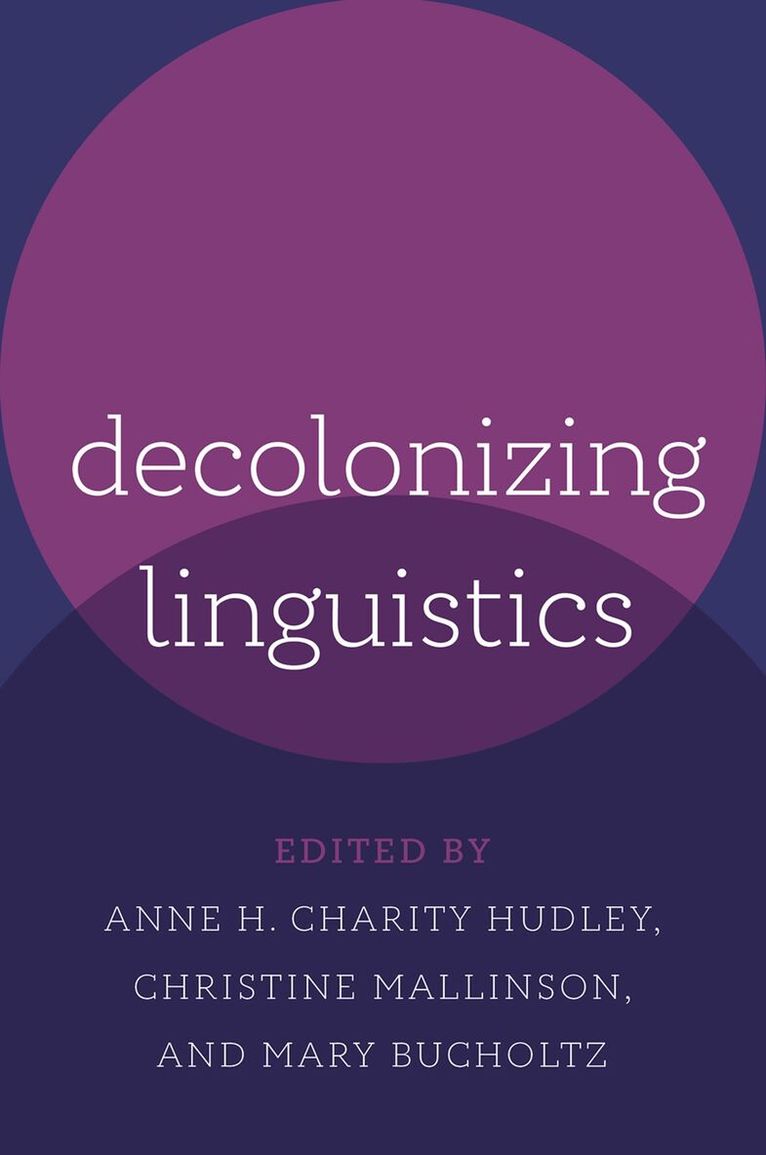
This is an open access title available under the terms of a CC BY-NC-ND 4.0 International license. It is free to read at Oxford Academic and offered as a free PDF download from OUP and selected open access locations.Decolonizing Linguistics, the companion volume to Inclusion in Linguistics, is designed to uncover and intervene in the history and ongoing legacy of colonization and colonial thinking in linguistics and related fields. Taken together, the two volumes are the first comprehensive, action-oriented, book-length discussions of how to advance social justice in all aspects of the discipline.The introduction to Decolonizing Linguistics theorizes decolonization as the process of centering Black, Native, and Indigenous perspectives, describes the extensive dialogic and collaborative process through which the volume was developed, and lays out key principles for decolonizing linguistic research and teaching. The twenty chapters cover a wide range of languages and linguistic contexts (e.g., Bantu languages, Creoles, Dominican Spanish, Francophone Africa, Zapotec) as well as various disciplines and subfields (applied linguistics, communication, historical linguistics, language documentation and revitalization/reclamation, psycholinguistics, sociolinguistics, syntax). Contributors address such topics as refusing settler-colonial practices and centering community goals in research on Indigenous languages; decolonizing research partnerships between the Global South and the Global North; and prioritizing Black Diasporic perspectives in linguistics. The volume's conclusion lays out specific actions that linguists can take through research, teaching, and institutional structures to refuse coloniality in linguistics and to move the field toward a decolonized future.
282 kr
Skickas inom 5-8 vardagar
This is an open access title available under the terms of a CC BY-NC-ND 4.0 International license. It is free to read at Oxford Academic and offered as a free PDF download from OUP and selected open access locations.Decolonizing Linguistics, the companion volume to Inclusion in Linguistics, is designed to uncover and intervene in the history and ongoing legacy of colonization and colonial thinking in linguistics and related fields. Taken together, the two volumes are the first comprehensive, action-oriented, book-length discussions of how to advance social justice in all aspects of the discipline.The introduction to Decolonizing Linguistics theorizes decolonization as the process of centering Black, Native, and Indigenous perspectives, describes the extensive dialogic and collaborative process through which the volume was developed, and lays out key principles for decolonizing linguistic research and teaching. The twenty chapters cover a wide range of languages and linguistic contexts (e.g., Bantu languages, Creoles, Dominican Spanish, Francophone Africa, Zapotec) as well as various disciplines and subfields (applied linguistics, communication, historical linguistics, language documentation and revitalization/reclamation, psycholinguistics, sociolinguistics, syntax). Contributors address such topics as refusing settler-colonial practices and centering community goals in research on Indigenous languages; decolonizing research partnerships between the Global South and the Global North; and prioritizing Black Diasporic perspectives in linguistics. The volume's conclusion lays out specific actions that linguists can take through research, teaching, and institutional structures to refuse coloniality in linguistics and to move the field toward a decolonized future.
1 024 kr
Skickas inom 7-10 vardagar
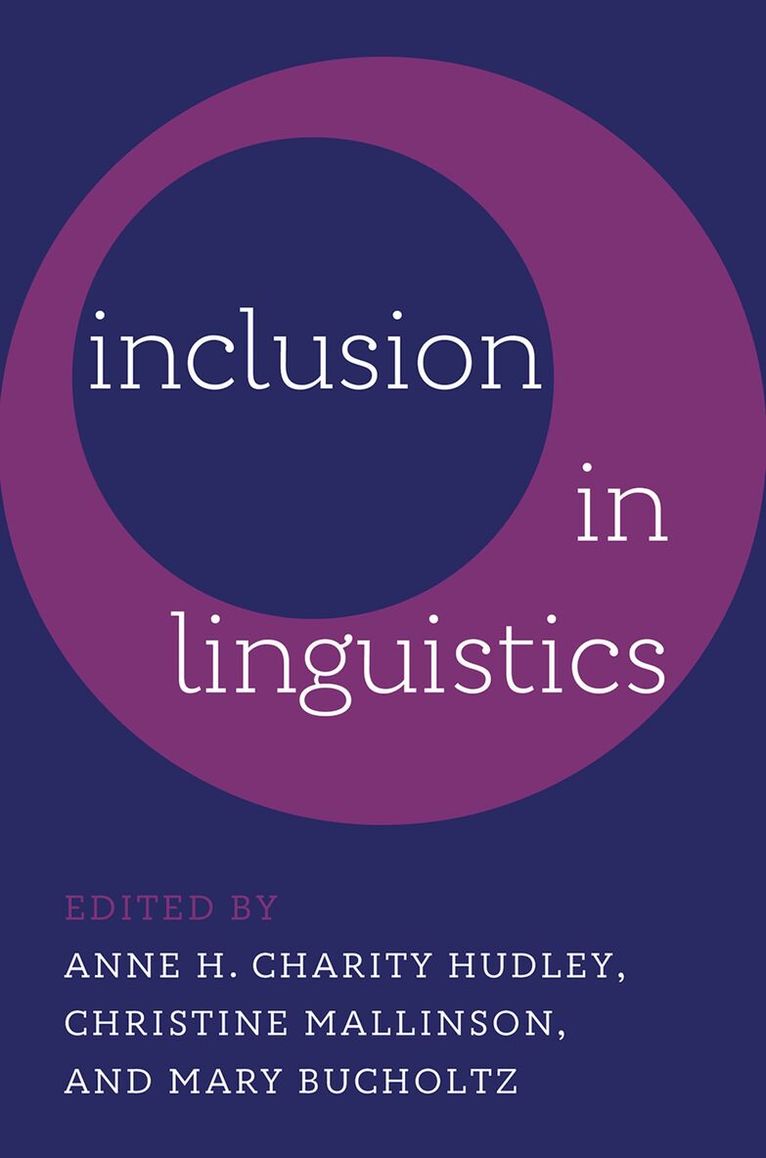
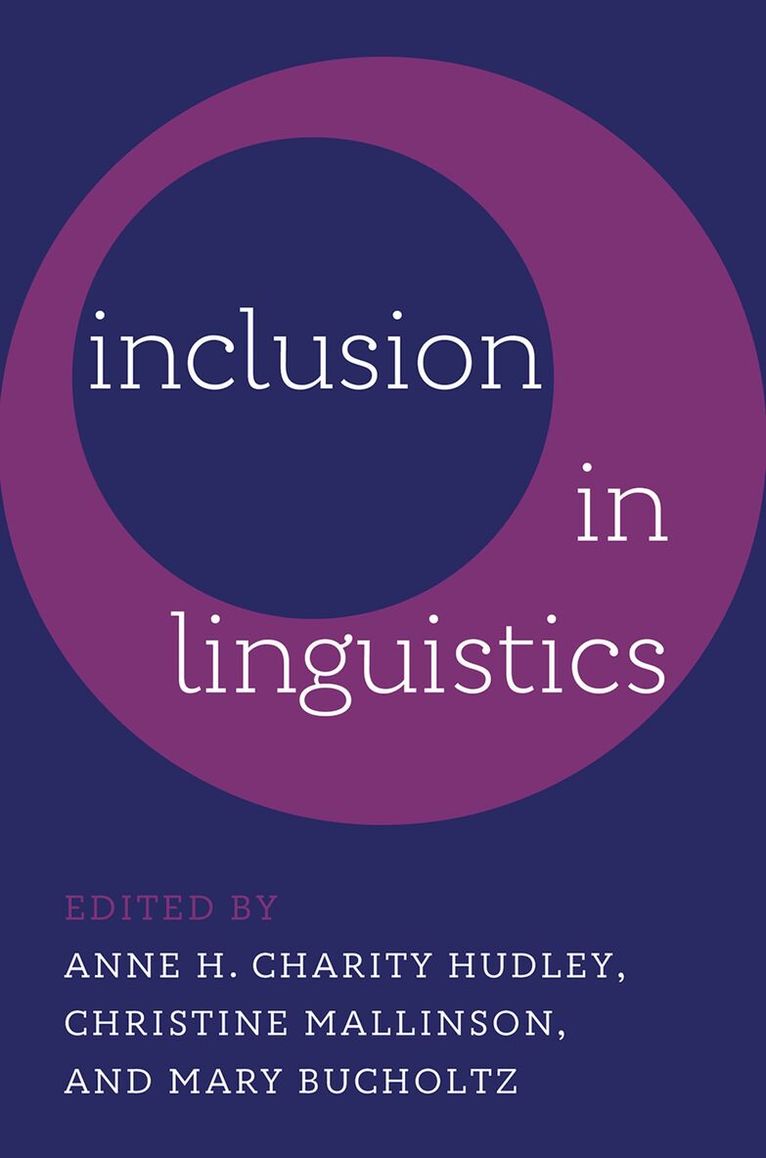
This is an open access title available under the terms of a CC BY-NC-ND 4.0 International license. It is free to read at Oxford Academic and offered as a free PDF download from OUP and selected open access locations.Inclusion in Linguistics, the companion volume to Decolonizing Linguistics, aims to reinvent linguistics as a space of belonging across race, gender, class, disability, geographic region, and more. Taken together, the two volumes are the first comprehensive, action-oriented, book-length discussions of how to advance social justice in all aspects of the discipline. The volume's introduction theorizes inclusion as fundamental to social justice and describes the extensive dialogic and collaborative process through which the volume was developed. Contributors discuss intersectional forms of exclusion in linguistics: researchers' anti-autistic ableism; the exclusion of Deaf Global South researchers of color; the marginalization of Filipino American students and scholars; disciplinary transphobia; and the need for a “big tent” linguistics. The volume goes on to outline intersectional forms of exclusion in linguistics, describes institutional steps toward inclusion, offers examples of how to further educational justice, and shares models of collaborations designed to create an inclusive public-facing linguistics. The volume's conclusion outlines actions that linguists can take through research, teaching, and institutional structures to advance inclusion in linguistics and move the field toward social justice.
282 kr
Skickas inom 5-8 vardagar
This is an open access title available under the terms of a CC BY-NC-ND 4.0 International license. It is free to read at Oxford Academic and offered as a free PDF download from OUP and selected open access locations.Inclusion in Linguistics, the companion volume to Decolonizing Linguistics, aims to reinvent linguistics as a space of belonging across race, gender, class, disability, geographic region, and more. Taken together, the two volumes are the first comprehensive, action-oriented, book-length discussions of how to advance social justice in all aspects of the discipline. The volume's introduction theorizes inclusion as fundamental to social justice and describes the extensive dialogic and collaborative process through which the volume was developed. Contributors discuss intersectional forms of exclusion in linguistics: researchers' anti-autistic ableism; the exclusion of Deaf Global South researchers of color; the marginalization of Filipino American students and scholars; disciplinary transphobia; and the need for a “big tent” linguistics. The volume goes on to outline intersectional forms of exclusion in linguistics, describes institutional steps toward inclusion, offers examples of how to further educational justice, and shares models of collaborations designed to create an inclusive public-facing linguistics. The volume's conclusion outlines actions that linguists can take through research, teaching, and institutional structures to advance inclusion in linguistics and move the field toward social justice.
360 kr
Skickas inom 11-20 vardagar
In today's culturally diverse classrooms, students possess and use many culturally, ethnically, and regionally diverse English language varieties that may differ from standardized English. This book helps classroom teachers become attuned to these differences and offers practical strategies to support student achievement while fostering positive language attitudes in classrooms and beyond. The text contrasts standardized varieties of English with Southern, Appalachian, and African American English varieties, focusing on issues that are of everyday concern to those who are assessing the linguistic competence of students.
339 kr
Skickas inom 7-10 vardagar
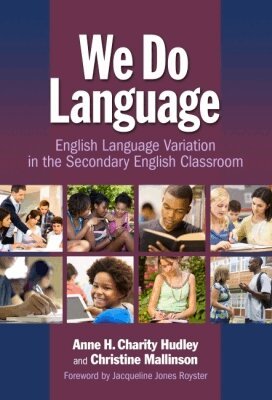
This book builds on the authors’ highly acclaimed first collaboration, Understanding English Language Variation in US Schools, and examines the need to integrate linguistically informed teaching into the secondary English classroom. It includes specific information about the language varieties students bring with them to school so that educators can better assist students in developing the literacy skills necessary for the Common Core State Standards. This resource features concrete strategies, models, and vignettes, as well as classroom materials developed by English educators for English educators.
761 kr
Skickas inom 7-10 vardagar
This book builds on the authors’ highly acclaimed first collaboration, Understanding English Language Variation in US Schools, and examines the need to integrate linguistically informed teaching into the secondary English classroom. It includes specific information about the language varieties students bring with them to school so that educators can better assist students in developing the literacy skills necessary for the Common Core State Standards. This resource features concrete strategies, models, and vignettes, as well as classroom materials developed by English educators for English educators.
416 kr
Skickas inom 11-20 vardagar
Talking College shows that language is fundamental to Black and African American culture and that linguistic justice is crucial to advancing racial justice, both on college campuses and throughout society. Writing from a linguistics-informed, Black-centered educational framework, the authors draw extensively on Black college students' lived experiences to present key ideas about African American English and Black language practices. The text presents a model of how Black students navigate the linguistic expectations of college. Grounded in real-world examples of Black undergraduates attending colleges and universities across the United States, the model illustrates the linguistic and cultural balancing acts that arise as Black students work to develop their full linguistic selves. Talking College provides Black students with the knowledge they need to make sense of anti-Black linguistic racism and to make decisions about their linguistic experiences in college. It also offers key insights to help college faculty and staff create the liberating and linguistically just educational community that Black students deserve.Book Features:Weaves together information and approaches drawn from the authors' extensive experience working with Black and other students of color in higher education.Provides an up-to-date discussion of Black language practices and their role in Black students' college experiences.Discusses the racial politics of language, including anti-Black linguistic racism and the struggle for linguistic justice as part of racial justice.Offers a detailed model of Black college students' diverse linguistic and racial identities. Outlines concrete steps toward racial and linguistic justice that students and faculty can take today.Accessible to students and faculty without a background in linguistics, while also engaging and informative for linguistics scholars.
Talking College
Making Space for Black Language Practices in Higher Education
Inbunden, Engelska, 2022
1 220 kr
Skickas inom 11-20 vardagar
Talking College shows that language is fundamental to Black and African American culture and that linguistic justice is crucial to advancing racial justice, both on college campuses and throughout society. Writing from a linguistics-informed, Black-centered educational framework, the authors draw extensively on Black college students' lived experiences to present key ideas about African American English and Black language practices. The text presents a model of how Black students navigate the linguistic expectations of college. Grounded in real-world examples of Black undergraduates attending colleges and universities across the United States, the model illustrates the linguistic and cultural balancing acts that arise as Black students work to develop their full linguistic selves. Talking College provides Black students with the knowledge they need to make sense of anti-Black linguistic racism and to make decisions about their linguistic experiences in college. It also offers key insights to help college faculty and staff create the liberating and linguistically just educational community that Black students deserve.Book Features:Weaves together information and approaches drawn from the authors' extensive experience working with Black and other students of color in higher education.Provides an up-to-date discussion of Black language practices and their role in Black students' college experiences.Discusses the racial politics of language, including anti-Black linguistic racism and the struggle for linguistic justice as part of racial justice.Offers a detailed model of Black college students' diverse linguistic and racial identities. Outlines concrete steps toward racial and linguistic justice that students and faculty can take today.Accessible to students and faculty without a background in linguistics, while also engaging and informative for linguistics scholars.
2 357 kr
Skickas inom 10-15 vardagar
The second edition of Data Collection in Sociolinguistics: Methods and Applications continues to provide up-to-date, succinct, relevant, and informative discussion about methods of data collection in sociolinguistic research. Written by a range of top sociolinguists, both veteran and emerging scholars, it covers the main areas of research design, conducting research, and sharing data findings. In addition to revisions of original material, this edition includes nine new vignettes covering such topics as collecting data from social media, conducting linguistic landscape research, forensic linguistic data collection, and working with transgender communities. A companion website, http://sociolinguisticdatacollection.com, provides enhanced pedagogical features such as discussion questions, activities, end-of-chapter exercises, and contributor videos. This volume is the one-stop, go-to guide for the numerous quantitative, qualitative, and mixed methods used in sociolinguistic research; it is the ideal resource for undergraduate and graduate courses in sociolinguistic research, field methods and data collection.
810 kr
Skickas inom 10-15 vardagar
The second edition of Data Collection in Sociolinguistics: Methods and Applications continues to provide up-to-date, succinct, relevant, and informative discussion about methods of data collection in sociolinguistic research. Written by a range of top sociolinguists, both veteran and emerging scholars, it covers the main areas of research design, conducting research, and sharing data findings. In addition to revisions of original material, this edition includes nine new vignettes covering such topics as collecting data from social media, conducting linguistic landscape research, forensic linguistic data collection, and working with transgender communities. A companion website, http://sociolinguisticdatacollection.com, provides enhanced pedagogical features such as discussion questions, activities, end-of-chapter exercises, and contributor videos. This volume is the one-stop, go-to guide for the numerous quantitative, qualitative, and mixed methods used in sociolinguistic research; it is the ideal resource for undergraduate and graduate courses in sociolinguistic research, field methods and data collection.
515 kr
Skickas inom 10-15 vardagar
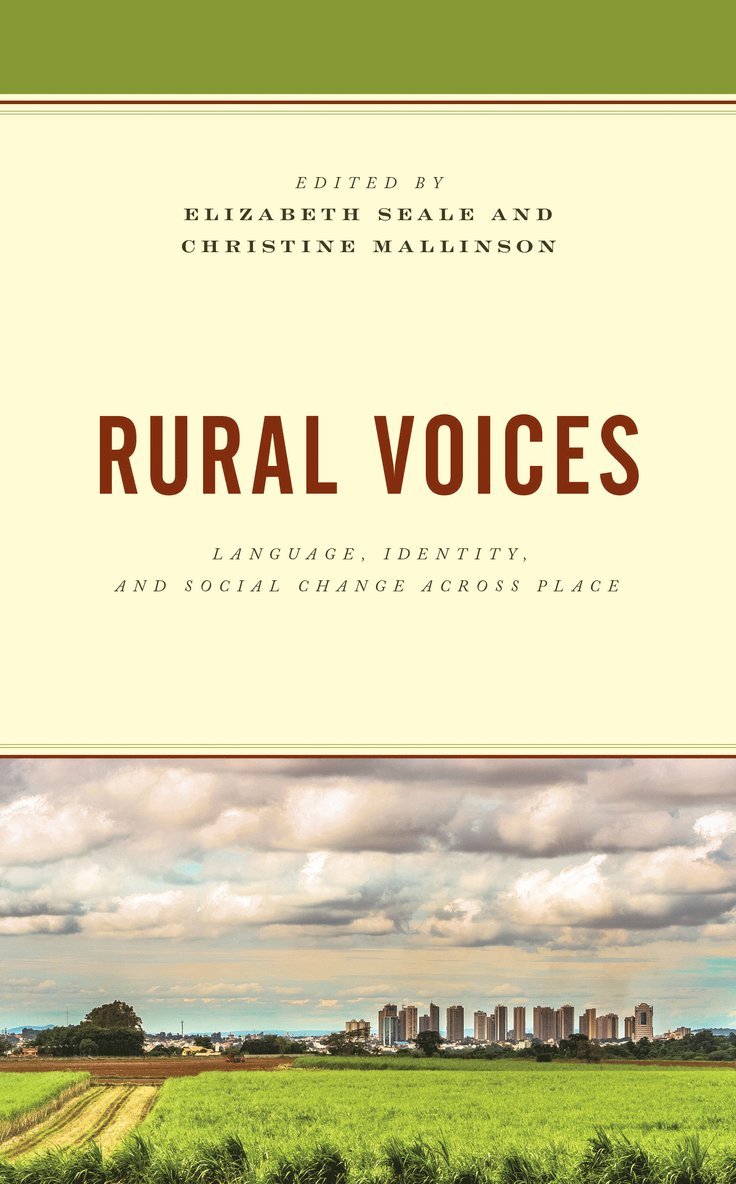
In this interdisciplinary volume, sociolinguists and sociologists explore the intersections of language, culture, and identity for rural populations around the world. Challenging stereotypical views of rural backwardness and urban progress, the contributors reveal how language is a key mechanism for constructing the meaning of places and the people who identify with them. With research that spans numerous countries and several continents, the chapters in this volume add broadly to knowledge about status and prestige, authenticity and belonging, rural-urban relations, and innovation and change among rural peoples and in rural communities across the globe.