Christof Royer – författare
Visar alla böcker från författaren Christof Royer. Handla med fri frakt och snabb leverans.
5 produkter
5 produkter
Häftad, Engelska, 2027
406 kr
Kommande
Across liberal democracies, open society has become both a familiar slogan and a favoured target, invoked by politicians and philanthropists while denounced by populists. In this approachably written and incisive work Christof Royer asks what it truly means to value diversity without illusions in an age of polarization, conspiracy thinking, and democratic fatigue.Drawing on the charged history of open society in the writings of Henri Bergson and Karl Popper, and drawing on thinkers such as Hannah Arendt, Judith Shklar, or Stuart Hall, Royer reclaims the concept as both ethos and ideology: a fallible, argumentative stance that accepts conflict and tragedy and a partisan commitment to defending dissent against forces that would close it down. Through accessible case studies – from wokeness and culture wars to immigration, COVID-19, artificial intelligence, and free speech – Royer shows how a reimagined conception of open society can guide struggles without slipping into relativism or liberal self-congratulation. He advances a distinctive account of the way provocation forges character and explores the political role of reflective solitude. Openness, Royer argues, must be actively cultivated by education, institutions, and individuals; it will not simply flourish on its own.Blending contemporary commentary and political theory with an irreverent first-person voice, Why Open Society Matters offers a provocative look at a contested ideal that has never been more relevant.
Inbunden, Engelska, 2020
993 kr
Skickas inom 10-15 vardagar
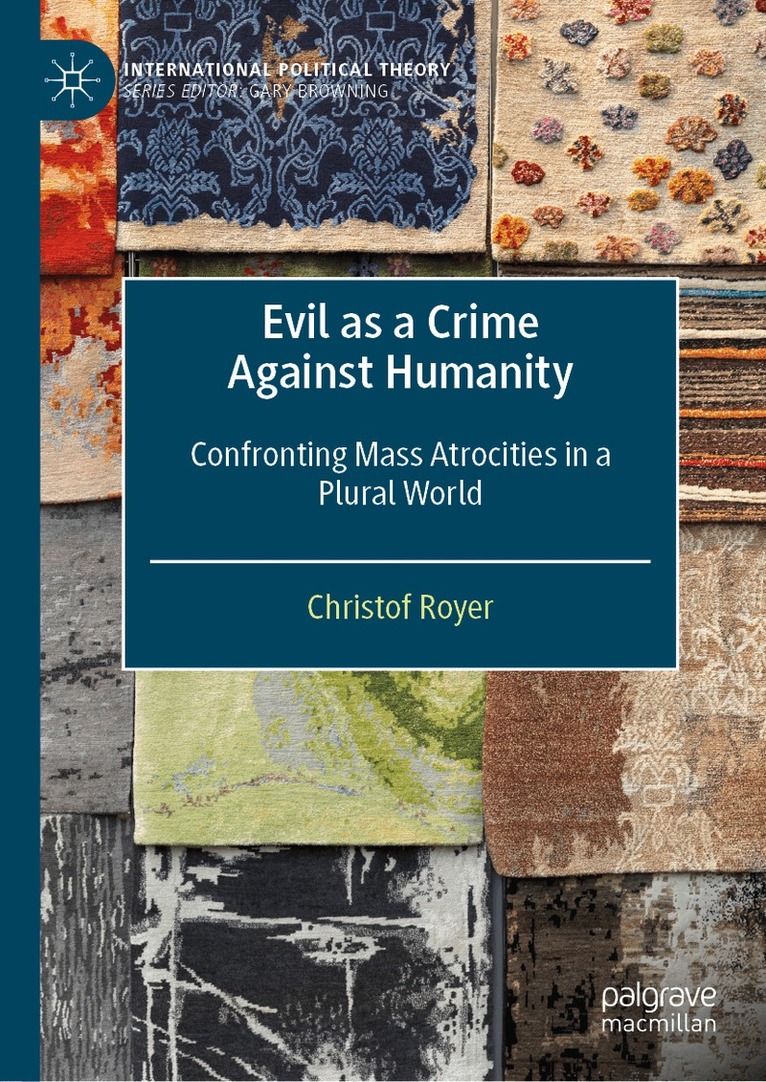
This book seeks to reimagine why and how to confront mass atrocities in world politics. Drawing on Hannah Arendt’s conception of evil, it interprets and understands mass atrocities as ‘evil’ in an ‘Arendtian’ sense, that is, as crimes against human plurality and, thus, crimes against humanity itself. This understanding of mass atrocities paves the way for reframing responses to mass atrocities as attempts to confront evil. In doing so, the book focuses on military intervention under the banner of the Responsibility to Protect (R2P) and judicial intervention by the International Criminal Court (ICC) and reframes them as tools to protect human plurality from evil. Furthermore, the book looks at the place and the role of R2P and the ICC in the changing landscape of world order. It argues that the protection of humanity from evil can serve as a legitimate Grundnorm (basic norm) around which a global constitutional order in an inherently pluralistic world can be constructed.
1 303 kr
Läs direkt efter köp
This book seeks to reimagine why and how to confront mass atrocities in world politics. Drawing on Hannah Arendt’s conception of evil, it interprets and understands mass atrocities as ‘evil’ in an ‘Arendtian’ sense, that is, as crimes against human plurality and, thus, crimes against humanity itself. This understanding of mass atrocities paves the way for reframing responses to mass atrocities as attempts to confront evil. In doing so, the book focuses on military intervention under the banner of the Responsibility to Protect (R2P) and judicial intervention by the International Criminal Court (ICC) and reframes them as tools to protect human plurality from evil. Furthermore, the book looks at the place and the role of R2P and the ICC in the changing landscape of world order. It argues that the protection of humanity from evil can serve as a legitimate Grundnorm (basic norm) around which a global constitutional order in an inherently pluralistic world can be constructed.
Häftad, Engelska, 2021
993 kr
Skickas inom 10-15 vardagar
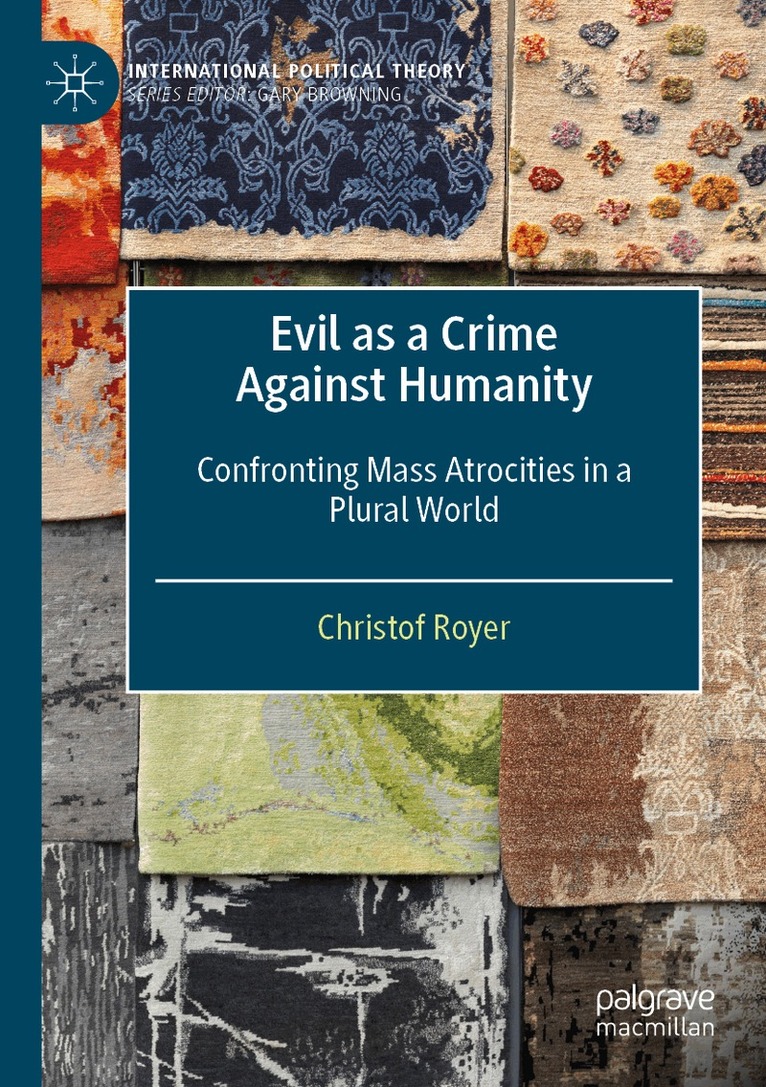
This book seeks to reimagine why and how to confront mass atrocities in world politics. Drawing on Hannah Arendt’s conception of evil, it interprets and understands mass atrocities as ‘evil’ in an ‘Arendtian’ sense, that is, as crimes against human plurality and, thus, crimes against humanity itself. This understanding of mass atrocities paves the way for reframing responses to mass atrocities as attempts to confront evil. In doing so, the book focuses on military intervention under the banner of the Responsibility to Protect (R2P) and judicial intervention by the International Criminal Court (ICC) and reframes them as tools to protect human plurality from evil. Furthermore, the book looks at the place and the role of R2P and the ICC in the changing landscape of world order. It argues that the protection of humanity from evil can serve as a legitimate Grundnorm (basic norm) around which a global constitutional order in an inherently pluralistic world can be constructed.
Häftad, Engelska, 2023
667 kr
Skickas inom 10-15 vardagar
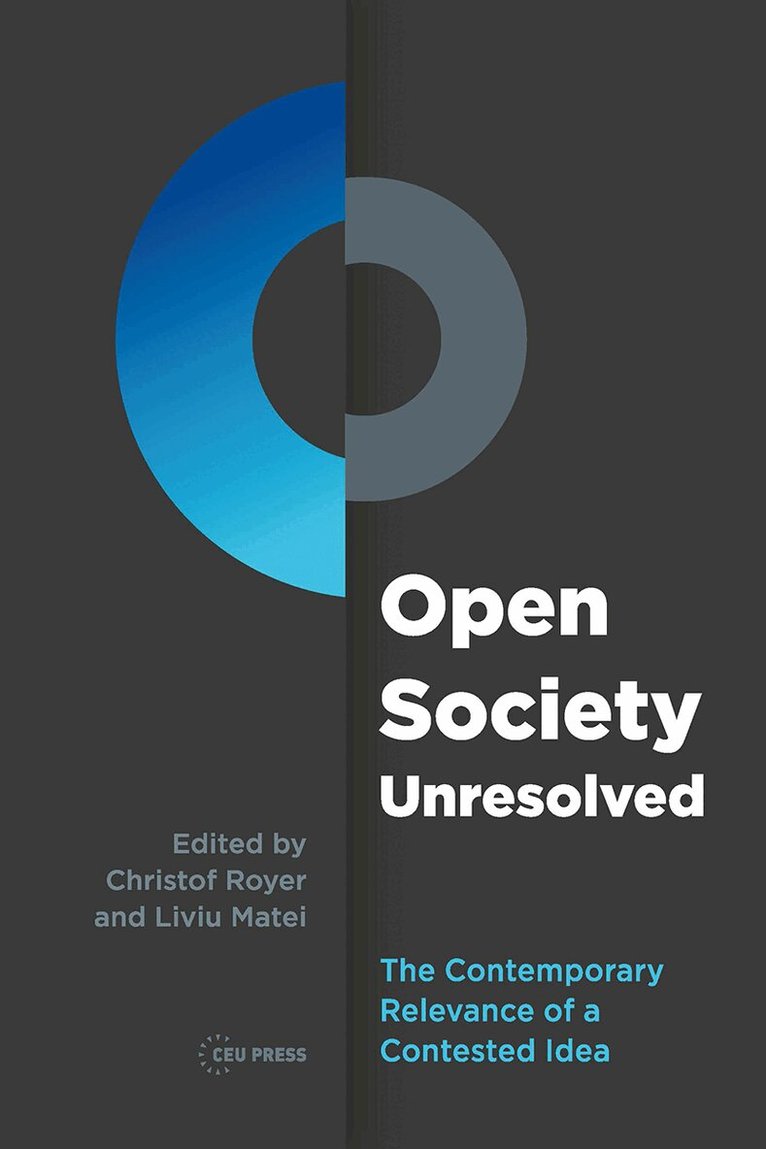
Is the concept of open society still relevant in the 21st century? Do the current social, moral, and political realities call for a drastic revision of this concept? Here fifteen essays address real-world contemporary challenges to open society from a variety of perspectives. What unites the individual authors and chapters is an interest in open society’s continuing usefulness and relevance to address current problems. And what distinguishes them is a rich variety of geographical and cultural backgrounds, and a wide range of academic disciplines and traditions.While focusing on probing the contemporary relevance of the concept, several chapters approach it historically. The book features a comprehensive introduction to the history and current ‘uses’ of the theory of open society. The authors link the concept to contemporary themes including education, Artificial Intelligence, cognitive science, African cosmology, colonialism, and feminism. The diversity of viewpoints in the analysis reflects a commitment to plurality that is at the heart of this book and of the idea of open society itself.