Christoph Zenger – författare
Visar alla böcker från författaren Christoph Zenger. Handla med fri frakt och snabb leverans.
12 produkter
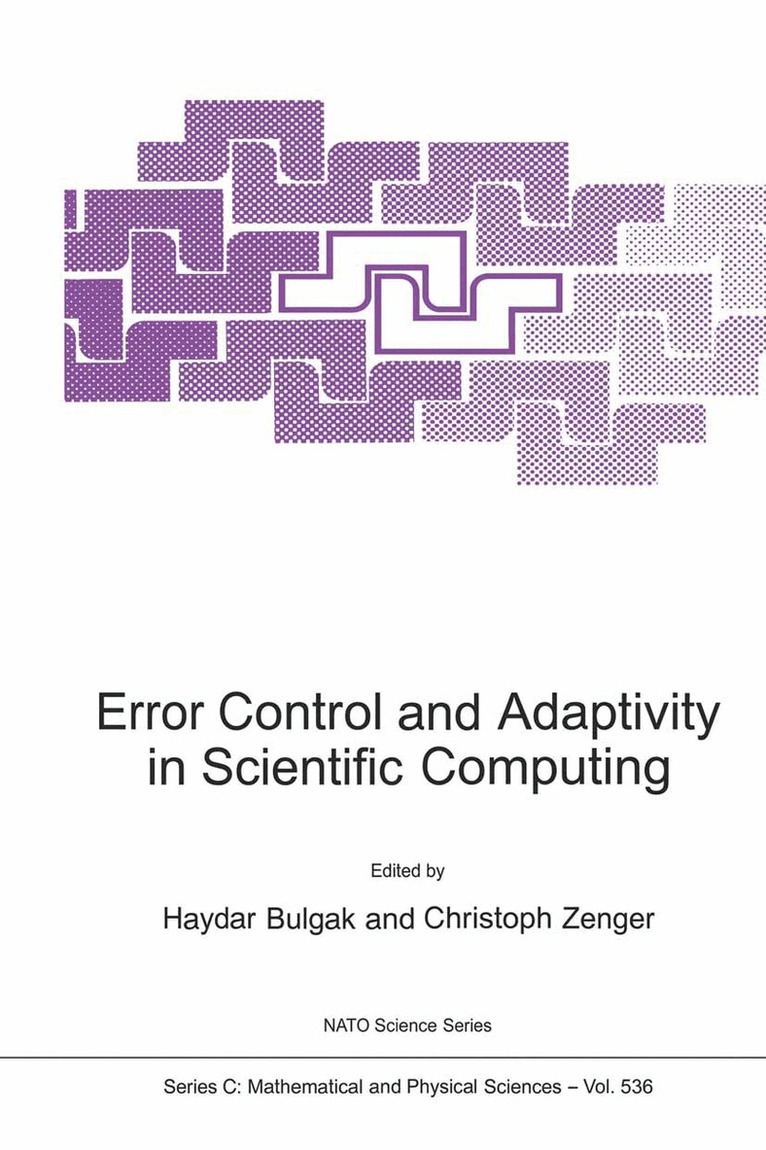
Error Control and Adaptivity in Scientific Computing
Av Haydar Bulgak, Christoph Zenger
Inbunden, 1999
1096 kr
Lägg i varukorg
One of the main ways by which we can understand complex processes is to create computerised numerical simulation models of them. Modern simulation tools are not used only by experts, however, and reliability has therefore become an important issue, meaning that it is not sufficient for a simulation …
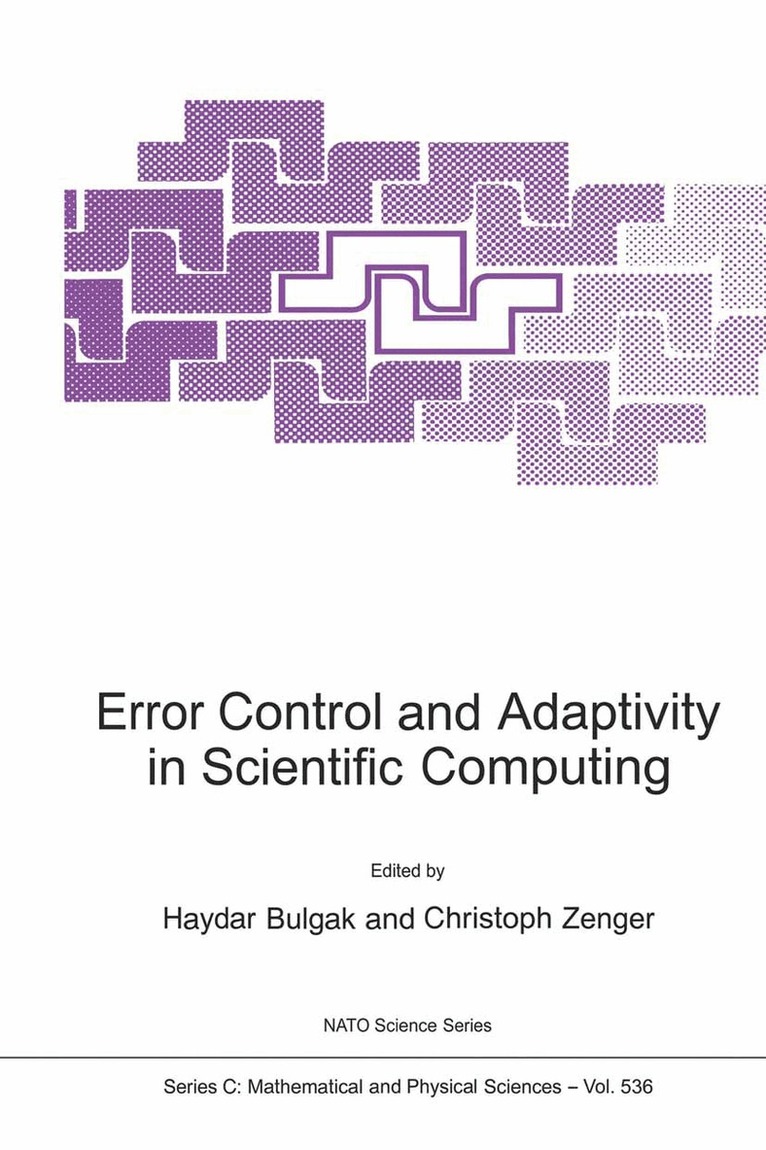
Error Control and Adaptivity in Scientific Computing
Av Haydar Bulgak, Christoph Zenger
Häftad, 1999
1096 kr
Lägg i varukorg
One of the main ways by which we can understand complex processes is to create computerised numerical simulation models of them. Modern simulation tools are not used only by experts, however, and reliability has therefore become an important issue, meaning that it is not sufficient for a simulation …
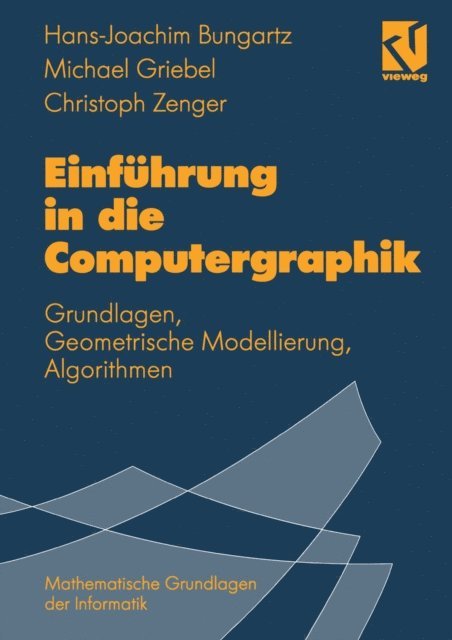
Einführung in die Computergraphik
Grundlagen, Geometrische Modellierung, Algorithmen
Av Christoph Zenger, Michael Griebel m. fl.
E-bok, 2013
554 kr
Lägg i varukorg
Einführung in die Computergraphik
Grundlagen, Geometrische Modellierung, Algorithmen
Av Hans-Joachim Bungartz, Michael Griebel m. fl.
Häftad, 2002
362 kr
Lägg i varukorg
Dieses Buch gibt eine umfassende Einführung in die verschiedenen Aspekte der Computergraphik. Neben der Diskussion grundlegender Fragestellungen (Koordinatensysteme, Rasterung, Farbmodelle) werden dabei sowohl die geometrische Modellierung dreidimensionaler Objekte als auch deren graphische …
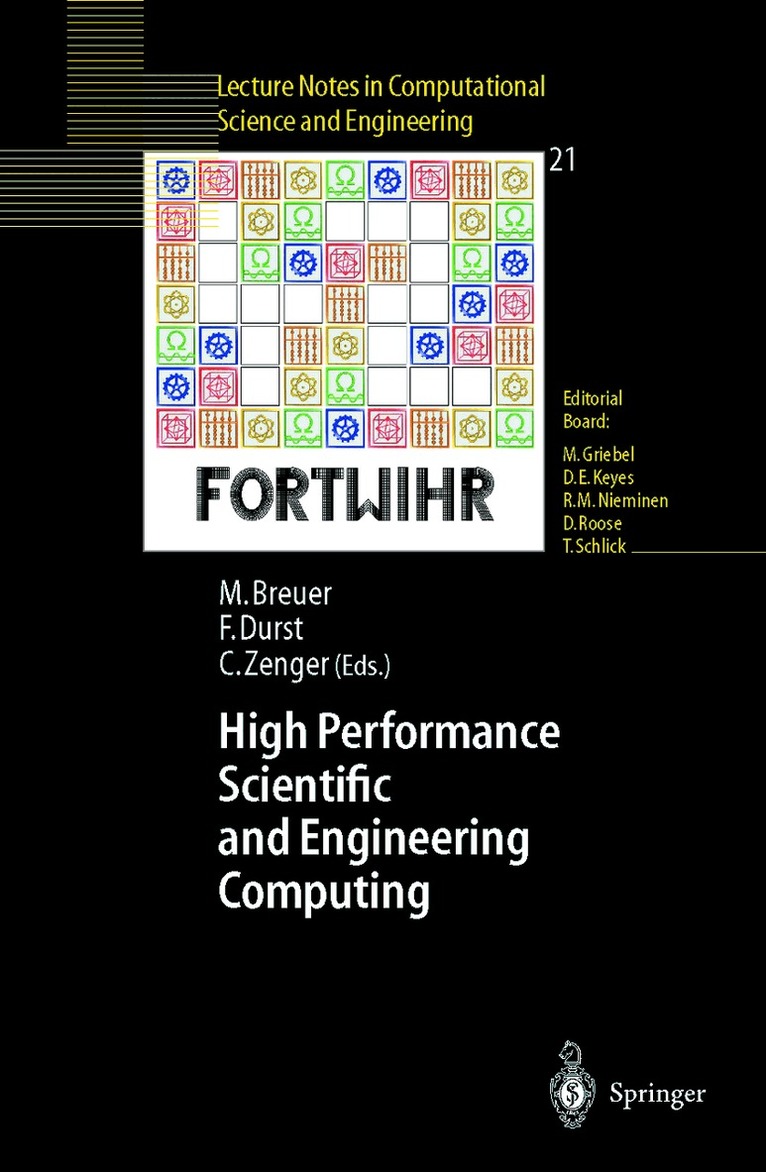
High Performance Scientific And Engineering Computing
Proceedings of the 3rd International FORTWIHR Conference on HPSEC, Erlangen, March 12–14, 2001
Av Michael Breuer, Franz Durst m. fl.
Häftad, 2002
1093 kr
Lägg i varukorg
In Douglas Adams' book 'Hitchhiker's Guide to the Galaxy', hyper-intelligent beings reached a point in their existence where they wanted to understand the purpose of their own existence and the universe. They built a supercomputer, called Deep Thought, and upon completion, they asked it for the …
High Performance Scientific and Engineering Computing
Proceedings of the International FORTWIHR Conference on HPSEC, Munich, March 16–18, 1998
Av Hans-Joachim Bungartz, Franz Durst m. fl.
Häftad, 1999
1093 kr
Lägg i varukorg
This volume contains the proceedings of an international conference on high performance scientific and engineering computing held in Munich in March 1998 and organized by FORTWIHR, the Bavarian Consortium for High Performance Scientific Computing. The 38 contributions cover engineering applications …
High Performance Scientific And Engineering Computing
Proceedings of the 3rd International FORTWIHR Conference on HPSEC, Erlangen, March 12–14, 2001
Av Christoph Zenger, Franz Durst m. fl.
E-bok, 2012
1459 kr
Lägg i varukorg
In Douglas Adams'' book ''Hitchhiker''s Guide to the Galaxy'', hyper-intelligent beings reached a point in their existence where they wanted to understand the purpose of their own existence and the universe. They built a supercomputer, called Deep Thought, and upon completion, they asked it for the …
Lectures on Applied Mathematics
Proceedings of the Symposium Organized by the Sonderforschungsbereich 438 on the Occasion of Karl-Heinz Hoffmann’s 60th Birthday, Munich, June 30 – July 1, 1999
Av Christoph Zenger, Ronald W. Hoppe m. fl.
E-bok, 2012
734 kr
Lägg i varukorg
When the DFG (Deutsche Forschungsgemeinschaft) launched its collabora tive research centre or SFB (Sonderforschungsbereich) 438 "Mathematical Modelling, Simulation, and Verification in Material-Oriented Processes and Intelligent Systems" in July 1997 at the Technische Vniversitat Munchen and at …
High Performance Scientific and Engineering Computing
Proceedings of the International FORTWIHR Conference on HPSEC, Munich, March 16–18, 1998
Av Christoph Zenger, Franz Durst m. fl.
E-bok, 2012
1459 kr
Lägg i varukorg
Since the creation of the term "Scientific Computing" and of its German counterpart "Wissenschaftliches Rechnen" (whoever has to be blamed for that), scientists from outside the field have been confused about the some what strange distinction between scientific and non-scientific computations. And …
Lectures on Applied Mathematics
Proceedings of the Symposium Organized by the Sonderforschungsbereich 438 on the Occasion of Karl-Heinz Hoffmann’s 60th Birthday, Munich, June 30 – July 1, 1999
Av Hans-Joachim Bungartz, Ronald W. Hoppe m. fl.
Häftad, 2013
550 kr
Lägg i varukorg
When the DFG (Deutsche Forschungsgemeinschaft) launched its collabora tive research centre or SFB (Sonderforschungsbereich) 438 "Mathematical Modelling, Simulation, and Verification in Material-Oriented Processes and Intelligent Systems" in July 1997 at the Technische Vniversitat Munchen and at …
Einführung in die Computergraphik
Grundlagen, Geometrische Modellierung, Algorithmen
Av Christoph Zenger, Michael Griebel m. fl.
E-bok, 2013
326 kr
Lägg i varukorg
Error Control and Adaptivity in Scientific Computing
Av Christoph Zenger, Haydar Bulgak
E-bok, 2012
1459 kr
Lägg i varukorg
One of the main ways by which we can understand complex processes is to create computerised numerical simulation models of them. Modern simulation tools are not used only by experts, however, and reliability has therefore become an important issue, meaning that it is not sufficient for a simulation …