Christopher D. Cantwell - Böcker
Visar alla böcker från författaren Christopher D. Cantwell. Handla med fri frakt och snabb leverans.
5 produkter
5 produkter
1 162 kr
Skickas inom 7-10 vardagar
The Pew and the Picket Line collects works from a new generation of scholars working at the nexus where religious history and working-class history converge. Focusing on Christianity and its unique purchase in America, the contributors use in-depth local histories to illustrate how Americans male and female, rural and urban, and from a range of ethnic backgrounds dwelt in a space between the church and the shop floor. Their vivid essays show Pentecostal miners preaching prosperity while seeking miracles in the depths of the earth, while aboveground black sharecroppers and white Protestants establish credit unions to pursue a joint vision of cooperative capitalism. Innovative and essential, The Pew and the Picket Line reframes venerable debates as it maps the dynamic contours of a landscape sculpted by the powerful forces of Christianity and capitalism. Contributors: Christopher D. Cantwell, Heath W. Carter, Janine Giordano Drake, Ken Fones-Wolf, Erik Gellman, Alison Collis Greene, Brett Hendrickson, Dan McKanan, Matthew Pehl, Kerry L. Pimblott, Jarod Roll, Evelyn Sterne, and Arlene Sanchez Walsh.
282 kr
Skickas inom 7-10 vardagar
The Pew and the Picket Line collects works from a new generation of scholars working at the nexus where religious history and working-class history converge. Focusing on Christianity and its unique purchase in America, the contributors use in-depth local histories to illustrate how Americans male and female, rural and urban, and from a range of ethnic backgrounds dwelt in a space between the church and the shop floor. Their vivid essays show Pentecostal miners preaching prosperity while seeking miracles in the depths of the earth, while aboveground black sharecroppers and white Protestants establish credit unions to pursue a joint vision of cooperative capitalism. Innovative and essential, The Pew and the Picket Line reframes venerable debates as it maps the dynamic contours of a landscape sculpted by the powerful forces of Christianity and capitalism. Contributors: Christopher D. Cantwell, Heath W. Carter, Janine Giordano Drake, Ken Fones-Wolf, Erik Gellman, Alison Collis Greene, Brett Hendrickson, Dan McKanan, Matthew Pehl, Kerry L. Pimblott, Jarod Roll, Evelyn Sterne, and Arlene Sanchez Walsh.
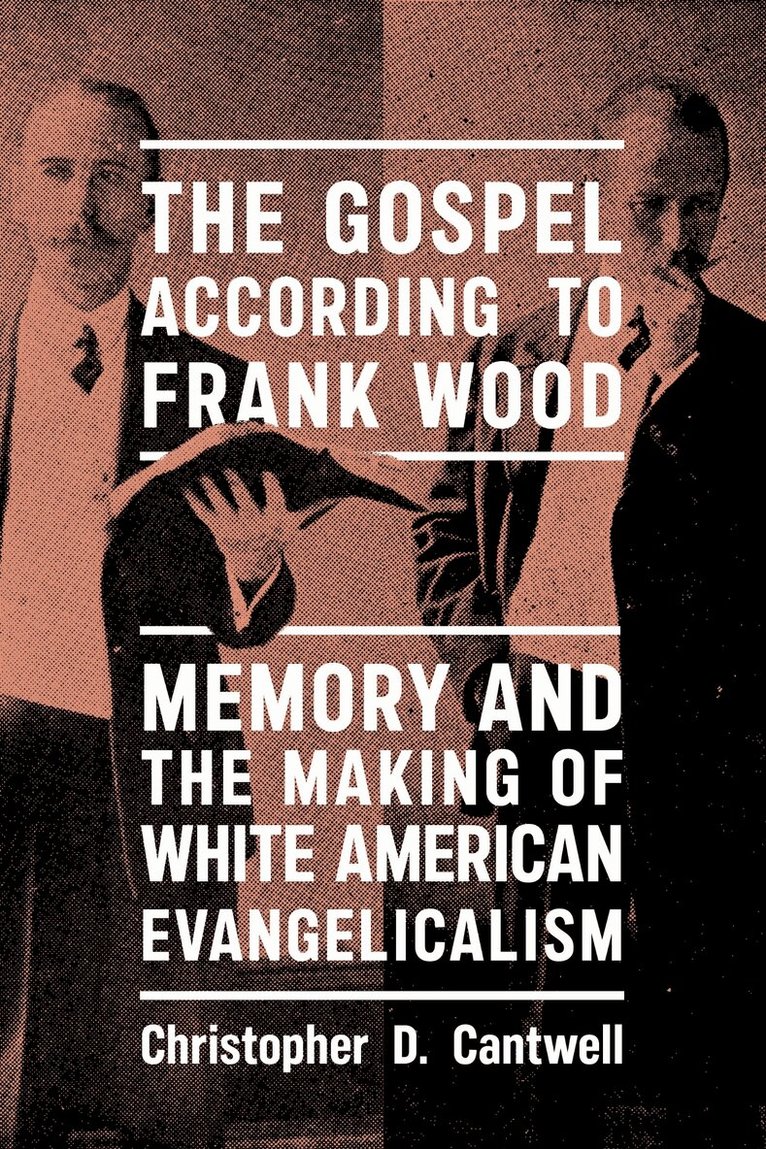
Gospel According to Frank Wood
Memory and the Making of White American Evangelicalism
Inbunden, Engelska, 2026
1 528 kr
Skickas inom 3-6 vardagar
An eye-opening history of how white evangelicals came to see America's past as sacred and themselves as its rightful stewards Though unknown to scholars of religion today, Frank Wood (1864-1945) was a prominent Protestant figure in his day. He taught what was said to be the largest Bible class in Chicago and helped found the city's first neighborhood historical society. In this compelling microhistory, Christopher D. Cantwell draws upon these features of Wood's life to uncover the historic rise and historical origins of the white evangelical nostalgia that haunts the United States today. In fact, Wood's religious life and historical interests directly reveal how evangelicalism itself is something of an invented tradition—a religious movement devised by layfolk like Frank Wood to defend their white, Protestant privilege.Beginning with Wood's move to Chicago, the book situates the origins of the modern evangelical movement in the mass migration of rural, white Protestants from the country to the city at the turn of the twentieth century. The sense of dislocation that accompanied this move made recreating the rhythms of rural social life a major feature of the Bible classes that Wood and millions of other white Protestants joined. The sense of cultural displacement that came with city living, meanwhile, placed an aggrieved sense of nativism and a commitment to Protestant nationalism at the center this community's religious faith and political vision. Out of this culturally meaningful, but racially charged sense of nostalgia would emerge what Wood and others like him called "the old-time religion," a wooden yet pliable phrase that spoke to the religious commitments and the social anxieties of an emerging community that identified itself as "evangelical." The historical importance that everyday white evangelicals attributed to their religious history became a stand-in for the white, Christian nationalism that animated their social vision. Through this surprising and compelling social biography, The Gospel According to Frank Wood offers a bottom-up examination of American evangelicalism, grounding the movement's history in the religious beliefs, cultural memories, and social anxieties of white American Protestants.
Gospel According to Frank Wood
Memory and the Making of White American Evangelicalism
Häftad, Engelska, 2026
297 kr
Skickas
An eye-opening history of how white evangelicals came to see America's past as sacred and themselves as its rightful stewards Though unknown to scholars of religion today, Frank Wood (1864-1945) was a prominent Protestant figure in his day. He taught what was said to be the largest Bible class in Chicago and helped found the city's first neighborhood historical society. In this compelling microhistory, Christopher D. Cantwell draws upon these features of Wood's life to uncover the historic rise and historical origins of the white evangelical nostalgia that haunts the United States today. In fact, Wood's religious life and historical interests directly reveal how evangelicalism itself is something of an invented tradition—a religious movement devised by layfolk like Frank Wood to defend their white, Protestant privilege.Beginning with Wood's move to Chicago, the book situates the origins of the modern evangelical movement in the mass migration of rural, white Protestants from the country to the city at the turn of the twentieth century. The sense of dislocation that accompanied this move made recreating the rhythms of rural social life a major feature of the Bible classes that Wood and millions of other white Protestants joined. The sense of cultural displacement that came with city living, meanwhile, placed an aggrieved sense of nativism and a commitment to Protestant nationalism at the center this community's religious faith and political vision. Out of this culturally meaningful, but racially charged sense of nostalgia would emerge what Wood and others like him called "the old-time religion," a wooden yet pliable phrase that spoke to the religious commitments and the social anxieties of an emerging community that identified itself as "evangelical." The historical importance that everyday white evangelicals attributed to their religious history became a stand-in for the white, Christian nationalism that animated their social vision. Through this surprising and compelling social biography, The Gospel According to Frank Wood offers a bottom-up examination of American evangelicalism, grounding the movement's history in the religious beliefs, cultural memories, and social anxieties of white American Protestants.
598 kr
Skickas inom 5-8 vardagar
This volume provides practical, but provocative, case studies of exemplary projects that apply digital technology or methods to the study of religion. An introduction and 16 essays are organized by the kinds of sources digital humanities scholars use – texts, images, and places – with a final section on the professional and pedagogical issues digital scholarship raises for the study of religion.