Christopher Greenwell - Böcker
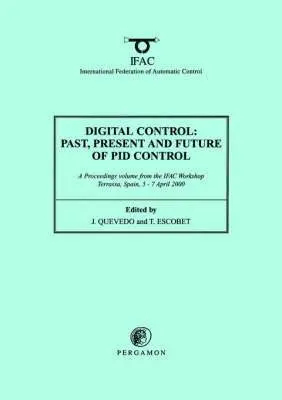
Digital Control 2000: Past, Present and Future of PID Control
Proceedings of the IFAC Workshop, 5-7 April 2000, Terrassa, Spain
1 618 kr
Skickas inom 5-8 vardagar
The present-day structure of PID controllers is quite different from the original analog PID controllers. Now the implementation of the PID is based on digital design, these digital PIDs include many algorithms such as anti-wind-up, auto-tuning, adaptive, and fuzzy fine tuning to improve their performances, but the basic actions remain the same.
During the last two decades, the general reluctance of researchers to use PID controllers has begun to disappear. Many of the new capabilities of digital PID controllers have been introduced by the research community. The industrial control users apply these innovations easily, even enthusiastically. PID control has become one of the most important ways for the scientific specialist in control and the users of industrial control to work together.
This workshop was organized so that the scientific world and the industrial control world could meet and discuss the present and future use of PID controllers - the successes and failures of their use and how to determine the limits of performances. This workshop was also useful for learning about control history, since the origin and evolution of PID control can provide us with keys for new development and designs.
1 391 kr
Skickas inom 5-8 vardagar
The IFAC workshop on Adaptation and Learning in Control and Signal Processing in 2001 gathered together experts in the field and interested researchers from universities and industry to present a full picture of the area. This proceedings volume presents papers covering the following subjects: Model reference and predictive control; Multiple model control; Adaptive control I/II; Adaptive control and learning; Learning; Adaptive control of nonlinear systems I/II; Supervisory control; Neural networks for control; PID design methods; Sliding mode; Adaptive filtering and estimation; Identification methods I/II.
903 kr
Skickas inom 5-8 vardagar
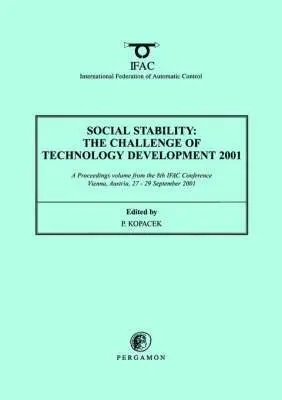
The papers included in this Proceedings volume cover a very broad field of interest, and include topics such as social aspects of technology transfer, managing the introduction of technological change, ethical aspects, technology and environmental stability and anticipating secondary and tertiary effects of technological development.
Technological development has caused profound changes to social stability. Regions that had stable populations for centuries have experienced enormous population growth, leading to the formation of sometimes unmanageable megaplex cities, as well as bringing about macroscopic environmental change. The papers in this Proceedings offer insights into ways to mitigate the unwanted side-effects of rapid development, and methodologies for appropriate ways of managing the introduction of technologies which will alter social stability.
This conference was dedicated to Professor Harold Chestnut, the first president of IFAC, who died in August 2001. Professor Chestnut was among the pioneers of social stability ideas within IFAC and formed the technical committee which organises this conference series.