Christopher Kinsey – författare
Visar alla böcker från författaren Christopher Kinsey. Handla med fri frakt och snabb leverans.
24 produkter
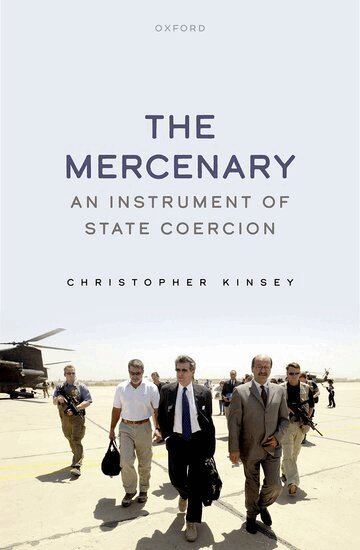
The Mercenary
An Instrument of State Coercion
Inbunden, 2023
1333 kr
Lägg i varukorg
Ever since the French Revolution and the rise of the rise of national armies, the mercenary has been viewed as a maligned and marginalized actor in international relations. The Mercenary challenges this view, suggesting instead that while delegated to the periphery of Great Power politics, the …
Mercenary
An Instrument of State Coercion
E-bok, 2023
1192 kr
Lägg i varukorg
Ever since the French Revolution and the rise of the rise of national armies, the mercenary has been viewed as a maligned and marginalized actor in international relations. The Mercenary challenges this view, suggesting instead that while delegated to the periphery of Great Power politics, the …
Mercenary
An Instrument of State Coercion
E-bok, 2023
1192 kr
Lägg i varukorg
Ever since the French Revolution and the rise of the rise of national armies, the mercenary has been viewed as a maligned and marginalized actor in international relations. The Mercenary challenges this view, suggesting instead that while delegated to the periphery of Great Power politics, the …
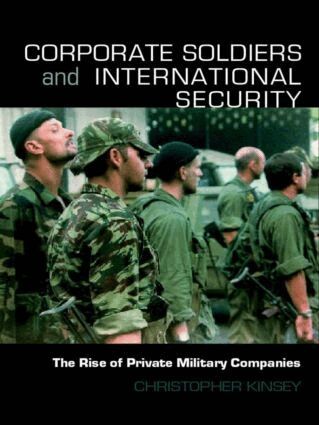
Corporate Soldiers and International Security
The Rise of Private Military Companies
Inbunden, 2006
2512 kr
Lägg i varukorg
This book traces the history of private military companies, with a special focus on UK private forces.Christopher Kinsey examines the mercenary companies that filled the ranks of many European armies right up to the 1850s, the organizations that operated in Africa in the 1960s and early 1970s, the …
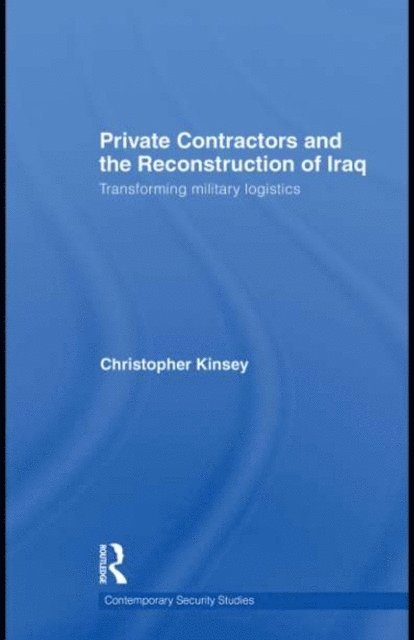
Private Contractors and the Reconstruction of Iraq
Transforming Military Logistics
Inbunden, 2009
2888 kr
Lägg i varukorg
Private Contractors and the Reconstruction of Iraq examines the controversial role of military contractors in the reconstruction of Iraq. When 'Operation Iraqi Freedom' was launched in March 2003, few, if any, of the Coalition's political leaders could have envisaged that within a few months the …
Corporate Soldiers and International Security
The Rise of Private Military Companies
Häftad, 2007
937 kr
Lägg i varukorg
This book traces the history of private military companies, with a special focus on UK private forces.Christopher Kinsey examines the mercenary companies that filled the ranks of many European armies right up to the 1850s, the organizations that operated in Africa in the 1960s and early 1970s, the …
Private Contractors and the Reconstruction of Iraq
Transforming Military Logistics
Häftad, 2012
847 kr
Lägg i varukorg
Private Contractors and the Reconstruction of Iraq examines the controversial role of military contractors in the reconstruction of Iraq. When 'Operation Iraqi Freedom' was launched in March 2003, few, if any, of the Coalition's political leaders could have envisaged that within a few months the …
Contractors and War
The Transformation of United States' Expeditionary Operations
Av Christopher Kinsey, Malcolm Hugh Patterson
Inbunden, 2012
1686 kr
Lägg i varukorg
The U.S. military is no longer based on a Cold War self-sufficient model. Today's armed forces are a third smaller than they were during the Cold War, and yet are expected to do as much if not more than they did during those years. As a result, a transformation is occurring in the way the U.S. …
Contractors and War
The Transformation of United States' Expeditionary Operations
Av Christopher Kinsey, Malcolm Hugh Patterson
Häftad, 2012
413 kr
Lägg i varukorg
The U.S. military is no longer based on a Cold War self-sufficient model. Today's armed forces are a third smaller than they were during the Cold War, and yet are expected to do as much if not more than they did during those years. As a result, a transformation is occurring in the way the U.S. …
Contractors and War
The Transformation of United States' Expeditionary Operations
Av Christopher Kinsey, Malcolm Hugh Patterson
E-bok, 2012
502 kr
Lägg i varukorg
The U.S. military is no longer based on a Cold War self-sufficient model. Today's armed forces are a third smaller than they were during the Cold War, and yet are expected to do as much if not more than they did during those years. As a result, a transformation is occurring in the way the U.S. …
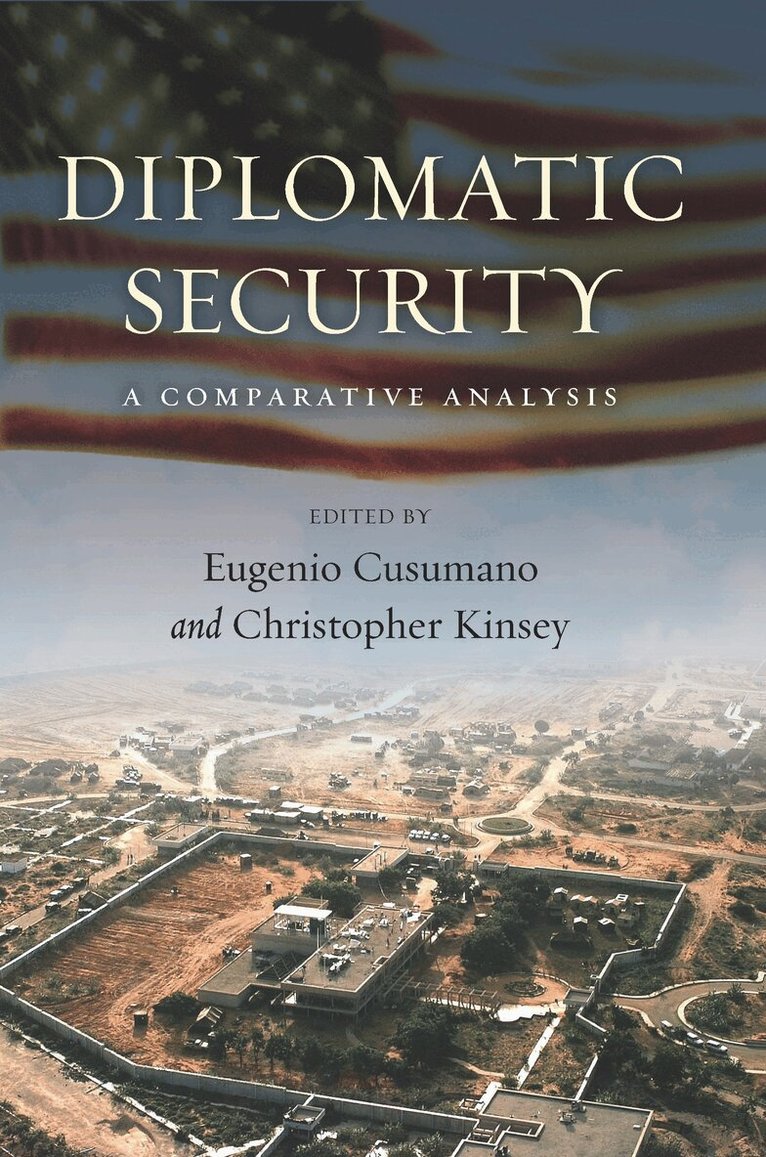
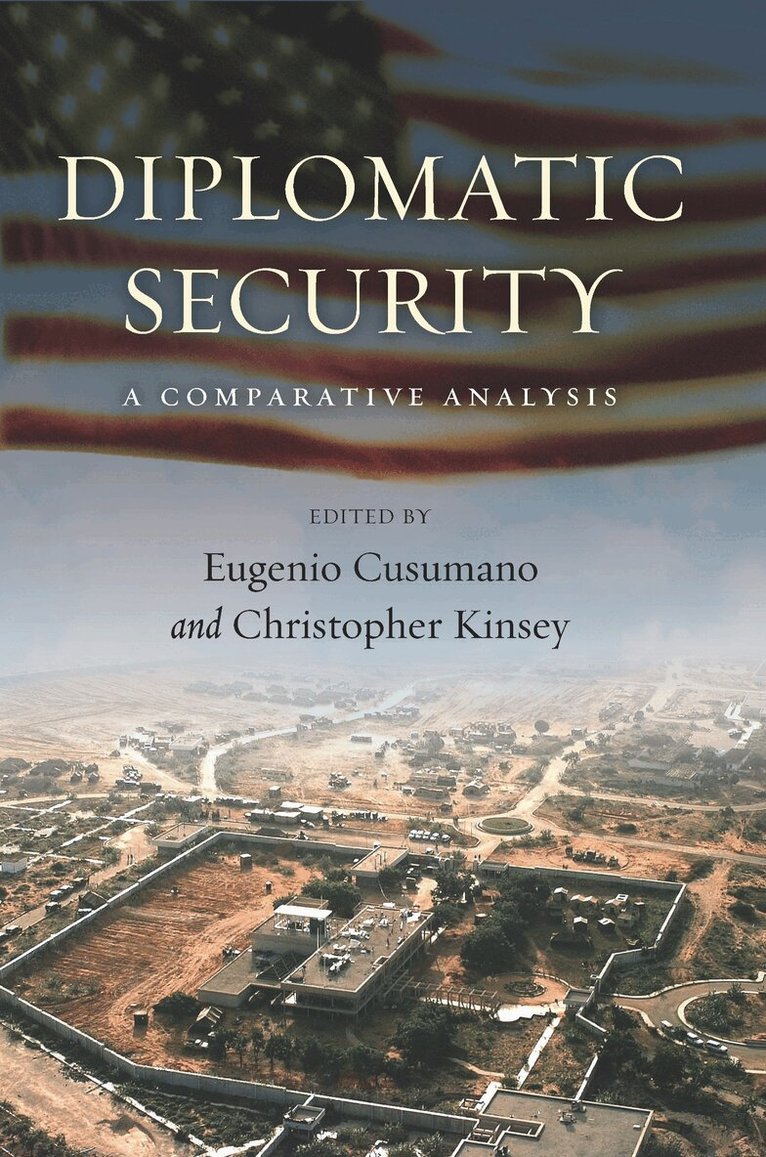
Diplomatic Security
A Comparative Analysis
Av Eugenio Cusumano, Christopher Kinsey
Inbunden, 2019
791 kr
Lägg i varukorg
The safety of diplomats has animated recent public and political debates. As diplomatic personnel are increasingly targeted by terrorism and political violence while overseas, sending states are augmenting host nations' security measures with their own. Protective arrangements range from deploying …
Mercenaries and Security Contractors in the 21st Century
The Past and Future of Private Force
Av Eugenio Cusumano, Christopher Kinsey m. fl.
Inbunden, 2025
2311 kr
Lägg i varukorg
This book examines the debate over private security contractors, using historical and contemporary cases, including several non-Western examples.Since the end of the Cold War, security privatization has grown in its geographical outreach, breadth, and scope. This pervasive expansion of the private …
Mercenaries and Security Contractors in the 21st Century
The Past and Future of Private Force
Av Eugenio Cusumano, Christopher Kinsey m. fl.
Häftad, 2026
649 kr
Lägg i varukorg
This book examines the debate over private security contractors, using historical and contemporary cases, including several non-Western examples.Since the end of the Cold War, security privatization has grown in its geographical outreach, breadth, and scope. This pervasive expansion of the private …
Mercenaries and Security Contractors in the 21st Century
The Past and Future of Private Force
Av Robert Parr, Christopher Kinsey m. fl.
E-bok, 2025
767 kr
Lägg i varukorg
This book examines the debate over private security contractors, using historical and contemporary cases, including several non-Western examples. Since the end of the Cold War, security privatization has grown in its geographical outreach, breadth, and scope. This pervasive expansion of the private …
Mercenaries and Security Contractors in the 21st Century
The Past and Future of Private Force
Av Robert Parr, Christopher Kinsey m. fl.
E-bok, 2025
767 kr
Lägg i varukorg
This book examines the debate over private security contractors, using historical and contemporary cases, including several non-Western examples. Since the end of the Cold War, security privatization has grown in its geographical outreach, breadth, and scope. This pervasive expansion of the private …
Corporate Soldiers and International Security
The Rise of Private Military Companies
E-bok, 2006
1106 kr
Lägg i varukorg
This book traces the history of private military companies, with a special focus on UK private forces. Christopher Kinsey examines the mercenary companies that filled the ranks of many European armies right up to the 1850s, the organizations that operated in Africa in the 1960s and early 1970s, the …
Corporate Soldiers and International Security
The Rise of Private Military Companies
E-bok, 2006
1082 kr
Lägg i varukorg
This book traces the history of private military companies, with a special focus on UK private forces. Christopher Kinsey examines the mercenary companies that filled the ranks of many European armies right up to the 1850s, the organizations that operated in Africa in the 1960s and early 1970s, the …
Private Contractors and the Reconstruction of Iraq
Transforming Military Logistics
E-bok, 2009
866 kr
Lägg i varukorg
Private Contractors and the Reconstruction of Iraq examines the controversial role of military contractors in the reconstruction of Iraq. When '' Operation Iraqi Freedom'' was launched in March 2003, few, if any, of the Coalition''s political leaders could have envisaged that within a few months …
Private Contractors and the Reconstruction of Iraq
Transforming Military Logistics
E-bok, 2009
866 kr
Lägg i varukorg
Private Contractors and the Reconstruction of Iraq examines the controversial role of military contractors in the reconstruction of Iraq. When '' Operation Iraqi Freedom'' was launched in March 2003, few, if any, of the Coalition''s political leaders could have envisaged that within a few months …
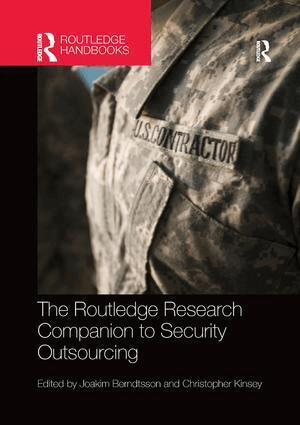
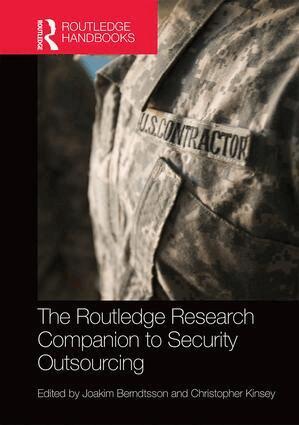
Routledge Research Companion to Security Outsourcing
Av Joakim Berndtsson, Christopher Kinsey
Häftad, 2018
750 kr
Lägg i varukorg
Conveniently structured into five sections, The Routledge Research Companion to Outsourcing Security offers an overview of the different ways in which states have come to rely on private contractors to support interventions.Part One puts into context the evolution of outsourcing in Western states …
Routledge Research Companion to Security Outsourcing
Av Christopher Kinsey, Joakim Berndtsson
E-bok, 2016
795 kr
Lägg i varukorg
Conveniently structured into five sections, The Routledge Research Companion to Outsourcing Security offers an overview of the different ways in which states have come to rely on private contractors to support interventions. Part One puts into context the evolution of outsourcing in Western states …
Routledge Research Companion to Security Outsourcing
Av Christopher Kinsey, Joakim Berndtsson
E-bok, 2016
813 kr
Lägg i varukorg
Conveniently structured into five sections, The Routledge Research Companion to Outsourcing Security offers an overview of the different ways in which states have come to rely on private contractors to support interventions. Part One puts into context the evolution of outsourcing in Western states …
Routledge Research Companion to Security Outsourcing
Av Joakim Berndtsson, Christopher Kinsey
Inbunden, 2016
4244 kr
Lägg i varukorg
Conveniently structured into five sections, The Routledge Research Companion to Outsourcing Security offers an overview of the different ways in which states have come to rely on private contractors to support interventions.Part One puts into context the evolution of outsourcing in Western states …
Diplomatic Security
A Comparative Analysis
Av Eugenio Cusumano, Christopher Kinsey
E-bok, 2019
881 kr
Lägg i varukorg
The safety of diplomats has animated recent public and political debates. As diplomatic personnel are increasingly targeted by terrorism and political violence while overseas, sending states are augmenting host nations' security measures with their own. Protective arrangements range from deploying …