Eugenio Cusumano – författare
768 kr
Skickas inom 5-8 vardagar
682 kr
Läs direkt efter köp
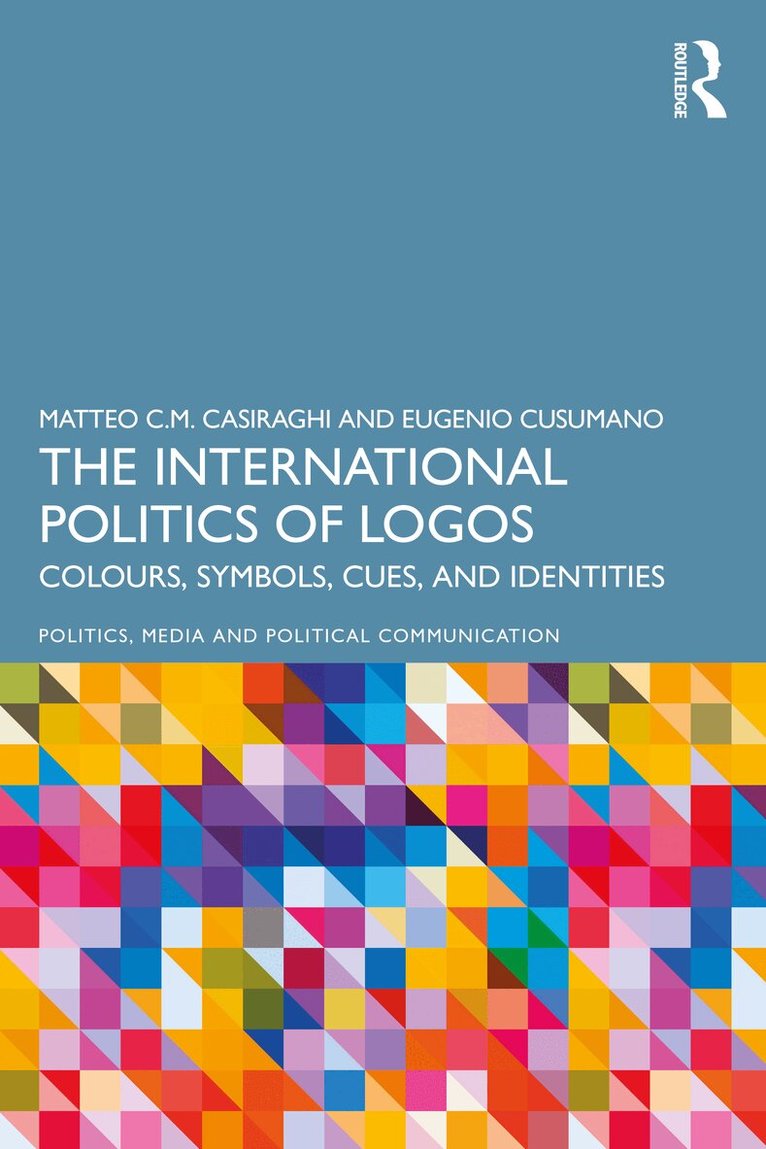
The International Politics of Logos provides the first systematic analysis of logos and the role they play in international politics.
Whilst there is growing scholarly interest in visual politics, logos have largely remained hidden in plain sight despite being the most important symbol of a variety of organizations. Visual artefacts, such as logos, play an increasingly central role in politics. Candidates running for office carefully choose the images they share on social media, political parties devise effective brands, and NGOs use visual artefacts for advocacy and advertisement. Visual artefacts are also vital for violent non-state actors, ranging from private military and security companies (PMSCs) to terrorists. This book provides a wealth of data on the logos chosen by a variety of organizations, examining how they vary between actors, across types of organizations, and over time. It offers methodological innovations to the study of logos and visual politics, highlighting the potential of combining quantitative and qualitative methodologies to study the colours, symbols, and types of logos and other visual artefacts. The book examines the role of colours as cues and the causal connection between chromatic choices and ideology, the influence of socialization and norm diffusion dynamics in the choice to showcase (or scrap) specific symbols, and the relationship between branding decisions and the structure and strategies of specific organizations.
This book will appeal to students and scholars of visual politics and visual communication, as well as those researching political parties, PMSCs, and terrorist groups. It will also be of interest to political, security, and marketing professionals.
682 kr
Läs direkt efter köp
The International Politics of Logos provides the first systematic analysis of logos and the role they play in international politics.
Whilst there is growing scholarly interest in visual politics, logos have largely remained hidden in plain sight despite being the most important symbol of a variety of organizations. Visual artefacts, such as logos, play an increasingly central role in politics. Candidates running for office carefully choose the images they share on social media, political parties devise effective brands, and NGOs use visual artefacts for advocacy and advertisement. Visual artefacts are also vital for violent non-state actors, ranging from private military and security companies (PMSCs) to terrorists. This book provides a wealth of data on the logos chosen by a variety of organizations, examining how they vary between actors, across types of organizations, and over time. It offers methodological innovations to the study of logos and visual politics, highlighting the potential of combining quantitative and qualitative methodologies to study the colours, symbols, and types of logos and other visual artefacts. The book examines the role of colours as cues and the causal connection between chromatic choices and ideology, the influence of socialization and norm diffusion dynamics in the choice to showcase (or scrap) specific symbols, and the relationship between branding decisions and the structure and strategies of specific organizations.
This book will appeal to students and scholars of visual politics and visual communication, as well as those researching political parties, PMSCs, and terrorist groups. It will also be of interest to political, security, and marketing professionals.
595 kr
Skickas inom 10-15 vardagar
2 179 kr
Skickas inom 10-15 vardagar
2 004 kr
Skickas inom 10-15 vardagar
687 kr
Läs direkt efter köp
This book examines the debate over private security contractors, using historical and contemporary cases, including several non-Western examples.
Since the end of the Cold War, security privatization has grown in its geographical outreach, breadth, and scope. This pervasive expansion of the private military and security market warrants a systematic investigation of commercial actors’ involvement in the variety of tasks associated with the provision of violence, ranging from combat to vessel protection and cybersecurity. Combining theoretical and empirical approaches, the essays in this volume provide a historical investigation into private force that extends beyond Europe and the United States.
By focusing on recent developments, such as the extensive involvement of Russian mercenaries in Ukraine, new evidence from the Global South, and the added historical depth given to the study of commercial providers of warfare, this volume questions the endurance of norms like the mercenary taboo and the state monopoly of violence. In doing so, it sheds new light on the past, present, and future of private security.
This book will be of much interest to students of private security studies, military studies, security studies, and international relations.
687 kr
Läs direkt efter köp
This book examines the debate over private security contractors, using historical and contemporary cases, including several non-Western examples.
Since the end of the Cold War, security privatization has grown in its geographical outreach, breadth, and scope. This pervasive expansion of the private military and security market warrants a systematic investigation of commercial actors’ involvement in the variety of tasks associated with the provision of violence, ranging from combat to vessel protection and cybersecurity. Combining theoretical and empirical approaches, the essays in this volume provide a historical investigation into private force that extends beyond Europe and the United States.
By focusing on recent developments, such as the extensive involvement of Russian mercenaries in Ukraine, new evidence from the Global South, and the added historical depth given to the study of commercial providers of warfare, this volume questions the endurance of norms like the mercenary taboo and the state monopoly of violence. In doing so, it sheds new light on the past, present, and future of private security.
This book will be of much interest to students of private security studies, military studies, security studies, and international relations.
844 kr
Läs direkt efter köp
1 308 kr
Skickas inom 10-15 vardagar
1 138 kr
Läs direkt efter köp
This book examines the strategies pursued by the North Atlantic Treaty Organization (NATO) and the European Union (EU) to foster resilience in the Middle East, Maghreb and Sahel regions, ranging from military operations to humanitarian assistance. Thanks to its constructive ambiguity, resilience can bring together policy communities and connect sponsors of reform with local societies, but also bridge rifts between and within the EU and NATO. However, existing resilience-based policies are fraught with policy, theoretical and normative dilemmas. This volume examines these dilemmas by including international relations, European politics and area studies scholars, as well as practitioners from armed forces, international organisations, humanitarian NGOs and think tanks.
929 kr
Skickas inom 10-15 vardagar
1 262 kr
Skickas
1 672 kr
Läs direkt efter köp
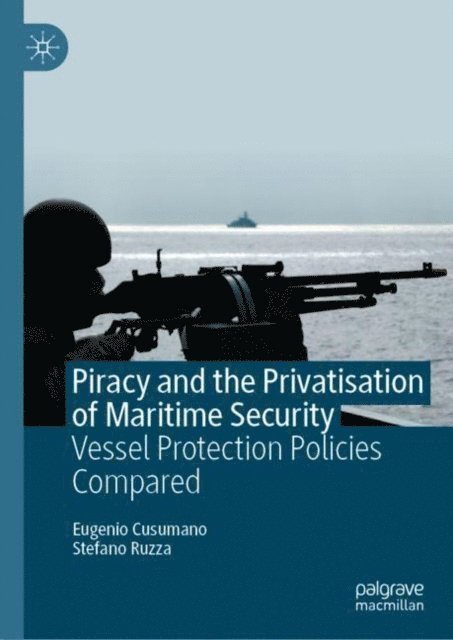
In response to pirate attacks in the Western Indian Ocean, countries worldwide have increasingly authorized the deployment of armed guards from private military and security companies (PMSCs) on merchant ships. This widespread trend contradicts states’ commitment to retain a monopoly on violence and discourage the presence of arms on civilian vessels. This book conceptualizes the extensive use of PMSCs as a form of institutional isomorphism, combining the functionalist, ideational, political and organizational arguments used to account for the privatization of security on land into a synthetic explanation of the commercialization of vessel protection.
1 303 kr
Skickas inom 10-15 vardagar
1 525 kr
Skickas inom 10-15 vardagar
1 825 kr
Läs direkt efter köp
This book investigates the connection between tightening mobilization constraints and the use of PMSCs in the United States, the United Kingdom, and Italy. Drawing on neoclassical realism and institutionalist theory, it conceptualizes democracies’ use of private military and security companies (PMSCs) as an attempt to circumvent the tightening constraints on the mobilization of military power. The use of private military contractors is less subjected to parliamentary restrictions and less visible to public opinion than the deployment of soldiers. Rather than cheaper in financial terms, PMSCs are therefore politically cost-effective, as they enable decision-makers to minimize the institutional obstacles on conducting military operations and the electoral costs attached thereto. The need to reduce the ex ante hurdles and the ex post costs of military deployments fills the blind spots of alternative explanations for the use of PMSCs based on effectiveness, ideology, and organizational interests.
625 kr
Skickas inom 5-8 vardagar
1 525 kr
Skickas inom 10-15 vardagar
1 742 kr
Skickas inom 10-15 vardagar
2 130 kr
Läs direkt efter köp
2 176 kr
Skickas inom 10-15 vardagar
2 741 kr
Läs direkt efter köp
This edited volume provides scholars and practitioners with an in-depth examination of the role of civil-military cooperation in addressing hybrid threats. As they combine the simultaneous employment of conventional and non-conventional tools and target not only military objectives but governments and societies at large, hybrid threats cannot be countered solely by military means, but require an equally inclusive response encompassing a wide range of military and civilian actors.
This book, which combines the perspectives of academics, military officers, and officials from international and non-governmental organisations, resorts to different case studies to illustrate the importance of civil-military cooperation in enhancing the resilience of NATO members and partners against a wide range of societal destabilization strategies, thereby contributing to the formulation of a civil-military response to hybrid threats.2 173 kr
Skickas inom 10-15 vardagar