• Fri frakt över 249 kr
  • •
  • Snabba leveranser
  • •
  • Billiga böcker
Kundservice

Du är på sajten för privatpersoner.

Företag, bibliotek eller offentlig verksamhet?

Du handlar på classic.bokus.com, där alla dina funktioner finns intakta.
Till classic.bokus.com
Bokus logotyp. Gå till startsidan.
  • Erbjudanden
  • Nyheter
  • Student
  • Topplistor
  • Barn & ungdom
  • Bokus Play
  • E-böcker
  • Pocketböcker
  • Spel & pussel

10% rabatt på allt med kod: NYSTART10 →

Sidfot

Mina sidor

    Hjälp

    • Kundservice
    • Vanliga frågor och svar
    • Frakt och leverans
    • Retur vid ångerrätt
    • Reklamera vara
    • Betalning
    • Köpvillkor
    • Allmänna villkor
    • Information om webbplatsens tillgänglighet

    Om Bokus

    • Om oss
    • Pressrum
    • För studenter
    • För företag
    • För bibliotek och offentlig verksamhet
    • För leverantörer
    • Hållbarhet

    Populärt

    • Aktuella erbjudanden
    • Presentkort
    • Studentlitteratur
    • Nya böcker
    • Topplistor
    • Signerade böcker
    • Engelska böcker

    Inspiration

    • Boktips
    • BookTok
    • Populära bokserier
    • Barnbokskaraktärer
    • Populära författare
    Logotyp för Bokus
    Följ oss på Facebook (extern länk)Följ oss på Instagram (extern länk)Följ oss på YouTube (extern länk)Följ oss på TikTok (extern länk)
    bokus @ CookiesAnpassa cookiesIntegritetspolicyKöpvillkor
    Till Citymail hemsida (extern länk)Till Budbee hemsida (extern länk)Till Postnord hemsida (extern länk)Till Schenker hemsida (extern länk)Till Early Bird hemsida (extern länk)Till Walleys hemsida (extern länk)
    1. Samhälle och politik
    2. Krig och försvar

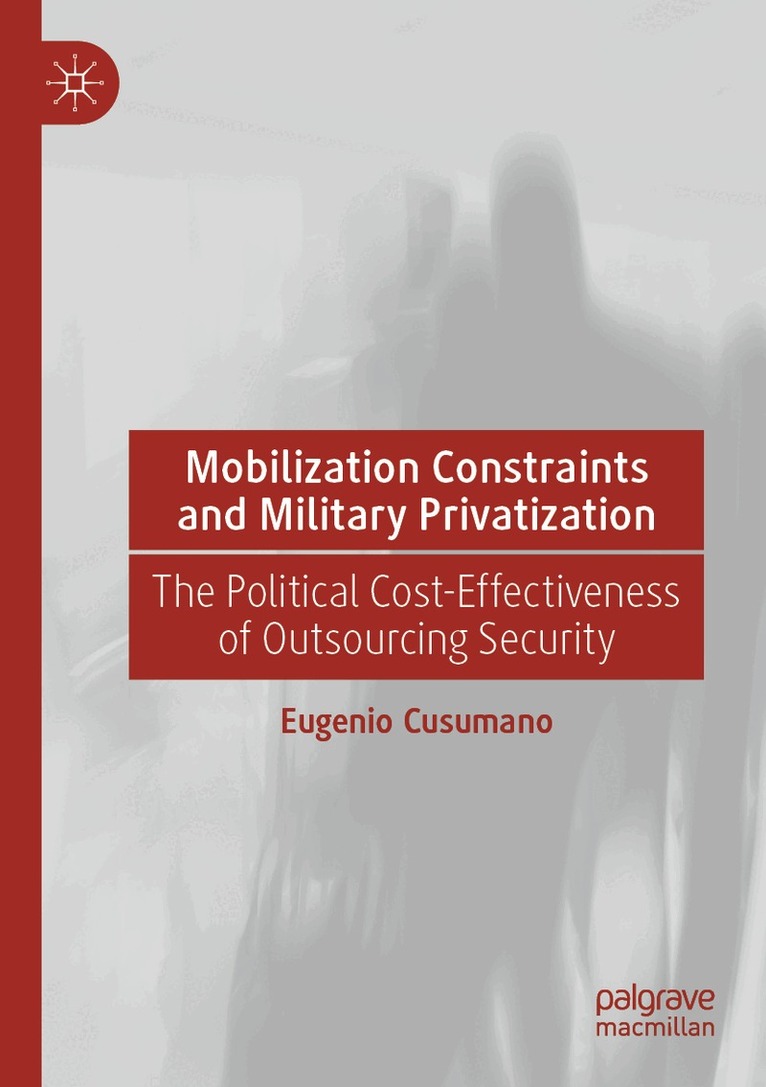
    Mobilization Constraints and Military Privatization

    The Political Cost-Effectiveness of Outsourcing Security

    AvEugenio Cusumano

    Häftad, Engelska, 2023

    1 518 kr

    Beställningsvara. Skickas inom 10-15 vardagar. Fri frakt över 249 kr.

    Fler format och utgåvor

    Inbunden

    1 518 kr

    E-bok

    1 891 kr

    Häftad

    646 kr

    Beskrivning

    This book investigates the connection between tightening mobilization constraints and the use of PMSCs in the United States, the United Kingdom, and Italy. Drawing on neoclassical realism and institutionalist theory, it conceptualizes democracies’ use of private military and security companies (PMSCs) as an attempt to circumvent the tightening constraints on the mobilization of military power. The use of private military contractors is less subjected to parliamentary restrictions and less visible to public opinion than the deployment of soldiers. Rather than cheaper in financial terms, PMSCs are therefore politically cost-effective, as they enable decision-makers to minimize the institutional obstacles on conducting military operations and the electoral costs attached thereto. The need to reduce the ex ante hurdles and the ex post costs of military deployments fills the blind spots of alternative explanations for the use of PMSCs based on effectiveness, ideology, and organizational interests.

    Produktinformation

    • Utgivningsdatum:2023-12-13
    • Mått:148 x 210 x 15 mm
    • Vikt:341 g
    • Format:Häftad
    • Språk:Engelska
    • Antal sidor:240
    • Förlag:Springer International Publishing AG
    • ISBN:9783031164255

    Utforska kategorier

    • Krig och försvar inom Samhälle och politik
    • Internationella relationer inom Samhälle och politik

    Mer om författaren

    Eugenio Cusumano is Associate Professor of political science at the University of Messina, Italy.

    Innehållsförteckning

    • 1. Introduction.- 2. Military Privatization and State Power in Historical Perspective.- 3. Domestic Political Constraints and Contractor Support to Military Operations: a new Theoretical Framework.- 4. Mobilization Constraints and Military Privatization in the United States.- 5. Mobilization Constraints and Military Privatization in the United Kingdom.- 6. Military Mobilization Constraints and Military Privatization in Italy.- 7. Effectiveness, Norms, and Military Cultures: Assessing Mobilization Constraints against Competing Explanations.- 8. Conclusions.