Christopher Kutz - Böcker
Visar alla böcker från författaren Christopher Kutz. Handla med fri frakt och snabb leverans.
8 produkter
8 produkter
412 kr
Skickas inom 7-10 vardagar
Over the last few decades, most societies have become more repressive, their laws more relentless, their magistrates more inflexible, independently of the evolution of crime. In The Will to Punish, using an approach both genealogical and ethnographic, distinguished anthropologist Didier Fassin addresses the major issues raised by this punitive moment through an inquiry into the very foundations of punishment. What is punishment? Why punish? Who is punished? Through these three questions, he initiates a critical dialogue with moral philosophy and legal theory on the definition, the justification and the distribution of punishment. Discussing various historical and national contexts, mobilizing a ten-year research program on police, justice and prison, and taking up the legacy of Friedrich Nietzsche and Michel Foucault, he shows that the link between crime and punishment is an historical artifact, that the response to crime has not always been the infliction of pain, that punishment does not only proceed from rational logics used to legitimize it, that more severity in sentencing often means increasing social inequality before the law, and that the question, "What should be punished?" always comes down to the questions "Whom do we deem punishable?" and "Whom do we want to be spared?" Going against a triumphant penal populism, this investigation proposes a salutary revision of the presuppositions that nourish the passion for punishing and invites to rethink the place of punishment in the contemporary world.The theses developed in the volume are discussed by criminologist David Garland, historian Rebecca McLennan, and sociologist Bruce Western, to whom Didier Fassin responds in a short essay.
359 kr
Skickas inom 5-8 vardagar
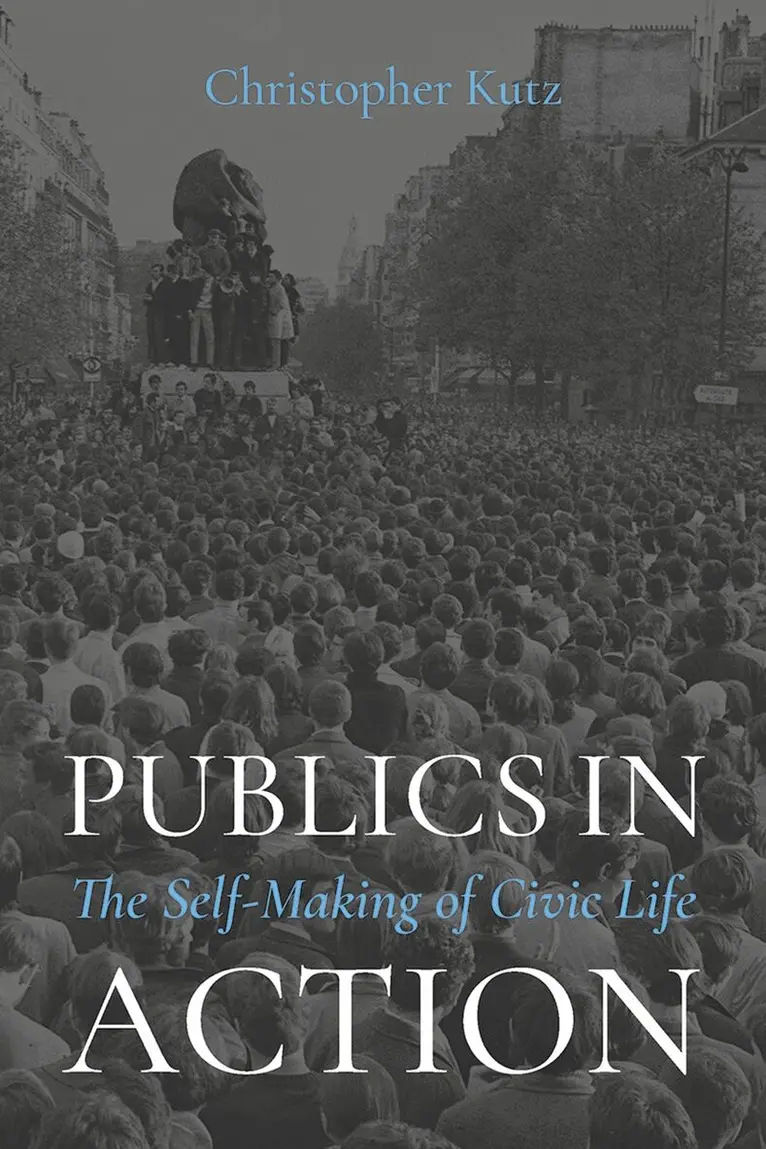
What does it mean for something to be public? It's not always clear what this ever-important word means. Are we using the same idea of "public" when we talk about public education, or public safety, or public works? And how should we think about ourselves as members of "the public"? Who belongs to the public? There are many different groups to consider: citizens and non-citizens who work and live together, the people of future generations, people in other countries who are affected by the gases we pump into our atmosphere. What "public" means can get messy. In Publics in Action, Christopher Kutz looks at how people should and do come together to create their shared institutions, and the lessons we can learn from one another. He argues that a healthy, dynamic public takes itself seriously as a subject of action, not just the passive beneficiary of a state institution. Kutz builds the book around an extended metaphor: we should understand ourselves as a public that improvises: listening to each other as we riff off shared standards and so creating something new, responsive to the scene and the moment. Publics in Action makes use of the author's extensive personal experience in public institutions, and in democracies around the world, with a particular focus on the U.S., represented primarily by California -- arguably the world's most successful multi-cultural democracy -- as well as France, and Norway, each of which provides instructive models of healthy publics in action (and some examples of dysfunction). Merging political philosophy and comparative politics, this book will leave both lay and professional readers not only with an enlivened sense of the possibilities of public life, but with new ideas about how we might build the shared future we desperately need.
320 kr
Skickas inom 7-10 vardagar
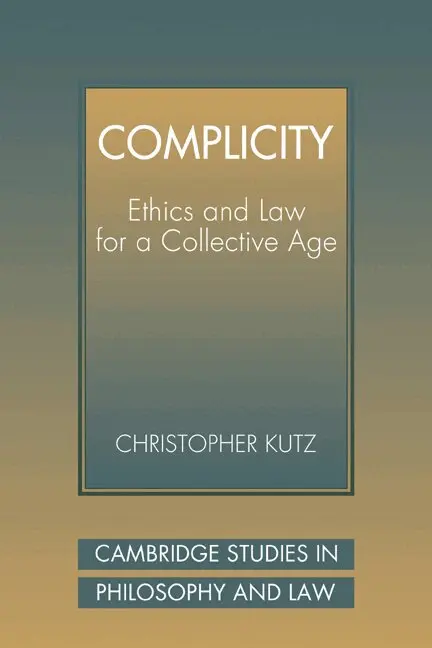
We live in a morally flawed world. Our lives are complicated by what other people do, and by the harms that flow from our social, economic and political institutions. Our relations as individuals to these collective harms constitute the domain of complicity. This book examines the relationship between collective responsibility and individual guilt. It presents a rigorous philosophical account of the nature of our relations to the social groups in which we participate, and uses that account in a discussion of contemporary moral theory. Christopher Kutz shows that the two prevailing theories of moral philosophy, Kantianism and consequentialism, both have difficulties resolving problems of complicity. He then argues for a richer theory of accountability in which any real understanding of collective action not only allows but demands individual responsibility.
1 145 kr
Skickas inom 7-10 vardagar
We live in a morally flawed world. Our lives are complicated by what other people do, and by the harms that flow from our social, economic and political institutions. Our relations as individuals to these collective harms constitute the domain of complicity. This book examines the relationship between collective responsibility and individual guilt. It presents a rigorous philosophical account of the nature of our relations to the social groups in which we participate, and uses that account in a discussion of contemporary moral theory. Christopher Kutz shows that the two prevailing theories of moral philosophy, Kantianism and consequentialism, both have difficulties resolving problems of complicity. He then argues for a richer theory of accountability in which any real understanding of collective action not only allows but demands individual responsibility.
431 kr
Skickas inom 7-10 vardagar
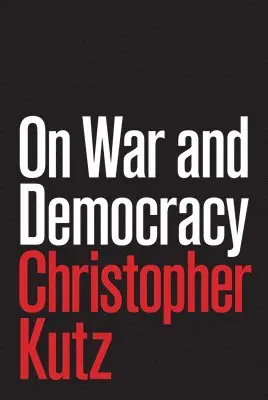
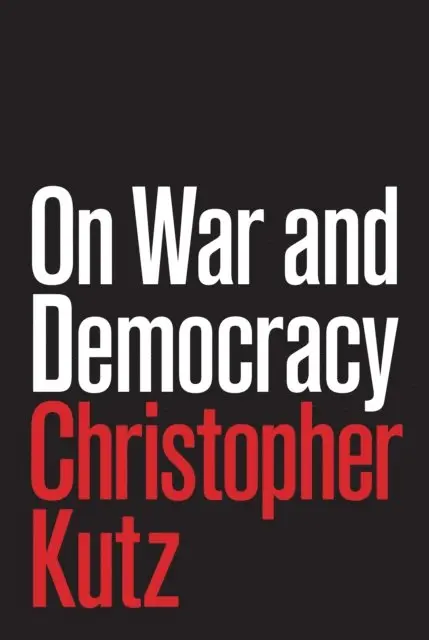
On War and Democracy provides a richly nuanced examination of the moral justifications democracies often invoke to wage war. In this compelling and provocative book, Christopher Kutz argues that democratic principles can be both fertile and toxic ground for the project of limiting war's violence. Only by learning to view war as limited by our democratic values--rather than as a tool for promoting them--can we hope to arrest the slide toward the borderless, seemingly endless democratic "holy wars" and campaigns of remote killings we are witnessing today, and to stop permanently the use of torture and secret law. Kutz shows how our democratic values, understood incautiously and incorrectly, can actually undermine the goal of limiting war. He helps us better understand why we are tempted to believe that collective violence in the name of politics can be legitimate when individual violence is not. In doing so, he offers a bold new account of democratic agency that acknowledges the need for national defense and the promotion of liberty abroad while limiting the temptations of military intervention.Kutz demonstrates why we must address concerns about the means of waging war--including remote war and surveillance--and why we must create institutions to safeguard some nondemocratic values, such as dignity and martial honor, from the threat of democratic politics. On War and Democracy reveals why understanding democracy in terms of political agency, not institutional process, is crucial to limiting when and how democracies use violence.
282 kr
Skickas inom 7-10 vardagar
On War and Democracy provides a richly nuanced examination of the moral justifications democracies often invoke to wage war. In this compelling and provocative book, Christopher Kutz argues that democratic principles can be both fertile and toxic ground for the project of limiting war's violence. Only by learning to view war as limited by our democratic values—rather than as a tool for promoting them—can we hope to arrest the slide toward the borderless, seemingly endless democratic "holy wars" and campaigns of remote killings we are witnessing today, and to stop permanently the use of torture and secret law.Kutz shows how our democratic values, understood incautiously and incorrectly, can actually undermine the goal of limiting war. He helps us better understand why we are tempted to believe that collective violence in the name of politics can be legitimate when individual violence is not. In doing so, he offers a bold new account of democratic agency that acknowledges the need for national defense and the promotion of liberty abroad while limiting the temptations of military intervention. Kutz demonstrates why we must address concerns about the means of waging war—including remote war and surveillance—and why we must create institutions to safeguard some nondemocratic values, such as dignity and martial honor, from the threat of democratic politics.On War and Democracy reveals why understanding democracy in terms of political agency, not institutional process, is crucial to limiting when and how democracies use violence.
1 013 kr
Skickas inom 10-15 vardagar
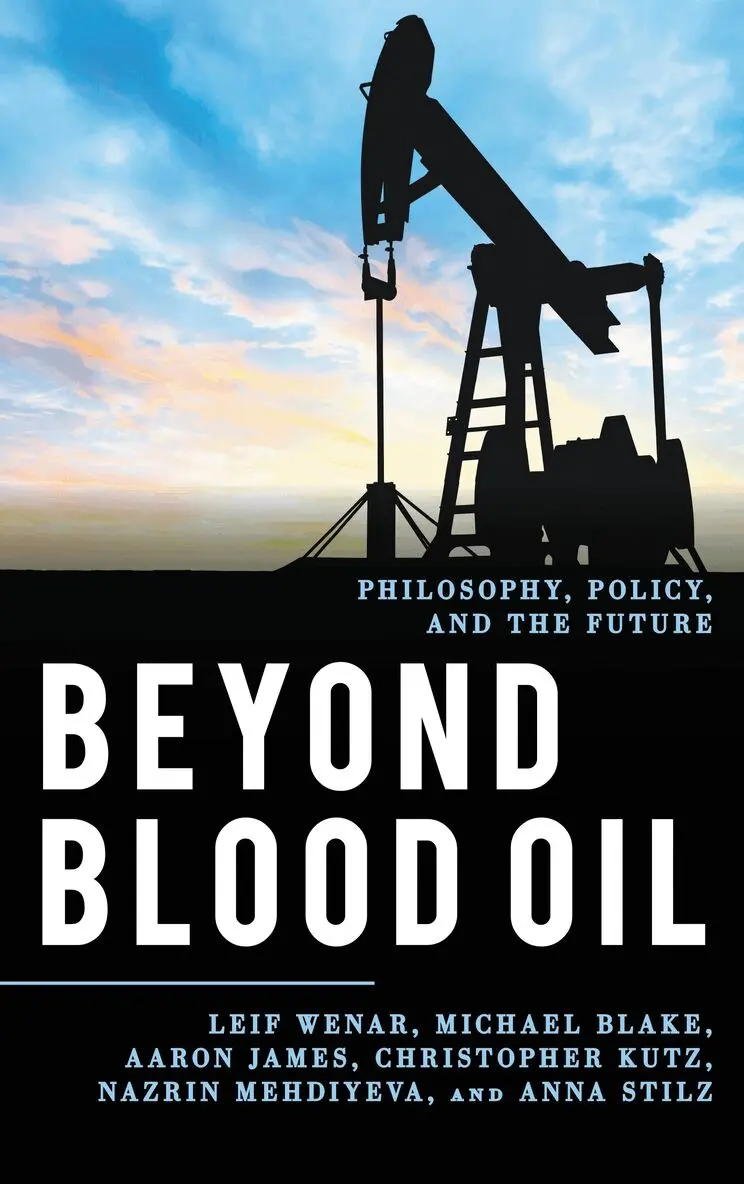
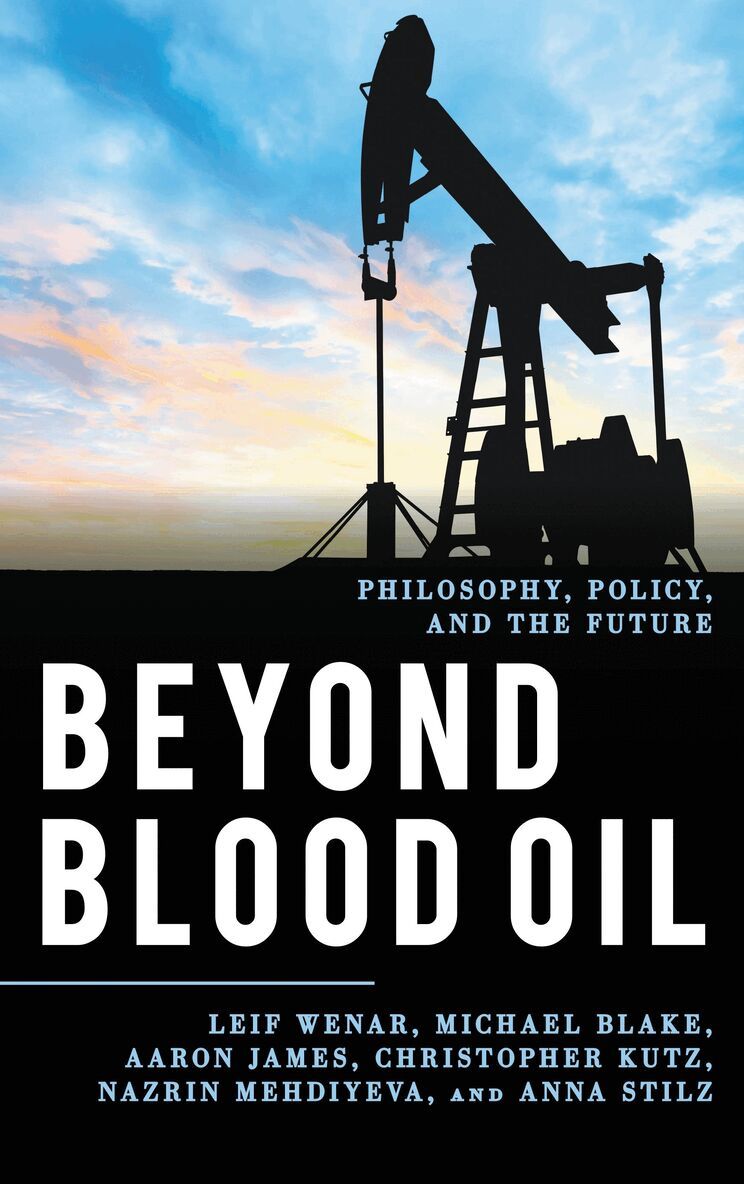
Leif Wenar’s 2016 book Blood Oil: Tyrants, Violence, and the Rules that Run the World argues that much of the conflict, suffering, and injustice in the world is driven by an archaic rule in global trade that forces consumers to fund oppression and corruption. This oil curse is a major threat to global peace and stability. Wenar sets out Clean Trade policies to lift the oil curse through national legislation that affirms democratic principles.In Beyond Blood Oil, Wenar summarizes and extends his views, setting the stage for five essays from first-class critics from the fields of political theory, philosophy, and energy politics. Wenar replies vigorously and frankly to the critics, making the volume the scene of a highly energetic debate that will benefit all scholars, students, and global citizens interested in global justice, international security, oil politics, fair trade, climate change, and progressive reforms.
436 kr
Skickas inom 10-15 vardagar
Leif Wenar’s 2016 book Blood Oil: Tyrants, Violence, and the Rules that Run the World argues that much of the conflict, suffering, and injustice in the world is driven by an archaic rule in global trade that forces consumers to fund oppression and corruption. This oil curse is a major threat to global peace and stability. Wenar sets out Clean Trade policies to lift the oil curse through national legislation that affirms democratic principles.In Beyond Blood Oil, Wenar summarizes and extends his views, setting the stage for five essays from first-class critics from the fields of political theory, philosophy, and energy politics. Wenar replies vigorously and frankly to the critics, making the volume the scene of a highly energetic debate that will benefit all scholars, students, and global citizens interested in global justice, international security, oil politics, fair trade, climate change, and progressive reforms.