Christopher Langlois - Böcker
Visar alla böcker från författaren Christopher Langlois. Handla med fri frakt och snabb leverans.
4 produkter
4 produkter
2 169 kr
Skickas inom 3-6 vardagar
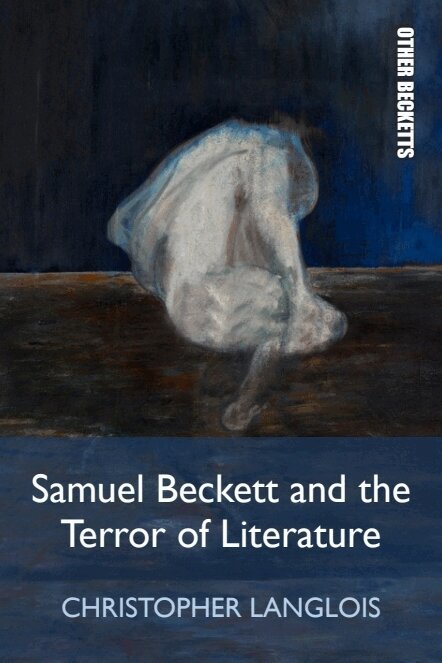
Provides a sustained comparative reading of the relation between Beckett and Blanchot through its novel conception of the language and phenomenon of terrorSamuel Beckett and the Terror of Literature addresses the relevance of terror to understanding the violence, the suffering, and the pain experienced by the narrative voices of Beckett’s major post-1945 works in prose: The Unnamable, Texts for Nothing, How It Is, Company, Ill Seen Ill Said, and Worstward Ho. Through a sustained dialogue with the theoretical work of Maurice Blanchot, it accomplishes a systematic interrogation of what happens in the space of literature when writing, and first of all Beckett’s, encounters the language of terror, thereby giving new significance – ethical, ontological, and political – to what speaks in Beckett’s texts. Key FeaturesArticulates a novel conceptual framework through the language of terror for reading Beckett’s major post-1945 works in prose, all the while engaging with key thinkers in the discourse of contemporary critical theory like Maurice Blanchot, Emmanuel Levinas, and Alain BadiouProvides for the first time a thorough articulation of the significance of terror to Blanchot’s understanding not only of what literature is as literature, but also of the literary history of modernity that Blanchot explicitly traces from the Marquis de Sade to Samuel BeckettAffords literary studies (and Beckett and Blanchot studies specifically) a distinctive and timely voice in the veritable "terror industry" of scholarly research that has proliferated in the twenty-first century against the politico-historical backdrop of the War on Terror
747 kr
Skickas inom 3-6 vardagar
Provides a sustained comparative reading of the relation between Beckett and Blanchot through its novel conception of the language and phenomenon of terrorSamuel Beckett and the Terror of Literature addresses the relevance of terror to understanding the violence, the suffering, and the pain experienced by the narrative voices of Beckett’s major post-1945 works in prose: The Unnamable, Texts for Nothing, How It Is, Company, Ill Seen Ill Said, and Worstward Ho. Through a sustained dialogue with the theoretical work of Maurice Blanchot, it accomplishes a systematic interrogation of what happens in the space of literature when writing, and first of all Beckett’s, encounters the language of terror, thereby giving new significance – ethical, ontological, and political – to what speaks in Beckett’s texts. Key FeaturesArticulates a novel conceptual framework through the language of terror for reading Beckett’s major post-1945 works in prose, all the while engaging with key thinkers in the discourse of contemporary critical theory like Maurice Blanchot, Emmanuel Levinas, and Alain BadiouProvides for the first time a thorough articulation of the significance of terror to Blanchot’s understanding not only of what literature is as literature, but also of the literary history of modernity that Blanchot explicitly traces from the Marquis de Sade to Samuel BeckettAffords literary studies (and Beckett and Blanchot studies specifically) a distinctive and timely voice in the veritable "terror industry" of scholarly research that has proliferated in the twenty-first century against the politico-historical backdrop of the War on Terror
2 108 kr
Skickas inom 10-15 vardagar
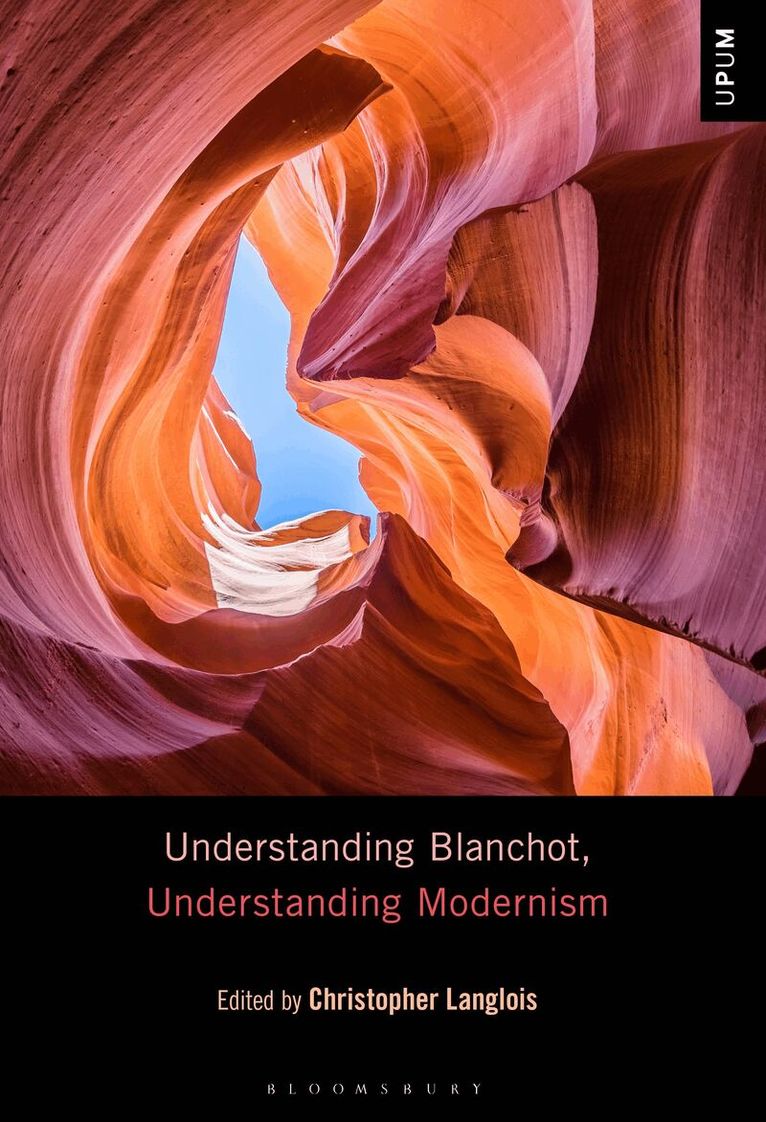
Maurice Blanchot occupies a central though still-overlooked position in the Anglo-American reception of 20th-century continental philosophy and literary criticism. On the one hand, his rigorous yet always-playful exchanges with the most challenging figures of the philosophical and literary canons of modernity have led thinkers such as Georges Bataille, Emmanuel Levinas, Jacques Derrida, and Michel Foucault to acknowledge Blanchot as a major influence on the development of literary and philosophical culture after World War II. On the other hand, Blanchot’s reputation for frustrating readers with his difficult style of thought and writing has resulted in a missed opportunity for leveraging Blanchot in advancing the most essential discussions and debates going on today in the comparative study of literature, philosophy, politics, history, ethics, and art. Blanchot’s voice is simply too profound, too erudite, and too illuminating of what is at stake at the intersections of these disciplines not to be exercising more of an influence than it has in only a minority of intellectual circles. Understanding Blanchot, Understanding Modernism brings together an international cast of leading and emergent scholars in making the case for precisely what contemporary modernist studies stands to gain from close inspection of Blanchot’s provocative post-war writings.
546 kr
Skickas inom 10-15 vardagar
Maurice Blanchot occupies a central though still-overlooked position in the Anglo-American reception of 20th-century continental philosophy and literary criticism. On the one hand, his rigorous yet always-playful exchanges with the most challenging figures of the philosophical and literary canons of modernity have led thinkers such as Georges Bataille, Emmanuel Levinas, Jacques Derrida, and Michel Foucault to acknowledge Blanchot as a major influence on the development of literary and philosophical culture after World War II. On the other hand, Blanchot’s reputation for frustrating readers with his difficult style of thought and writing has resulted in a missed opportunity for leveraging Blanchot in advancing the most essential discussions and debates going on today in the comparative study of literature, philosophy, politics, history, ethics, and art. Blanchot’s voice is simply too profound, too erudite, and too illuminating of what is at stake at the intersections of these disciplines not to be exercising more of an influence than it has in only a minority of intellectual circles. Understanding Blanchot, Understanding Modernism brings together an international cast of leading and emergent scholars in making the case for precisely what contemporary modernist studies stands to gain from close inspection of Blanchot’s provocative post-war writings.