Christopher Rivers – författare
Visar alla böcker från författaren Christopher Rivers. Handla med fri frakt och snabb leverans.
9 produkter
9 produkter
Inbunden, Engelska, 2007
893 kr
Skickas inom 10-15 vardagar
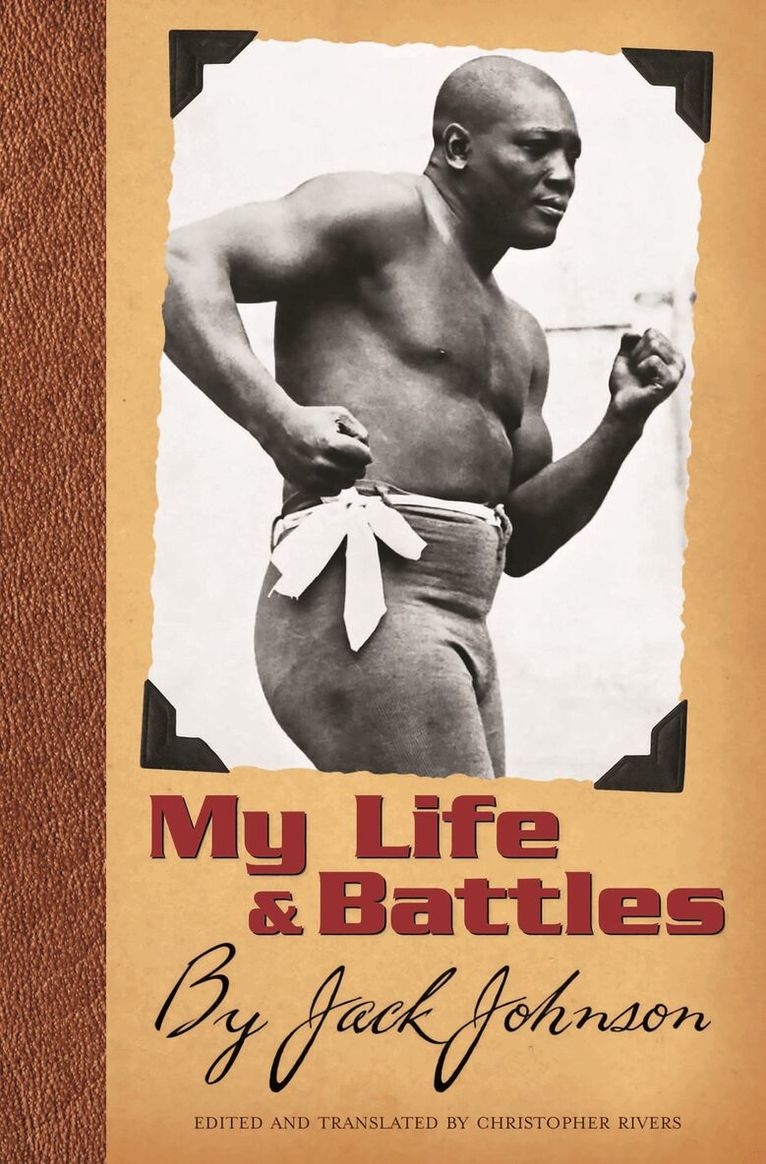
African American historian Gerald Early refers to Jack Johnson (1878-1946), the first African American heavyweight champion of the world, as the first African American pop culture icon. Johnson is a seminal and iconic figure in the history of race and sport in America. This manuscript is the translation of a memoir by Johnson that was published in French, has never before been translated, and is virtually unknown. Originally published as a series of articles in 1911 and then in revised form as a book in 1914, it covers Johnson's colorful life and battles, both inside and outside the ring, up until and including his famous defeat of Jim Jeffries in Reno, on July 4, 1910. In addition to the fights themselves, the memoir recounts, among many other things, Johnson's brief and amusing career as a local politician in Galveston, Texas; his experience hunting kangaroos in Australia; and his epic bouts of seasickness. It includes portraits of some of the most famous boxers of the 1900-1915 era—such truly legendary figures as Joe Choynski, Jim Jeffries, Sam McVey, Bob Fitzsimons, Philadelphia Jack O'Brien, and Stanley Ketchel. Johnson comments explicitly on race and the color line in boxing and in American society at large in ways that he probably would not have in a publication destined for an American reading public. The text constitutes genuinely new, previously unavailable material and will be of great interest for the many readers intrigued by Jack Johnson. In addition to providing information about Johnson's life, it is a fascinating exercise in self-mythologizing that provides substantial insights into how Johnson perceived himself and wished to be perceived by others. Johnson's personal voice comes through clearly-brash, clever, theatrical, and invariably charming. The memoir makes it easy to see how and why Johnson served as an important role model for Muhammad Ali and why so many have compared the two.
E-bok
PDF, Engelska, 2007964 kr
Läs direkt efter köp
African American historian Gerald Early refers to Jack Johnson (1878-1946), the first African American heavyweight champion of the world, as the first African American pop culture icon. Johnson is a seminal and iconic figure in the history of race and sport in America. This manuscript is the translation of a memoir by Johnson that was published in French, has never before been translated, and is virtually unknown. Originally published as a series of articles in 1911 and then in revised form as a book in 1914, it covers Johnson's colorful life and battles, both inside and outside the ring, up until and including his famous defeat of Jim Jeffries in Reno, on July 4, 1910. In addition to the fights themselves, the memoir recounts, among many other things, Johnson's brief and amusing career as a local politician in Galveston, Texas; his experience hunting kangaroos in Australia; and his epic bouts of seasickness. It includes portraits of some of the most famous boxers of the 1900-1915 era—such truly legendary figures as Joe Choynski, Jim Jeffries, Sam McVey, Bob Fitzsimons, Philadelphia Jack O'Brien, and Stanley Ketchel. Johnson comments explicitly on race and the color line in boxing and in American society at large in ways that he probably would not have in a publication destined for an American reading public. The text constitutes genuinely new, previously unavailable material and will be of great interest for the many readers intrigued by Jack Johnson. In addition to providing information about Johnson's life, it is a fascinating exercise in self-mythologizing that provides substantial insights into how Johnson perceived himself and wished to be perceived by others. Johnson's personal voice comes through clearly-brash, clever, theatrical, and invariably charming. The memoir makes it easy to see how and why Johnson served as an important role model for Muhammad Ali and why so many have compared the two.
Häftad, Engelska, 2002
402 kr
Skickas inom 5-8 vardagar
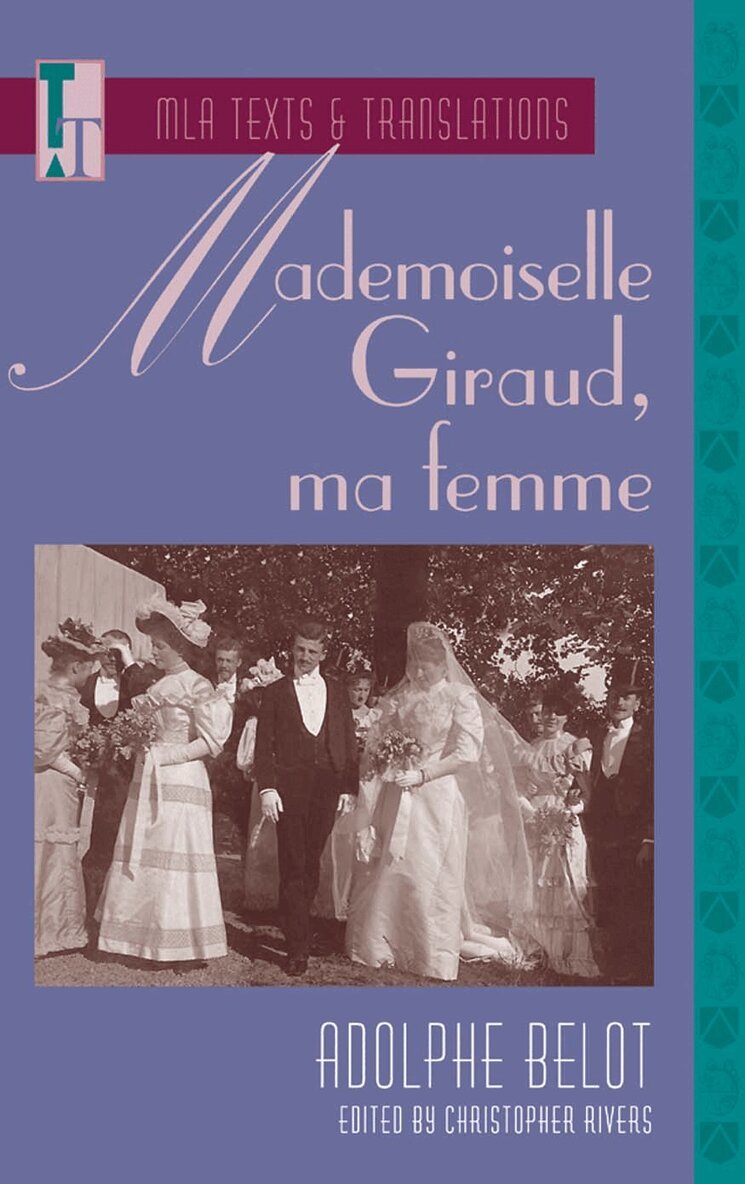
Adolphe Belot was the envy of his contemporaries Émile Zola and Gustave Flaubert: his books, unlike theirs, were best-sellers. He specialized in popular fiction that provided readers with just the right mix of salaciousness and propriety. (Under the initials A. B. he dispensed entirely with propriety.)The sensational Mademoiselle Giraud, ma femme (published in 1870 with a preface by Zola) tells of the suffering of a naive young man whose new bride will not agree to consummate the marriage. Eventually he learns from an acquaintance, to his amazement, that their wives are lovers. In the pitched battle between husband and wife, the sexes are evenly matched—until the end.Christopher Rivers argues in his introduction that the protagonist's homophobic attitude toward lesbianism is ironically linked to his intimate homosocial bonds with men. This example of commercial fiction, Rivers argues, reveals tensions in nineteenth-century French society not apparent in canonical works of high culture.
Häftad, Engelska, 2024
201 kr
Skickas inom 5-8 vardagar
Inbunden, Engelska, 2024
275 kr
Skickas inom 5-8 vardagar
Häftad, Engelska, 2024
226 kr
Skickas inom 5-8 vardagar
Häftad, Engelska, 2024
152 kr
Skickas inom 5-8 vardagar
Inbunden, Engelska, 2004
251 kr
Skickas inom 5-8 vardagar
Inbunden, Engelska, 2024
288 kr
Tillfälligt slut