Christos Simelidis – författare
Visar alla böcker från författaren Christos Simelidis. Handla med fri frakt och snabb leverans.
2 produkter
2 produkter
284 kr
Skickas inom 7-10 vardagar
The first complete, modern translation of one of the most important Byzantine works of Marian doctrine and devotion.John Geometres (ca. 935–ca. 1000) was one of the most highly esteemed poets and authors in Byzantium; yet his most important text, the Life of the Virgin Mary, remains largely unknown today. This literary and rhetorical masterpiece stands as a work of outstanding theological sophistication, animated by deeply felt devotion to the Mother of God. Geometres’s distinctive and idiosyncratic narrative offers a comprehensive biography, from Mary’s ancestry to her death and beyond, with special emphasis on her direction of Christ’s female disciples, her active participation in the passion and resurrection, and her leadership of the nascent Church. The Life has been rightly considered a critical missing piece in a larger puzzle connecting early Marian writings with later works. Based on a completely new edition of the Byzantine Greek text, this is the first complete translation of Life of the Virgin Mary into a modern language.
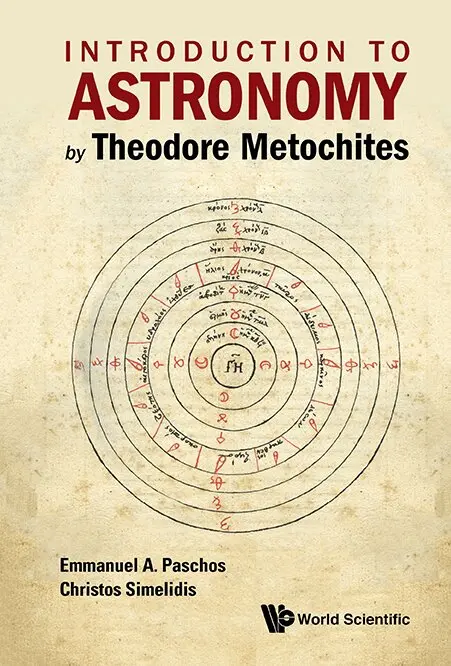
Introduction To Astronomy By Theodore Metochites: Stoicheiosis Astronomike 1.5-30
Inbunden, Engelska, 2017
2 044 kr
Skickas inom 5-8 vardagar
Stoicheiosis Astronomike ("Elements of Astronomy") is a late Byzantine comprehensive introduction to Astronomy. It was written by an outstanding figure in Byzantine culture and politics, who served also as prime minister. This volume makes available for the first time a large part of its astronomical contents, offering the original text with an English translation, accompanied by an introduction and analysis.This book describes the celestial spheres, the rotation of the planets, and especially the apparent trajectory of the sun with its uniform and anomalous rotations, which are used to determine the length of the year. Metochites proposed a new starting date for the calendar (6th of October 1283) specifying the position of the sun on that date. The work revived the interest in studies of Ptolemaic astronomy as attested by numerous annotations in the margins of the manuscripts.Besides its astronomical content there are statements on the epistemological method and other issues elucidating the spirit of that age. It will be of interest as an introduction to Byzantine astronomy for historians of science and philosophy, for astronomers, and those interested in the development of calendars.