Ciaran O'Neill – Författare
Visar alla böcker från författaren Ciaran O'Neill. Handla med fri frakt och snabb leverans.
7 produkter
7 produkter
1 389 kr
Skickas inom 5-8 vardagar
The history of Union Ireland is typically told through its best-known historical events and leaders - from the 1798 Rising, the Great Famine, and the Irish Revolution, to Parnell and De Valera -- and as moments of sectarian division and high parliamentary politics. Instead, Ciaran O'Neill here makes the case for a broader, more inclusive, and decentred approach that emphasizes transnational phenomena, a settler-colonial diaspora, and minority groups on the island. Through the lenses of 'power' and 'powerlessness', he demonstrates that the received historiographical wisdoms suffer from several misconceptions: on the one hand they misconstrue the nature of power and the powerful, perpetuating historical myths about the 'ungovernability' of Ireland. After securing the Union, the British state proceeded to govern Ireland with less and less certainty of ever persuading its citizens of its legitimacy. Despite all reforms and investment, there was a widespread sense that Ireland would never recover and be a willing partner in the Union. And on the other hand they take at face value the nature of the so-called 'powerless', ignoring the myriad ways in which marginalized and diasporic groups negotiated and asserted their agency during the Union period, influencing and transforming the powerful centre in the process. The result is an untraditional and thought-provoking reappraisal of Union Ireland that raises important questions about colonialism and resistance - of what it means to govern and be governed, and the long-lasting legacies of the spaces in between.
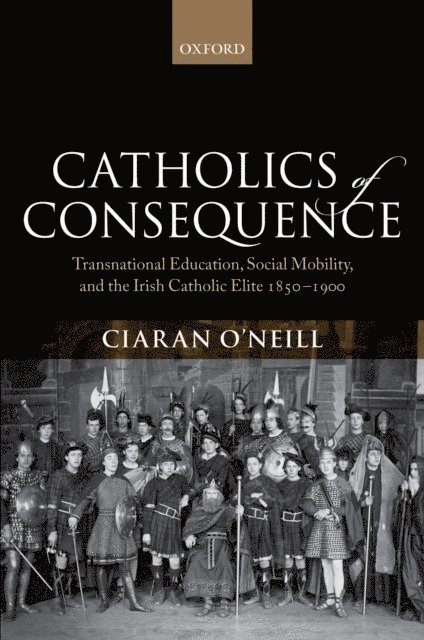
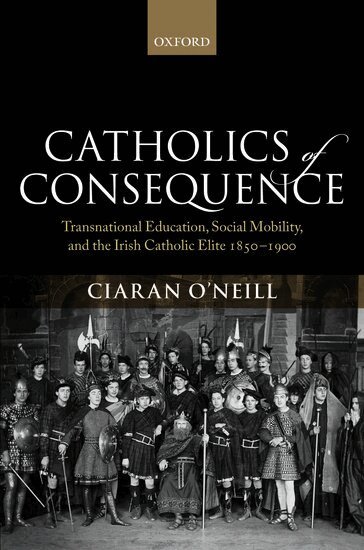
Catholics of Consequence
Transnational Education, Social Mobility, and the Irish Catholic Elite 1850-1900
Inbunden, Engelska, 2014
1 735 kr
Skickas inom 7-10 vardagar
For as far back as school registers can take us, the most prestigious education available to any Irish child was to be found outside Ireland. Catholics of Consequence traces, for the first time, the transnational education, careers, and lives of more than two thousand Irish boys and girls who attended Catholic schools in England, France, Belgium, and elsewhere in the second half of the nineteenth century. There was a long tradition of Irish Anglicans and Catholics sending their children abroad for the majority of their formative years. However, as the cultural nationalism of the Irish revival at the end of the nineteenth century took root, Irish Catholics who sent their children to school in Britain were accused of a pro-Britishness that crystallized into still recognisable terms of insult such as West Briton, Castle Catholic, Squireen, and Seoinin. This concept has an enduring resonance in Ireland, but very few publications have ever interrogated it.Catholics of Consequence marks the first ever attempt to analyse the education and subsequent lives of the Irish children that received this type of transnational education. It also tells the story of elite education in Ireland, where schools such as Clongowes Wood and Castleknock College were rooted in the continental Catholic tradition, but also looked to public schools in England as exemplars. Taken together it tells the story of an Irish Catholic elite at once integrated and segregated within what was then the most powerful state in the world.
Catholics of Consequence
Transnational Education, Social Mobility, and the Irish Catholic Elite 1850-1900
Häftad, Engelska, 2016
529 kr
Skickas inom 7-10 vardagar
For as far back as school registers can take us, the most prestigious education available to any Irish child was to be found outside Ireland. Catholics of Consequence traces, for the first time, the transnational education, careers, and lives of more than two thousand Irish boys and girls who attended Catholic schools in England, France, Belgium, and elsewhere in the second half of the nineteenth century. There was a long tradition of Irish Anglicans, Protestants, and Catholics sending their children abroad for the majority of their formative years. However, as the cultural nationalism of the Irish revival took root at the end of the nineteenth century, Irish Catholics who sent their children to school in Britain were accused of a pro-Britishness that crystallized into still recognisable terms of insult such as West Briton, Castle Catholic, Squireen, and Seoinin. This concept has an enduring resonance in Ireland, but very few publications have ever interrogated it. Catholics of Consequence endeavours to analyse the education and subsequent lives of the Irish children that received this type of transnational education. It also tells the story of elite education in Ireland, where schools such as Clongowes Wood College and Castleknock College were rooted in the continental Catholic tradition, but also looked to public schools in England as exemplars. Taken together the book tells the story of an Irish Catholic elite at once integrated and segregated within what was then the most powerful state in the world.
503 kr
Skickas inom 10-15 vardagar
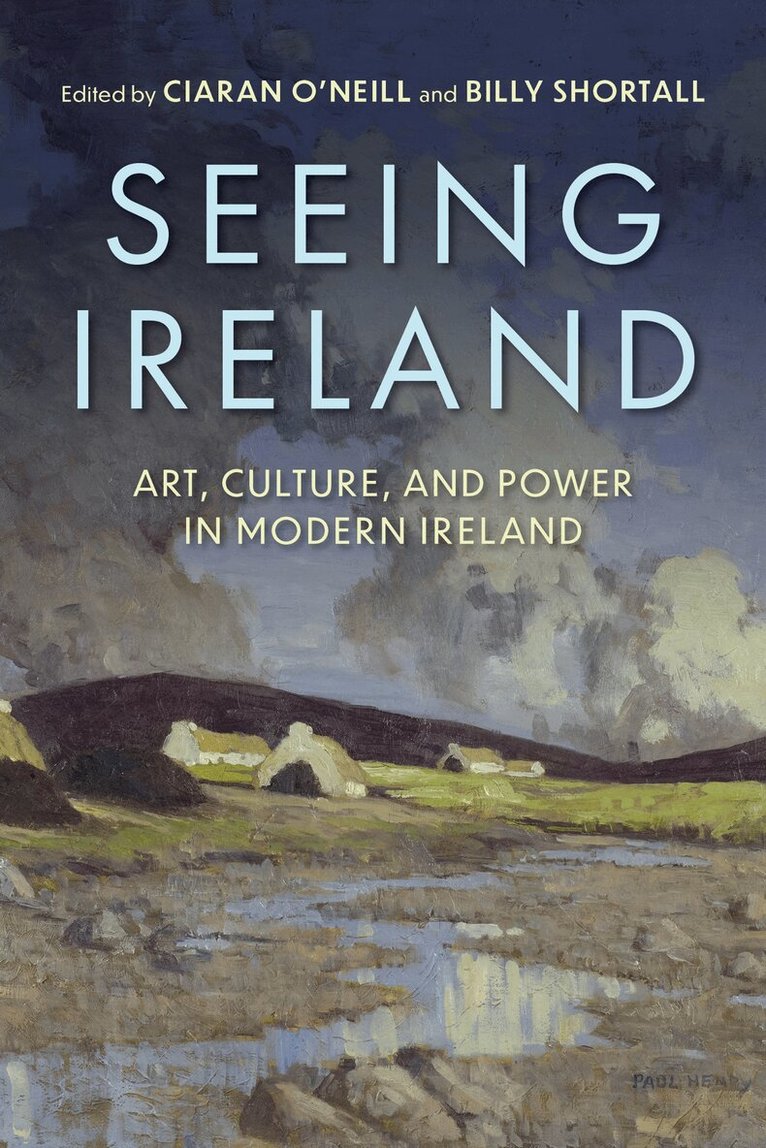
Prompted by the centennial commemoration of the 1922 Paris Exposition d'Art Irlandais, Seeing Ireland explores the intersection of art and politics in the century that followed.While the Irish Revival of the late nineteenth and the early twentieth century is often associated with literary figures such as Joyce and Yeats, Seeing Ireland's focus on visual arts sheds new light on a pivotal era of Irish cultural and national development. The collection explores the 1922 Paris diaspora congress and its associated art exhibition, the development of an Irish school of art, official visual representations of post-independence Ireland, and the continued intermingling of art and the state in subsequent decades. The Paris exhibition happened at a pivotal moment in Ireland's history, and the administration used Irish art to present for international consumption a self-defined identity of the new state. This collection reflects on that event and on the recent Decade of Centenaries commemoration of the Irish revolutionary period.Academics and practicing artists alike contribute thought-provoking analyses of the exposition, Irish visual culture, and Irish diaspora politics. The collection ends with an exploration of the constantly negotiated relationship among the state, the arts, and memory.
Del 196 - Studies in Imperialism
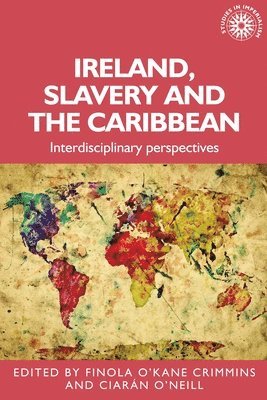
Ireland, Slavery and the Caribbean
Interdisciplinary Perspectives
Inbunden, Engelska, 2023
1 264 kr
Skickas
Ireland, slavery and the Caribbean is a complex and ground-breaking collection of essays. Grounded in history, it integrates perspectives from art historians, architectural and landscape historians, and literary scholars to produce a genuinely interdisciplinary collection that spans from 1620-1830: the high point of European colonialism. By exploring imperial, national and familial relationships from their building blocks of plantation, migration, property and trade, it finds new ways to re-create and question how slavery made the Atlantic world.
Del 196 - Studies in Imperialism
Ireland, Slavery and the Caribbean
Interdisciplinary Perspectives
Häftad, Engelska, 2024
426 kr
Skickas
Ireland, slavery and the Caribbean is a complex and ground-breaking collection of essays. Grounded in history, it integrates perspectives from art historians, architectural and landscape historians, and literary scholars to produce a genuinely interdisciplinary collection that spans from 1620-1830: the high point of European colonialism. By exploring imperial, national and familial relationships from their building blocks of plantation, migration, property and trade, it finds new ways to re-create and question how slavery made the Atlantic world.
1 292 kr
Skickas inom 7-10 vardagar
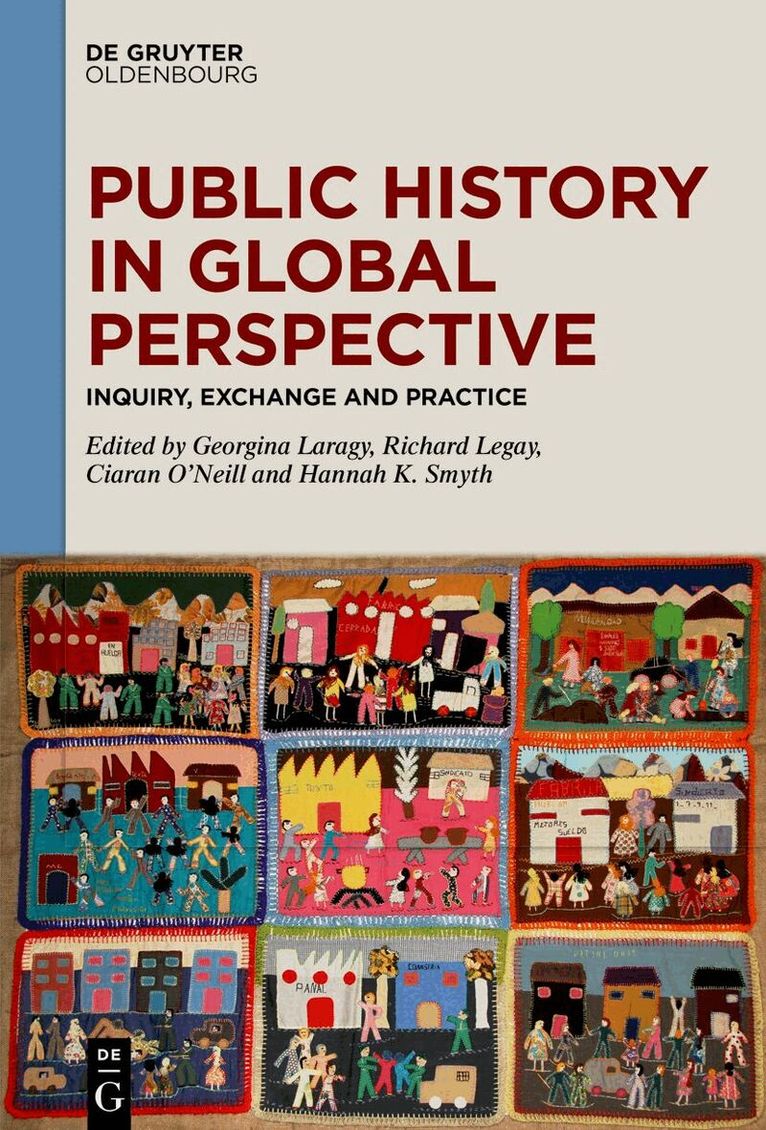
Where should public history sit within the matrix of global, international, (trans-)national, and more local histories? Since its emergence in the 1970s, Public History has typically been read as community-oriented and more local in its applications. The academic field in particular has developed along national lines, and indeed, we see in the many monographs, edited books, and journals that have emerged a distinct tendency to consider public history as understandable mostly in its relation to the nation state and its attendant mythologies. The meta-narratives that public history pushes against are the building blocks of ‘national’ histories: political, military, and heroic histories. Conceiving of a global public history seems to have more radical potential than an international public history, which arguably simply collects these national histories. What would a global public history look like and how can it disrupt the field if interpreted radically? This book will centre the work of scholars and professionals in the field of Public History. It will offer novel reflections on postgraduate Public History learning, work experience, and application from recent graduates and partnered institutions. A mix of theory and practice, traditional and creative methodologies, it demonstrates the value of integrating work experience, practitioner workshops and close collaboration in Public History training.