Cindy Tekobbe – författare
Visar alla böcker från författaren Cindy Tekobbe. Handla med fri frakt och snabb leverans.
4 produkter
4 produkter
Häftad, Engelska, 2026
630 kr
Kommande
Building upon existing literature in the field, this book identifies the frameworks and paradigms in which we Indigenize, identify, and establish Indigenous practice, and contemplates the possibilities of American Indian and Indigenous rhetorics.This book outlines how American Indian and Indigenous rhetorics is an interdisciplinary scholarly practice and sub-field that draws from material and cultural practice, history and historiography, religious studies, literary studies, decolonial theory and practice, and community-based research. It explores how American Indian and Indigenous peoples and communities communicate the shaping of their worlds, identities, and goals through language, culture, and connection to land. The book includes case studies exploring current issues such as land and water rights, environmental precarity, and healthcare and provides readers with an Indigenous rhetorics model to approach these topics. In doing so, the book equips readers with the questions, practices, and methodologies to challenge historic notions and engage with Indigenous issues, ideas, and practices in public issues and debates.This book will be of interest to students and scholars of Rhetoric, Indigenous Studies, American Indian Studies, Native Studies, Composition Studies, and Communication Studies.
Inbunden, Engelska, 2026
2 306 kr
Kommande
Building upon existing literature in the field, this book identifies the frameworks and paradigms in which we Indigenize, identify, and establish Indigenous practice, and contemplates the possibilities of American Indian and Indigenous rhetorics.This book outlines how American Indian and Indigenous rhetorics is an interdisciplinary scholarly practice and sub-field that draws from material and cultural practice, history and historiography, religious studies, literary studies, decolonial theory and practice, and community-based research. It explores how American Indian and Indigenous peoples and communities communicate the shaping of their worlds, identities, and goals through language, culture, and connection to land. The book includes case studies exploring current issues such as land and water rights, environmental precarity, and healthcare and provides readers with an Indigenous rhetorics model to approach these topics. In doing so, the book equips readers with the questions, practices, and methodologies to challenge historic notions and engage with Indigenous issues, ideas, and practices in public issues and debates.This book will be of interest to students and scholars of Rhetoric, Indigenous Studies, American Indian Studies, Native Studies, Composition Studies, and Communication Studies.
Häftad, Engelska, 2024
335 kr
Skickas inom 5-8 vardagar
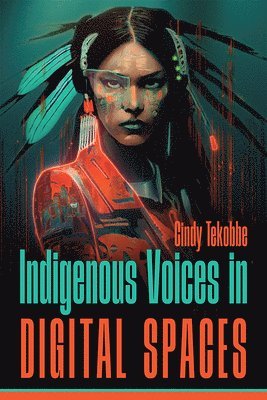
Indigenous Voices in Digital Spaces applies Indigenous frameworks and epistemologies to online cultural movements through four case studies, including hashtags, memes, cryptocurrency, and digital artistry, and develops decolonizing practices for digital rhetoric, online identity work, and digital literacy practices. Tekobbe’s methods for analyzing and understanding Indigenous knowledges online center Indigenous storytelling and “thick” (broad, deep, and complex) Indigenous meaning-making. Employing this thickness to interpret Indigenous knowledge ways resists the settler-colonial logics that tend to flatten complex Indigenous concepts into one-note representations of racial stereotypes. Native Americans’ use of social media and digital platforms to support social movements uniquely constructs Indigenous identities as living, producing, and culture-making people, which confronts the commonplace, one-dimensional narrative that Indigenous North Americans either live in isolation or are people of history resigned to the long-forgotten past. Tekobbe’s methods are applicable to additional online research to break through Western paradigms of oppositional critique, the colonial power matrix embedded in hierarchical and taxonomical classification systems, and participant objectification. Indigenous Voices in Digital Spaces offers new methodological and epistemological opportunities to explore digital communities and technologies, problematizing conventional Western critique. This book is useful to instructors in Indigenous studies, internet studies, digital literacies, cultural studies, and communications, as well as Indigenous and internet studies researchers.
Inbunden, Engelska, 2024
1 042 kr
Tillfälligt slut
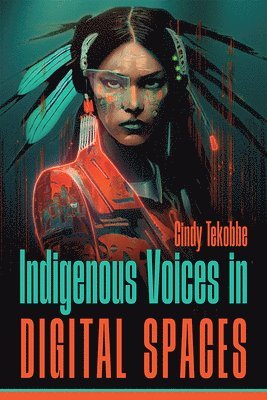
Indigenous Voices in Digital Spaces applies Indigenous frameworks and epistemologies to online cultural movements through four case studies, including hashtags, memes, cryptocurrency, and digital artistry, and develops decolonizing practices for digital rhetoric, online identity work, and digital literacy practices. Tekobbe’s methods for analyzing and understanding Indigenous knowledges online center Indigenous storytelling and “thick” (broad, deep, and complex) Indigenous meaning-making. Employing this thickness to interpret Indigenous knowledge ways resists the settler-colonial logics that tend to flatten complex Indigenous concepts into one-note representations of racial stereotypes. Native Americans’ use of social media and digital platforms to support social movements uniquely constructs Indigenous identities as living, producing, and culture-making people, which confronts the commonplace, one-dimensional narrative that Indigenous North Americans either live in isolation or are people of history resigned to the long-forgotten past. Tekobbe’s methods are applicable to additional online research to break through Western paradigms of oppositional critique, the colonial power matrix embedded in hierarchical and taxonomical classification systems, and participant objectification. Indigenous Voices in Digital Spaces offers new methodological and epistemological opportunities to explore digital communities and technologies, problematizing conventional Western critique. This book is useful to instructors in Indigenous studies, internet studies, digital literacies, cultural studies, and communications, as well as Indigenous and internet studies researchers.