
Claire A Lees – författare
Visar alla böcker från författaren . Handla med fri frakt och snabb leverans.
3 produkter
3 produkter
Inbunden, Engelska, 2009
971 kr
Skickas inom 7-10 vardagar
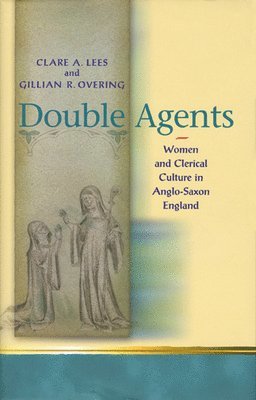
First printed in 2001 by the University of Pennsylvania Press, this book has been out of print for several years and is highly sought after by researchers in the field of Medieval cultural studies. "Double Agents" was the first book length study of women in Anglo-Saxon written culture that took on board the insights of contemporary critical theory, especially feminist theory, in order to elucidate the complex challenges of both the absence and presence of women in the historical record. That is to say, unlike the two earlier books on women in this period (by Fell, 1984, and by Chance, 1986), this is not a book about only those women in the written record (whether we think of it as historical or literary) of Anglo-Saxon England, it also tackles the question of how the feminine is modelled, used, and metaphorised in Anglo-Saxon texts, even when women themselves are absent.This book spans the entire Anglo-Saxon period from Aldhelm and Bede in the earliest centuries to Alfric and the anonymous homilists and hagiographers of the later tenth and eleventh centuries; it draws on Anglo-Saxon vernacular texts as well as Latin ones, and on those works most familiar to literary scholars (such as the "Exeter Book Riddles" or "Cadmon's Hymn", the first so-called poem in English, or the female "Lives of Saints") as well as historians (wills, charters, the cult of relics); it deliberately reconsiders, from the perspective of gender and women's agency, some of the key conceptual issues that studying Anglo-Saxon England presents (the relation of orality to literacy; that of poetry and sanctity to belief; and, the cultural significance of names, naming, and metaphors in Anglo-Saxon writing).
E-bok
PDF, Engelska, 2009445 kr
Läs direkt efter köp
First printed in 2001 by the University of Pennsylvania Press, this book has been out of print for several years and is highly sought after by researchers in the field of Medieval cultural studies. "Double Agents" was the first book length study of women in Anglo-Saxon written culture that took on board the insights of contemporary critical theory, especially feminist theory, in order to elucidate the complex challenges of both the absence and presence of women in the historical record. That is to say, unlike the two earlier books on women in this period (by Fell, 1984, and by Chance, 1986), this is not a book about only those women in the written record (whether we think of it as historical or literary) of Anglo-Saxon England, it also tackles the question of how the feminine is modelled, used, and metaphorised in Anglo-Saxon texts, even when women themselves are absent.This book spans the entire Anglo-Saxon period from Aldhelm and Bede in the earliest centuries to Alfric and the anonymous homilists and hagiographers of the later tenth and eleventh centuries; it draws on Anglo-Saxon vernacular texts as well as Latin ones, and on those works most familiar to literary scholars (such as the "Exeter Book Riddles" or "Cadmon''s Hymn", the first so-called poem in English, or the female "Lives of Saints") as well as historians (wills, charters, the cult of relics); it deliberately reconsiders, from the perspective of gender and women''s agency, some of the key conceptual issues that studying Anglo-Saxon England presents (the relation of orality to literacy; that of poetry and sanctity to belief; and, the cultural significance of names, naming, and metaphors in Anglo-Saxon writing).
E-bok
Engelska, 2009445 kr
Läs direkt efter köp
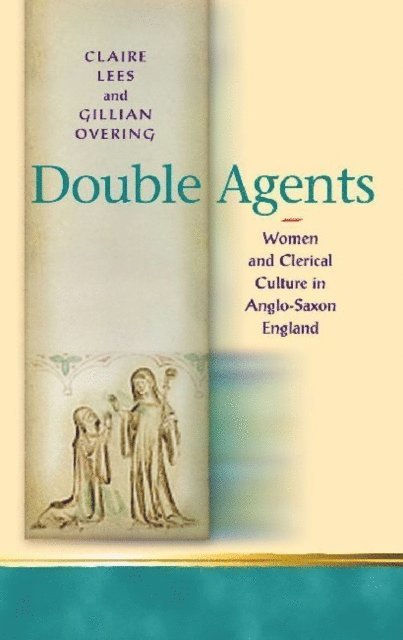
First published in 2001, Double Agents was the first book-length study of women in Anglo-Saxon written culture that took on the insights provided by contemporary critical and feminist theory, and it quickly established itself as a standard. Now available again, it complicates the exclusion of women from the historical record of Anglo-Saxon England by tackling the deeper questions behind how the feminine is modeled, used, and made metaphoric in Anglo-Saxon texts, even when the women themselves are absent.