Gillian R. Overing - Böcker
Visar alla böcker från författaren Gillian R. Overing. Handla med fri frakt och snabb leverans.
4 produkter
4 produkter
951 kr
Skickas inom 7-10 vardagar
First printed in 2001 by the University of Pennsylvania Press, this book has been out of print for several years and is highly sought after by researchers in the field of Medieval cultural studies. "Double Agents" was the first book length study of women in Anglo-Saxon written culture that took on board the insights of contemporary critical theory, especially feminist theory, in order to elucidate the complex challenges of both the absence and presence of women in the historical record. That is to say, unlike the two earlier books on women in this period (by Fell, 1984, and by Chance, 1986), this is not a book about only those women in the written record (whether we think of it as historical or literary) of Anglo-Saxon England, it also tackles the question of how the feminine is modelled, used, and metaphorised in Anglo-Saxon texts, even when women themselves are absent.This book spans the entire Anglo-Saxon period from Aldhelm and Bede in the earliest centuries to Alfric and the anonymous homilists and hagiographers of the later tenth and eleventh centuries; it draws on Anglo-Saxon vernacular texts as well as Latin ones, and on those works most familiar to literary scholars (such as the "Exeter Book Riddles" or "Cadmon's Hymn", the first so-called poem in English, or the female "Lives of Saints") as well as historians (wills, charters, the cult of relics); it deliberately reconsiders, from the perspective of gender and women's agency, some of the key conceptual issues that studying Anglo-Saxon England presents (the relation of orality to literacy; that of poetry and sanctity to belief; and, the cultural significance of names, naming, and metaphors in Anglo-Saxon writing).
292 kr
Skickas inom 7-10 vardagar
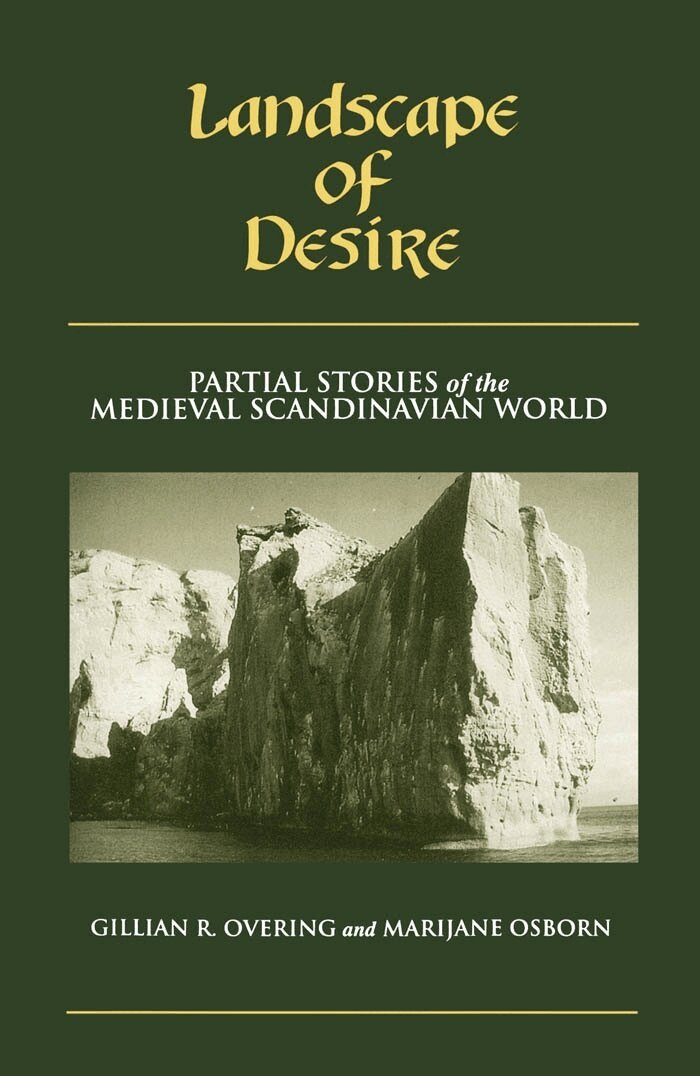
An exhilarating journey across a distant literary landscape, this book takes us to those places described, evoked, or invented in Beowulf and the sagas of Iceland. Chronicling their own travels in Scandinavia, charting the geography of medieval history and fiction, the authors negotiate the complex territory where past and present meet. In this encounter, ancient and modern viewpoints converge, forming a new way into the northern world of medieval literature.Overing and Osborn use a variety of approaches, borrow from different disciplines, and employ an array of styles to discover and "reinvent" the landscape of these texts. Through their scholarly appraisals and personal encounters, maps and photographs, we accompany them as they follow Beowulf's sea route and travel to Drangey, the remote island in the Saga of Grettir. Here and at numerous other legendary sites, we see how the past is made up of divergent stories told in the present, and how our own histories and desires influence the shape and purpose of those stories. These experiences and places, imagined and real, frame a new and essentially interdisciplinary space where a conversation among different professional, personal, and cultural viewpoints-a conversation that engages individual desire-can take place. This book will appeal to medievalists, historians, cultural geographers, critical theorists, and those who like to travel, whether in literature or their own good time. ContentsIntroduction1.Mapping BeowulfReinventing Beowulf's voyage to DenmarkTraveling home with Beowulf2.Geography in the ReaderPlace in QuestionIceland and IcelandersPlaces in QuestionSelves in PlacePlaces in Translation and the Metonymy of Terrain3.The Saga of the SagaThe Road to DrangeyWhere's Grettir?
1 088 kr
Tillfälligt slut
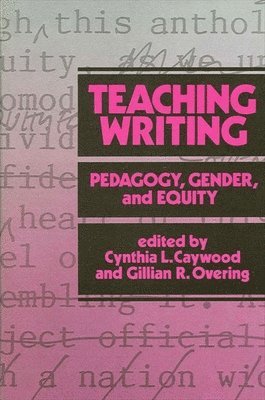
This anthology explores the relationship between feminism and writing theory. The chapters cover the major issues: basic pedagogical theory and philosophical approaches to the teaching of writing, studies of problems encountered by female writers and writing instructors, and useful how-to essays on classroom technique. The authors also address important, provocative questions about power in the classroom-its use, abuse, and distribution.The book is based on the concept of equity, which the editors define: "Equity does not mean to us the abolition of differences among individuals, nor does it imply a blanket imposition of an Orwellian homogeneity. It does not mean stifling some voices so that others may be heard; it does not demand the compromising of academic standards in the name of egalitarianism. Equity, as we understand it, creates new standards which accommodate and nurture differences. Equity fosters the individual voice in the classroom, investing students with confidence in their own authority. Equity unleashes the creative potential of heterogeneity. this definition of equity is at the heart of this anthology, and our attempts as teachers to model our pedagogy on this principle provided the impetus for assembling it." - from the Introduction
394 kr
Tillfälligt slut
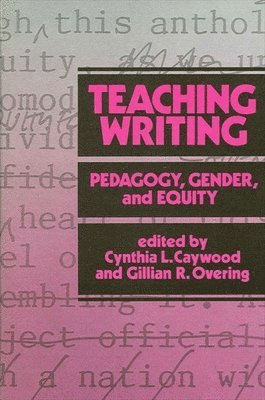
This anthology explores the relationship between feminism and writing theory. The chapters cover the major issues: basic pedagogical theory and philosophical approaches to the teaching of writing, studies of problems encountered by female writers and writing instructors, and useful how-to essays on classroom technique. The authors also address important, provocative questions about power in the classroom-its use, abuse, and distribution.The book is based on the concept of equity, which the editors define: "Equity does not mean to us the abolition of differences among individuals, nor does it imply a blanket imposition of an Orwellian homogeneity. It does not mean stifling some voices so that others may be heard; it does not demand the compromising of academic standards in the name of egalitarianism. Equity, as we understand it, creates new standards which accommodate and nurture differences. Equity fosters the individual voice in the classroom, investing students with confidence in their own authority. Equity unleashes the creative potential of heterogeneity. this definition of equity is at the heart of this anthology, and our attempts as teachers to model our pedagogy on this principle provided the impetus for assembling it." - from the Introduction