Clark Banack - Böcker
Visar alla böcker från författaren Clark Banack. Handla med fri frakt och snabb leverans.
3 produkter
3 produkter
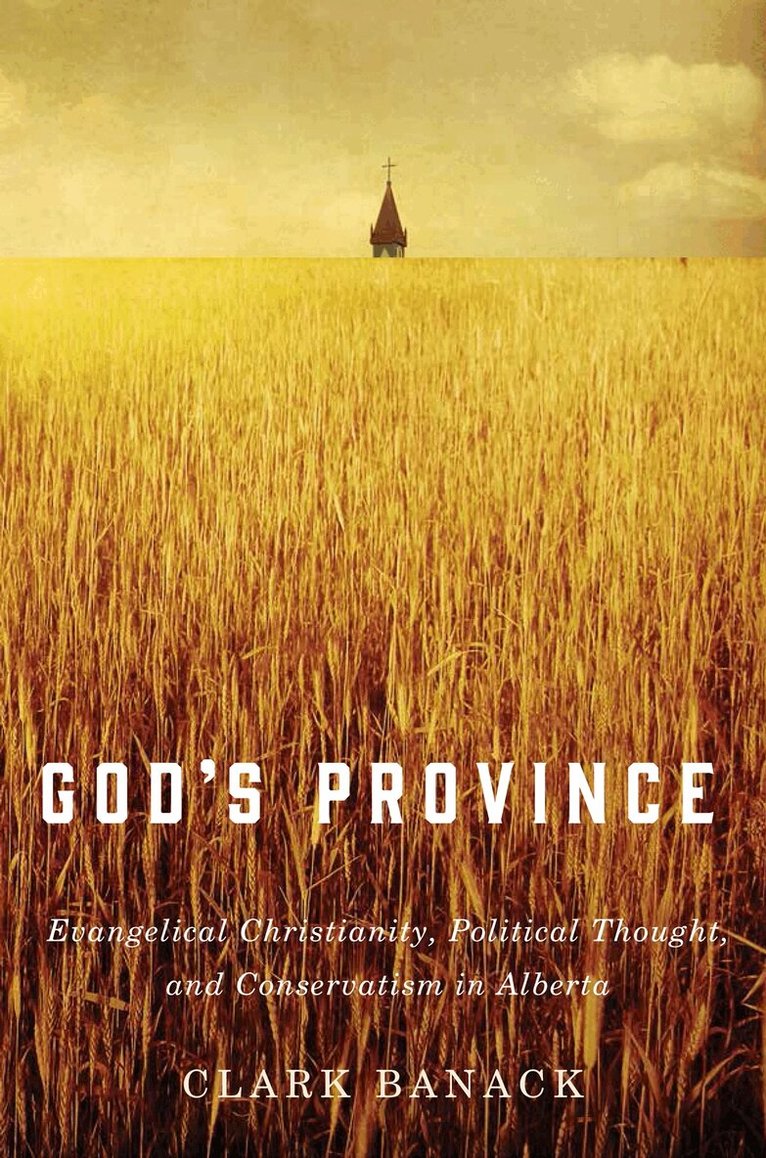
God's Province
Evangelical Christianity, Political Thought, and Conservatism in Alberta
Inbunden, Engelska, 2016
428 kr
Skickas inom 7-10 vardagar
Compared to the United States, it is assumed that religion has not been a significant factor in Canada's political development. In God's Province, Clark Banack challenges this assumption, showing that, in Alberta, religious motivation has played a vital role in shaping its political trajectory. For Henry Wise Wood, president of the United Farmers of Alberta from 1916 until 1931, William "Bible Bill" Aberhart, founder of the Alberta Social Credit Party and premier from 1935 until 1943, Aberhart's protégé Ernest Manning, Alberta's longest serving premier (1943–1968), and Manning's son Preston, founder of the Alberta-based federal Reform Party of Canada, religion was central to their thinking about human agency, the purpose of politics, the role of the state, the nature of the economy, and the proper duties of citizens. Drawing on substantial archival research and in-depth interviews, God's Province highlights the strong link that exists between the religiously inspired political thought and action of these formative leaders, the US evangelical Protestant tradition from which they drew, and the emergence of an individualistic, populist, and anti-statist sentiment in Alberta that is largely unfamiliar to the rest of Canada. Covering nearly a century of Alberta's history, Banack offers an illuminating reconsideration of the political thought of these leaders, the goals of the movements they led, and the roots of Alberta's distinctiveness within Canada. A fusion of religious history, intellectual history, and political thought, God's Province exposes the ways in which individual politicians have shaped one province's political culture.
684 kr
Skickas inom 7-10 vardagar
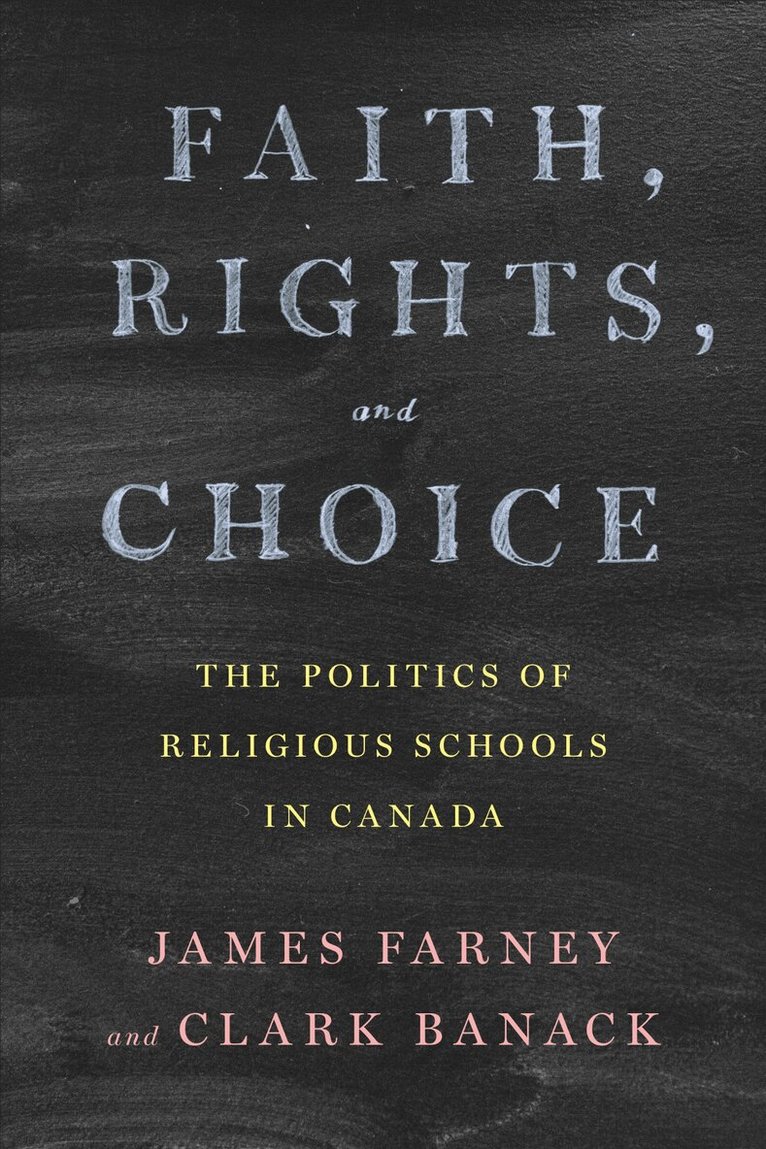
The Canadian provinces have evolved quite different ways of responding to the policy problems posed by religious schools. Seeking to understand this peculiar reality, Faith, Rights, and Choice articulates the ways in which the provincial governance regimes developed for religious schools have changed over time.Covering nearly three centuries, the book begins with the founding of schooling systems in New France and continues into a variety of present-day conflicts that emerged over the question of religion in schools. James Farney and Clark Banack employ a method of process-tracing, drawing on 88 semi-structured interviews with key policy insiders. They also reference archival material documenting meetings, political speeches, and legislative debates related to government decisions around issues of religious education. Relying on the theoretical foundations of both historical institutionalism and Canadian political development, Faith, Rights, and Choice presents a new analytic framework to help make sense of the policy divergence witnessed across Canada.
288 kr
Skickas inom 7-10 vardagar
The Canadian provinces have evolved quite different ways of responding to the policy problems posed by religious schools. Seeking to understand this peculiar reality, Faith, Rights, and Choice articulates the ways in which the provincial governance regimes developed for religious schools have changed over time.Covering nearly three centuries, the book begins with the founding of schooling systems in New France and continues into a variety of present-day conflicts that emerged over the question of religion in schools. James Farney and Clark Banack employ a method of process-tracing, drawing on 88 semi-structured interviews with key policy insiders. They also reference archival material documenting meetings, political speeches, and legislative debates related to government decisions around issues of religious education. Relying on the theoretical foundations of both historical institutionalism and Canadian political development, Faith, Rights, and Choice presents a new analytic framework to help make sense of the policy divergence witnessed across Canada.