Claudia Brittenham – författare
Visar alla böcker från författaren Claudia Brittenham. Handla med fri frakt och snabb leverans.
7 produkter
7 produkter
E-bok
PDF, Engelska, 2019409 kr
Läs direkt efter köp
Vessels can take many forms: as objects made for human interaction and handling, they both contain and are bounded by space. They can be constructed of a wide variety of materials. But the range of vessels - across history and across cultures - are unified in their potential for practical functioning, whether or not a particular object is in fact made to be used in its particular context. In this volume, four essays by leading scholars tackle the category of the vessel in a comparative conversation between classical Greece, late antique Rome, pre-Columbian Mesoamerica, and ancient China. By considering the material properties of the object as container, the interactions between user and artefact, and the power of the vessel as both conceptual category and material metaphor, they argue that many vessels - and assemblages of vessels - were sites of remarkable workmanship and considerable ingenuity, smart and sophisticated commentaries on the very categories that they embody. In placing these individual case studies in dialogue, the volume offers an art historical and cross-cultural study of vessels in ancient societies, considering both objects and their archaeological contexts. Its aim is to make illuminating comparisons, contrasts, and interpretations by juxtaposing traditions. In keeping with the aims of the series, it serves as a model for a new kind of comparative art history, one which emphasizes material culture and is attentive to questions of evidence and method, yet remains historically grounded and contextually sensitive.
E-bok
Engelska, 2019409 kr
Läs direkt efter köp
Vessels can take many forms: as objects made for human interaction and handling, they both contain and are bounded by space. They can be constructed of a wide variety of materials. But the range of vessels - across history and across cultures - are unified in their potential for practical functioning, whether or not a particular object is in fact made to be used in its particular context. In this volume, four essays by leading scholars tackle the category of the vessel in a comparative conversation between classical Greece, late antique Rome, pre-Columbian Mesoamerica, and ancient China. By considering the material properties of the object as container, the interactions between user and artefact, and the power of the vessel as both conceptual category and material metaphor, they argue that many vessels - and assemblages of vessels - were sites of remarkable workmanship and considerable ingenuity, smart and sophisticated commentaries on the very categories that they embody. In placing these individual case studies in dialogue, the volume offers an art historical and cross-cultural study of vessels in ancient societies, considering both objects and their archaeological contexts. Its aim is to make illuminating comparisons, contrasts, and interpretations by juxtaposing traditions. In keeping with the aims of the series, it serves as a model for a new kind of comparative art history, one which emphasizes material culture and is attentive to questions of evidence and method, yet remains historically grounded and contextually sensitive.
Inbunden, Engelska, 2019
604 kr
Skickas inom 7-10 vardagar
Vessels can take many forms: as objects made for human interaction and handling, they both contain and are bounded by space. They can be constructed of a wide variety of materials. But the range of vessels - across history and across cultures - are unified in their potential for practical functioning, whether or not a particular object is in fact made to be used in its particular context. In this volume, four essays by leading scholars tackle the category of the vessel in a comparative conversation between classical Greece, late antique Rome, pre-Columbian Mesoamerica, and ancient China. By considering the material properties of the object as container, the interactions between user and artefact, and the power of the vessel as both conceptual category and material metaphor, they argue that many vessels - and assemblages of vessels - were sites of remarkable workmanship and considerable ingenuity, smart and sophisticated commentaries on the very categories that they embody. In placing these individual case studies in dialogue, the volume offers an art historical and cross-cultural study of vessels in ancient societies, considering both objects and their archaeological contexts. Its aim is to make illuminating comparisons, contrasts, and interpretations by juxtaposing traditions. In keeping with the aims of the series, it serves as a model for a new kind of comparative art history, one which emphasizes material culture and is attentive to questions of evidence and method, yet remains historically grounded and contextually sensitive.
Inbunden, Engelska, 2009
666 kr
Skickas inom 5-8 vardagar
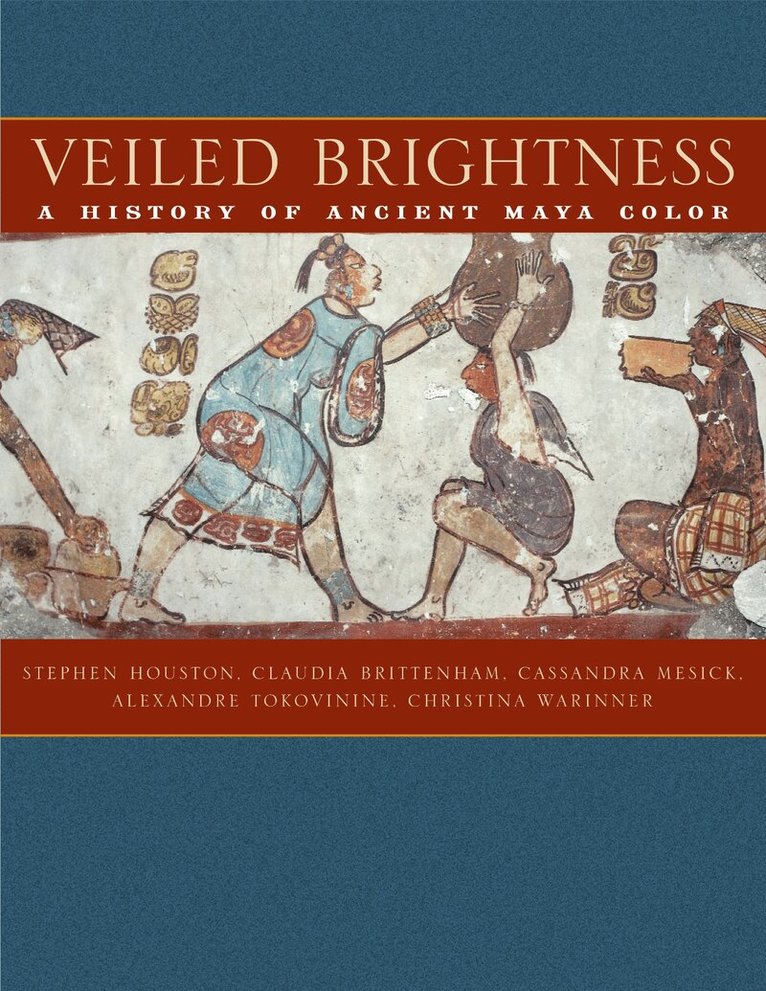
Color is an integral part of human experience, so common as to be overlooked or treated as unimportant. Yet color is both unavoidable and varied. Each culture classifies, understands, and uses it in different and often surprising ways, posing particular challenges to those who study color from long-ago times and places far distant. Veiled Brightness reconstructs what color meant to the ancient Maya, a set of linked peoples and societies who flourished in and around the Yucatan Peninsula of Mexico and Central America. By using insights from archaeology, linguistics, art history, and conservation, the book charts over two millennia of color use in a region celebrated for its aesthetic refinement and high degree of craftsmanship.The authors open with a survey of approaches to color perception, looking at Aristotelian color theory, recent discoveries in neurophysiology, and anthropological research on color. Maya color terminology receives new attention here, clarifying not just basic color terms, but also the extensional or associated meanings that enriched ancient Maya perception of color. The materials and technologies of Maya color production are assembled in one place as never before, providing an invaluable reference for future research.From these investigations, the authors demonstrate that Maya use of color changed over time, through a sequence of historical and artistic developments that drove the elaboration of new pigments and coloristic effects. These findings open fresh avenues for investigation of ancient Maya aesthetics and worldview and provide a model for how to study the meaning and making of color in other ancient civilizations.
Inbunden, Engelska, 2015
781 kr
Skickas inom 5-8 vardagar
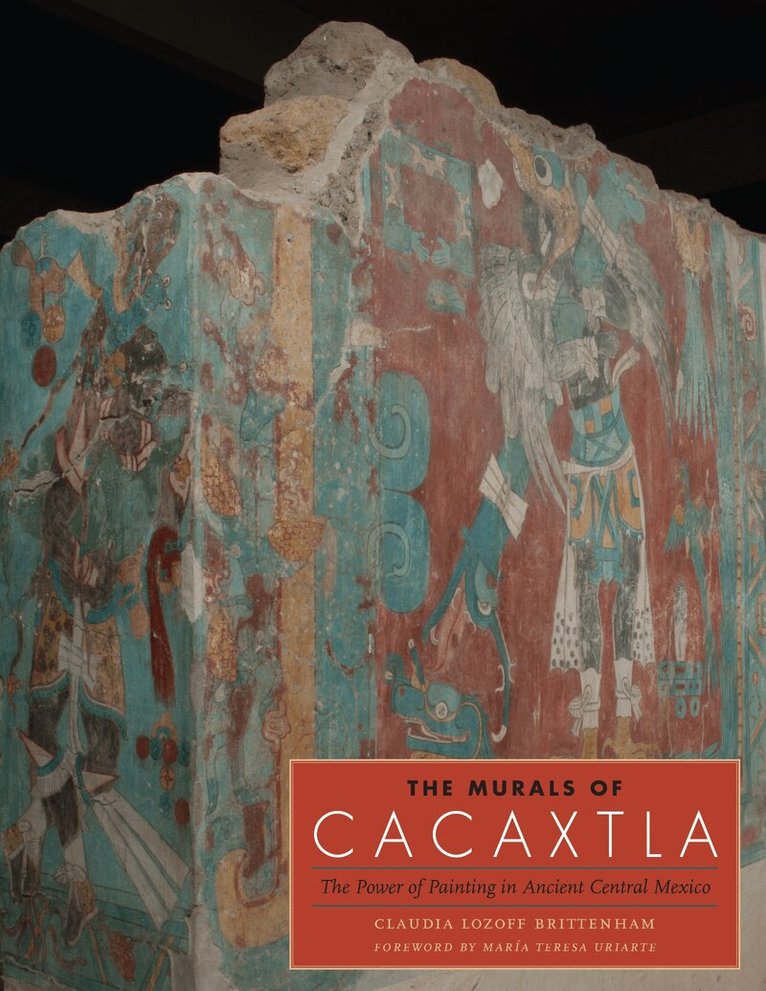
Presenting the first comprehensive art historical study of some magnificent Mesoamerican murals, this book demonstrates how generations of ancient Mexican artists, patrons, and audiences created a powerful statement of communal identity that still captures the imagination.Honorable Mention, ALAA Book Award, Association for Latin American Art/Arvey Foundation, 2016Between AD 650 and 950, artists at the small Central Mexican city-state of Cacaxtla covered the walls of their most important sacred and public spaces with dazzling murals of gods, historical figures, and supernatural creatures. Testimonies of a richly interconnected ancient world, the Cacaxtla paintings present an unexpectedly deep knowledge of the art and religion of the Maya, Zapotec, and other distant Mesoamerican peoples. Painted during a period of war and shifting alliances after the fall of Teotihuacan, the murals’ distinctive fusion of cosmopolitan styles and subjects claimed a powerful identity for the beleaguered city-state.Presenting the first cohesive, art historical study of the entire painting corpus, The Murals of Cacaxtla demonstrates that these magnificent works of art constitute a sustained and local painting tradition, treasured by generations of patrons and painters. Exhaustive chapters on each of the mural programs make it possible to see how the Cacaxtla painting tradition developed over time, responding to political and artistic challenges. Lavishly illustrated, The Murals of Cacaxtla illuminates the agency of ancient artists and the dynamics of artistic synthesis in a Mesoamerican context, offering a valuable counterpoint to studies of colonial and modern art operating at the intersection of cultural traditions.
Inbunden, Engelska, 2023
671 kr
Skickas inom 5-8 vardagar
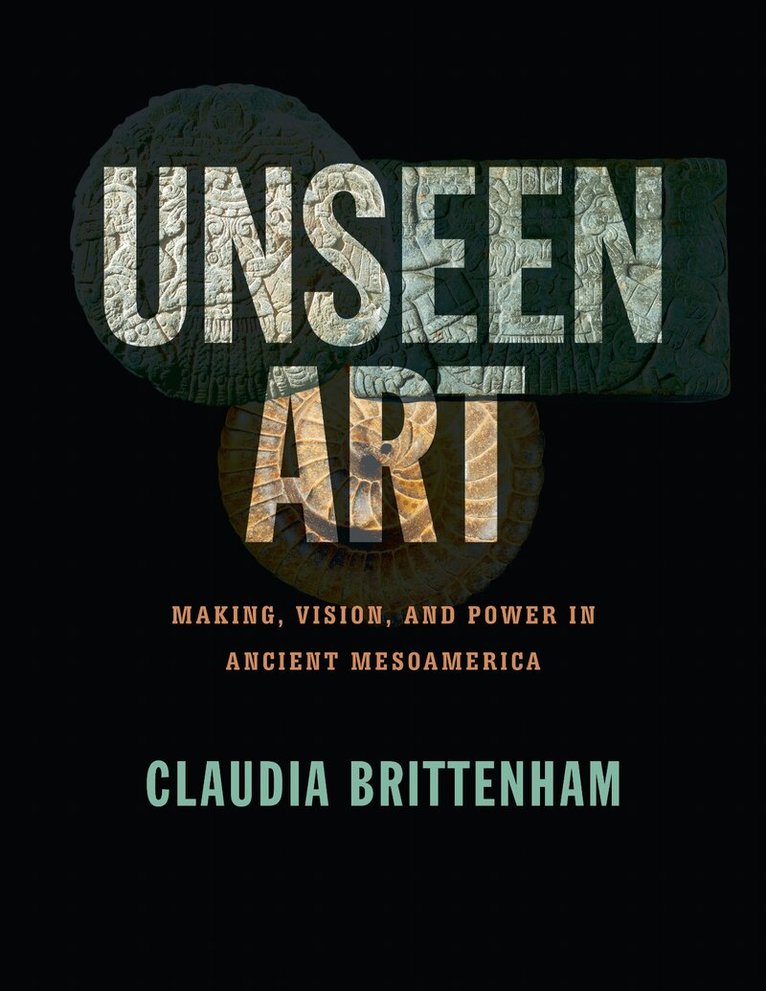
In Unseen Art, Claudia Brittenham unravels one of the most puzzling phenomena in Mesoamerican art history: why many of the objects that we view in museums today were once so difficult to see. She examines the importance that ancient Mesoamerican people assigned to the process of making and enlivening the things we now call art, as well as Mesoamerican understandings of sight as an especially godlike and elite power, in order to trace a gradual evolution in the uses of secrecy and concealment, from a communal practice that fostered social memory to a tool of imperial power.Addressing some of the most charismatic of all Mesoamerican sculptures, such as Olmec buried offerings, Maya lintels, and carvings on the undersides of Aztec sculptures, Brittenham shows that the creation of unseen art has important implications both for understanding status in ancient Mesoamerica and for analyzing art in the present. Spanning nearly three thousand years of the Indigenous art of Mexico, Guatemala, Honduras, and Belize, Unseen Art connects the dots between vision, power, and inequality, providing a critical perspective on our own way of looking.
E-bok
Spanska, 2021430 kr
Läs direkt efter köp
Conceptualizado como una contribución a la continua construcción de la identidad del Códice mendocino, el presente volumen está organizado en torno a tres ejes: el análisis material, la interpretación textual y estilística, y la recepción y transmisión del manuscrito. Los estudios de Barker Benfield y MOLAB abren una ventana hacia el entendimiento objetivo de la materialidad del manuscrito. El proceso de conservación y reencuadernamiento del Mendocino registrado por Barker Benfield ha disipado especulaciones en cuanto al método de construcción del manuscrito y sus posibles encuadernaciones previas, permitiendo que conexiones antes aceptadas, como la autoría de Francisco Gualpuyogualcal, sean reexaminadas. Asimismo, el análisis llevado a cabo por el equipo de MOLAB —liderado por Davide Domenici— ha sacado del ámbito de la especulación la naturaleza de los pigmentos del manuscrito, así como ha permitido que hipótesis interpretativas —previamente articuladas al respecto del significado de pigmentos específicos y lo estricto de su aplicación en el tlacuilolli— sean refinadas y contenidas. Si bien el color tiene significado para el tlacuilo, este no está directa y necesariamente ligado a su materialidad. A partir de estas observaciones se puede desarrollar una nueva generación de estudios interpretativos cuyas propuestas se basen en datos cada vez más certeros acerca de la naturaleza material del Mendocino.Los estudios interpretativos del manuscrito que ocupan el presente volumen representan una línea de investigación que, al considerar al manuscrito desde la perspectiva compleja de la obra de arte, bibliográfica y literaria, complementa las lecturas antropológicas e históricas que se han hecho del Mendocino en estudios anteriores. Así, los ensayos de Diana Magaloni, Daniela Bleichmar y Jorge Gómez Tejada, editor del libro, reconsideran el número y estilo de los artistas que crearon el manuscrito para entender tanto el proceso de creación del mismo como el lugar que este ocupa en el contexto artístico del virreinato temprano. Las decisiones que estos artistas e intelectuales toman en el Mendocino, lejos de insertarse en una relación binaria dominante-dominado, se presentan como una manifestación de los modos de pensar y ver el espacio y el tiempo en el mundo mesoamericano. Las pinturas del Mendocino —ejecutadas a manera de taller en donde uno, dos o más individuos intervienen en una misma página para crear de manera sincronizada una sola composición, tal como demuestra quien escribe— toman visos de ritualidad y funcionan como "instrumento para re-crear, reactualizar y hacer coherente el devenir histórico ligado al territorio y los patrones cósmicos" (ver Capítulo 4). Esta última observación complementa y refuerza la lectura de la tercera sección del manuscrito propuesta por Joanne Harwood, para quien, independientemente de lo original de las soluciones visuales utilizadas para componer esta sección del manuscrito, su modelo prehispánico se encuentra en un género de resonancia religiosa mesoamericana: el teoamoxtli.