Claudia Morsut - Böcker
Visar alla böcker från författaren Claudia Morsut. Handla med fri frakt och snabb leverans.
2 produkter
2 produkter
535 kr
Skickas inom 10-15 vardagar
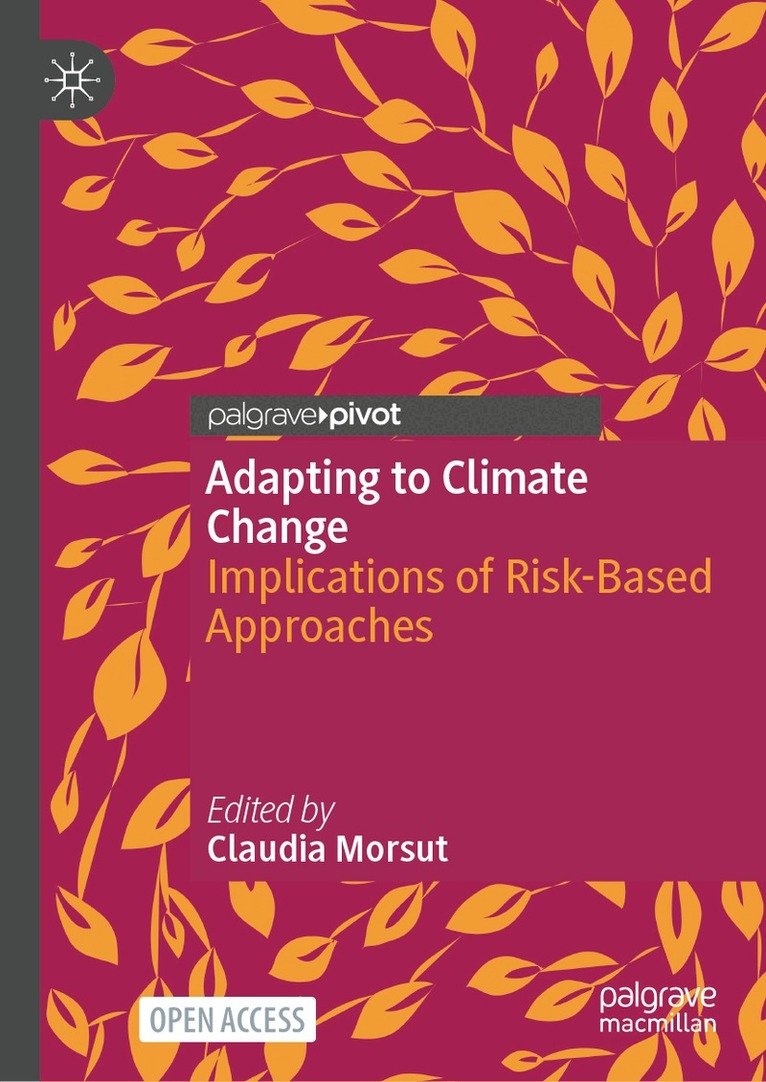
Climate change adaptation has become the new mantra worldwide as the set of strategies, practices, and measures for coping with climate change and building resilient societies. Accompanying its rise on the international agenda, especially since the Paris Agreement, is the treatment of climate change adaptation using a risk management approach.This Open Access book examines risk management as a type of policy logic that shapes and refracts the outcomes of climate change adaptation. Policy logics are underpinned by a set of ontological understandings of the nature of problems and how they should be handled, along with certain methodologies for analysing and acting upon those problems. Policy logics, in other words, are not politically neutral. Risk management approaches offer systematised models for making assessments and a clear set of decision tools. They also, however, may underestimate complexity, exclude wider social goals and trigger new unknown risks.This book offers a novel view on climate change adaptation by critically questioning the use of a risk management approach. Empirically, the book expands our understanding of which climate change adaptation policies are being adopted, at international and national levels. Theoretically, the book considers two sets of literatures enlightening the implications of a risk approach to the governance of extreme events: Security Studies and Risk Governance. Each of these fields is mined for key insights into the advantages and drawbacks of risk management. Analytically, the book assesses international and national policies in the light of these advantages and drawbacks and discusses the resulting implications at practical level.
797 kr
Skickas inom 3-6 vardagar
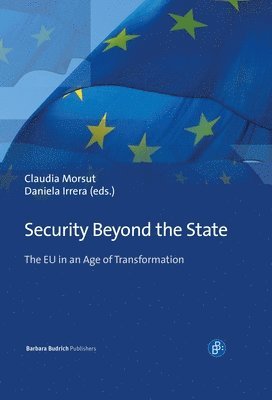
Which is the role of the European Union in dealing with crises that go beyond the nation states borders – terrorism, proliferation of weapons of mass destruction, regional conflicts, state failure, organised crime, natural and man-made disasters? The authors assess the main challenge for the EU: the need to operate in a multidimensional setting where with a wide range of actors, such as member states, national and international NGOs, international organisations (NATO and the UN in primis), as well as a wide range of activities, rules and norms are generated for these diversified crises.