Claudio Minca – författare
2 255 kr
Skickas inom 10-15 vardagar
569 kr
Skickas inom 10-15 vardagar
565 kr
Skickas inom 5-8 vardagar
698 kr
Skickas inom 10-15 vardagar
2 255 kr
Skickas inom 10-15 vardagar
1 600 kr
Skickas inom 5-8 vardagar
26 kr
Läs direkt efter köp
445 kr
Läs direkt efter köp
673 kr
Läs direkt efter köp
This book represents the first comprehensive study of the influential German legal and political thinker Carl Schmitt’s spatial thought, offering the first systematic examination from a Geographic perspective of one of the most important political thinkers of the twentieth century.
It charts the development of Schmitt’s spatial thinking from his early work on secularization and the emergence of the modern European state to his post war analysis of the spatial basis of global order and international law, whilst situating his thought in relation to his changing biographical and intellectual context, controversial involvement in Weimar politics and disastrous support for the Nazi regime. It argues that spatial concepts play a crucial structural role throughout Schmitt’s work, from his well-known analyses of sovereign power and states of exception to his often overlooked spatial history of modernity. Locating a fundamental relationship between space and ‘the political’ lies at the core of his thought.
The book explores the critical insight that Schmitt’s spatial thought bears on some of the key political questions of the twentieth century whilst tracking his profound and enduring influence on key debates on sovereignty, international relations, war and the nature of world order at the start of the twenty first century.
649 kr
Läs direkt efter köp
This book represents the first comprehensive study of the influential German legal and political thinker Carl Schmitt’s spatial thought, offering the first systematic examination from a Geographic perspective of one of the most important political thinkers of the twentieth century.
It charts the development of Schmitt’s spatial thinking from his early work on secularization and the emergence of the modern European state to his post war analysis of the spatial basis of global order and international law, whilst situating his thought in relation to his changing biographical and intellectual context, controversial involvement in Weimar politics and disastrous support for the Nazi regime. It argues that spatial concepts play a crucial structural role throughout Schmitt’s work, from his well-known analyses of sovereign power and states of exception to his often overlooked spatial history of modernity. Locating a fundamental relationship between space and ‘the political’ lies at the core of his thought.
The book explores the critical insight that Schmitt’s spatial thought bears on some of the key political questions of the twentieth century whilst tracking his profound and enduring influence on key debates on sovereignty, international relations, war and the nature of world order at the start of the twenty first century.
883 kr
Läs direkt efter köp
Over the past decade, tourism studies has broken out of its traditional institutional affiliation with business and management programs to take its legitimate place as an interdisciplinary social science field of cutting edge scholarship. The field has emerged as central to ongoing debates in social theory concerning such diverse topics as postcolonialism, mobility, and postmodernism, to name just a few. While there has been a diverse body of empirical research on this transformation the theoretical discussions in tourism studies remain largely attached to theories of modernity and Anglo-centric assumptions about tourism. There is a need for the field to come to terms theoretically with the contemporary and future realities of tourism as a truly global phenomenon.
Real Tourism is a significant volume which sets this new theoretical agenda, engaging directly with what tourism does in practice and in place and demonstrates the need for a theoretical intervention that moves tourism scholarship beyond the province of Anglophone thinking. The volume achieves this by explicitly bridging ‘western’ and ‘non-western’ scholarship on tourism; reframing theoretical discussions around ‘real practices’ instead of abstract typologies; and radically delinking tourism theory from the grand narratives of modernity and assumptions about authenticity, identity, tradition, and development. The book brings together leading academics in the field and provides provocative multidisciplinary and multi-contextual reflection on the future of tourism.
This original, timely and compelling volume puts forward new post modernist ideas and arguments about tourism today and in the future. It is essential reading for students, researchers and academics interested in Tourism.
883 kr
Läs direkt efter köp
Over the past decade, tourism studies has broken out of its traditional institutional affiliation with business and management programs to take its legitimate place as an interdisciplinary social science field of cutting edge scholarship. The field has emerged as central to ongoing debates in social theory concerning such diverse topics as postcolonialism, mobility, and postmodernism, to name just a few. While there has been a diverse body of empirical research on this transformation the theoretical discussions in tourism studies remain largely attached to theories of modernity and Anglo-centric assumptions about tourism. There is a need for the field to come to terms theoretically with the contemporary and future realities of tourism as a truly global phenomenon.
Real Tourism is a significant volume which sets this new theoretical agenda, engaging directly with what tourism does in practice and in place and demonstrates the need for a theoretical intervention that moves tourism scholarship beyond the province of Anglophone thinking. The volume achieves this by explicitly bridging ‘western’ and ‘non-western’ scholarship on tourism; reframing theoretical discussions around ‘real practices’ instead of abstract typologies; and radically delinking tourism theory from the grand narratives of modernity and assumptions about authenticity, identity, tradition, and development. The book brings together leading academics in the field and provides provocative multidisciplinary and multi-contextual reflection on the future of tourism.
This original, timely and compelling volume puts forward new post modernist ideas and arguments about tourism today and in the future. It is essential reading for students, researchers and academics interested in Tourism.
2 255 kr
Skickas inom 10-15 vardagar
745 kr
Skickas inom 10-15 vardagar
780 kr
Skickas inom 10-15 vardagar
925 kr
Läs direkt efter köp
892 kr
Läs direkt efter köp
1 268 kr
Kommande
1 666 kr
Skickas inom 10-15 vardagar
587 kr
Skickas inom 10-15 vardagar
636 kr
Läs direkt efter köp
2 182 kr
Läs direkt efter köp
2 284 kr
Läs direkt efter köp
1 684 kr
Skickas inom 5-8 vardagar
1 936 kr
Skickas inom 5-8 vardagar
27 kr
Läs direkt efter köp
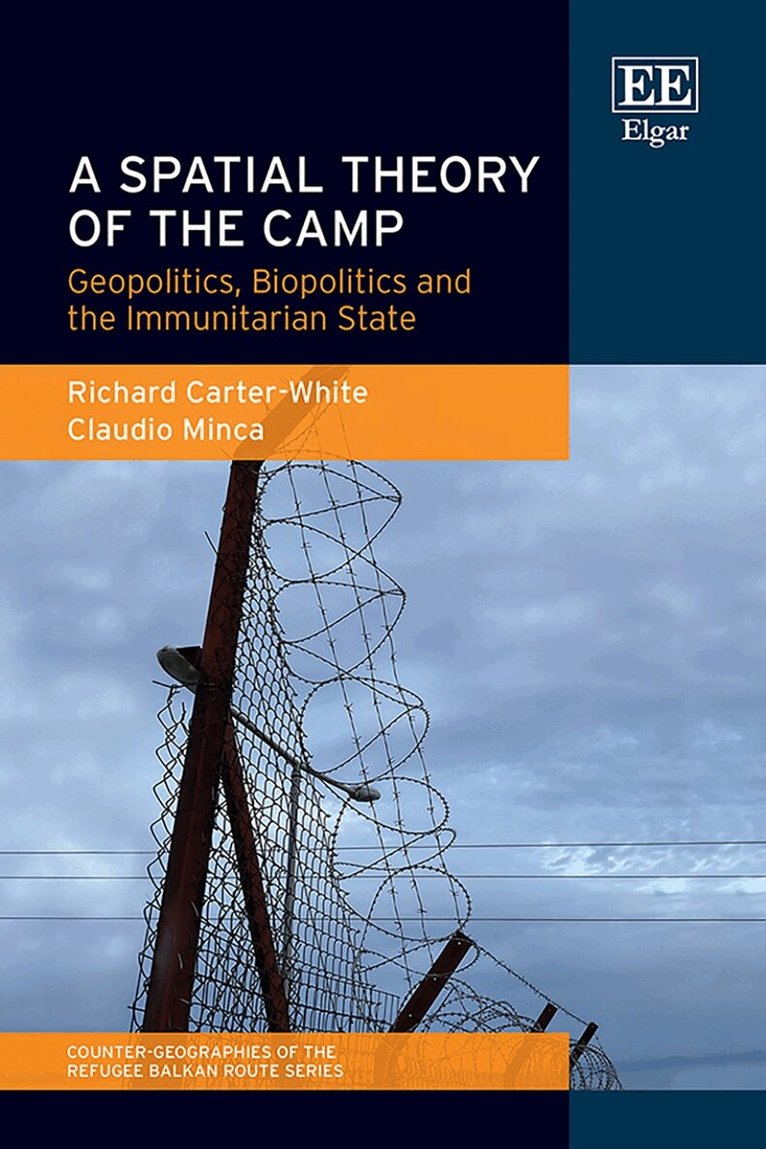
From concentration camps to refugee settlements, there is little consensus about what exactly defines ‘the camp’. This timely and comprehensive book adopts a geographical perspective to develop a spatial theory of the camp, advancing the interdisciplinary field of camp studies. Richard Carter-White and Claudio Minca explore the spatial logics and practices that unite different camps, demonstrating why the camp has become such an integral tool of contemporary governance and what this reveals about the geopolitics and biopolitics of the modern nation-state.
Through a thorough parallel analysis of historical concentration camps and contemporary refugee camps, this book conceptualizes ‘the camp’ as an institution through which selected groups and individuals are included in society through a set of exclusionary practices. Providing an innovative and multifaceted geographical analysis of camp contexts, chapters focus on the examples of Auschwitz concentration camp and refugee camps along the Balkan Route. Throughout the analysis, the book draws upon Roberto Esposito’s political philosophy to theorize that camps are an attempt at ‘immunizing’ the nation-state from its inherent state of crisis.
A Spatial Theory of the Camp will be an indispensable reference for those interested in camp studies. It will also be beneficial to students and academics of human geography, political philosophy, Holocaust studies, and refugee and migration studies.
463 kr
Skickas inom 5-8 vardagar
2 094 kr
Skickas inom 10-15 vardagar
490 kr
Skickas inom 10-15 vardagar
633 kr
Läs direkt efter köp