Clay S. Jenkinson - Böcker
Visar alla böcker från författaren Clay S. Jenkinson. Handla med fri frakt och snabb leverans.
4 produkter
4 produkter
355 kr
Skickas inom 3-6 vardagar
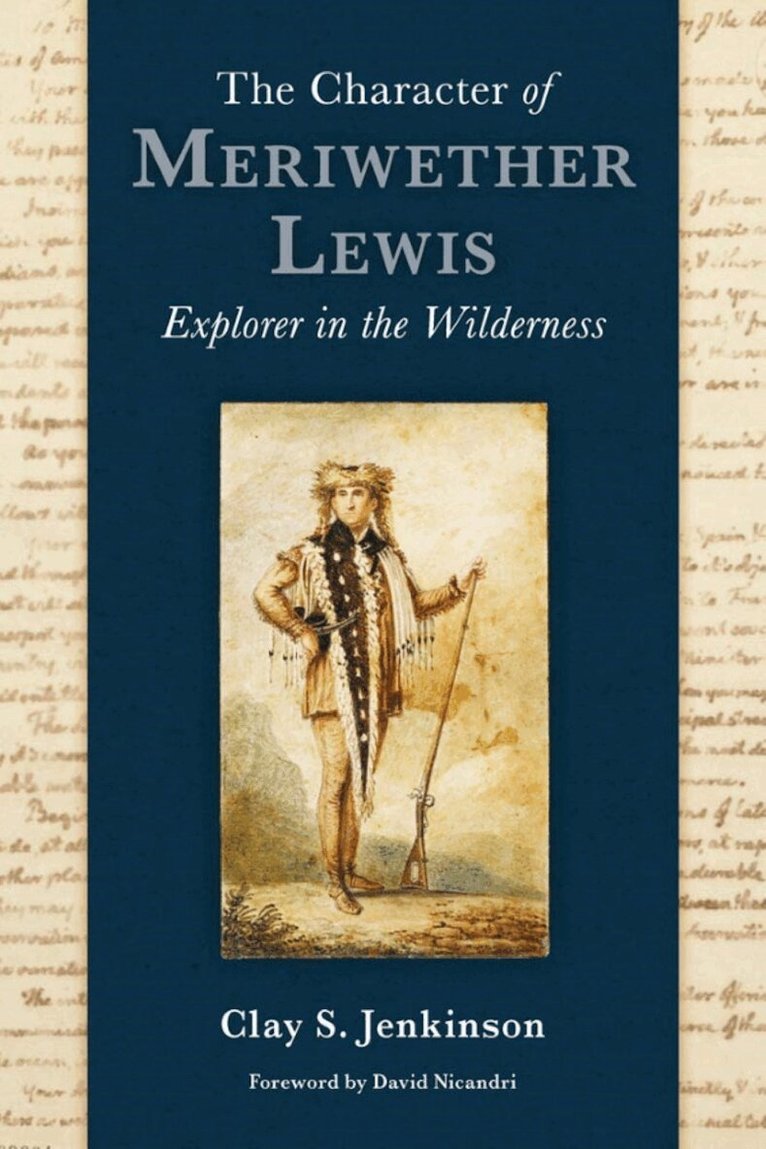
Meriwether Lewis commanded the most important exploration mission in the early history of the United States. Clay S. Jenkinson takes a fresh look at Lewis, not to offer a paper cutout hero but to describe and explain a hyperserious young man of great complexity who found the wilderness of Upper Louisiana as exacting as it was exhilarating.Jenkinson sees Lewis as a troubled soul before he left St. Charles, Missouri, in May 1804. His experiences in lands "upon which the foot of civilized man had never trodden" further fractured his sense of himself. His hiring William Clark as his "partner in discovery" was, Jenkinson shows, the most intelligent decision he ever made. When Clark was nearby, Lewis's leadership was stable and productive. When Clark was absent and thus unable to provide a calming influence on his mercurial friend, Lewis tended to get into trouble. Jenkinson argues that if Clark had been with Lewis on the Natchez Trace, the governor of Upper Louisiana would not have killed himself. Jenkinson sees Lewis's 1809 suicide not as an inexplicable mystery, but the culmination of a series of pressures that extend back to the expedition and perhaps even earlier.The Character of Meriwether Lewis: Explorer in the Wilderness is a revision of an earlier book, greatly expanded with new scholarship and insights gained through Jenkinson's extensive participation in the Lewis and Clark Expedition Bicentennial. Jenkinson discusses Lewis's sense of humor, his oft-stated fear that the expedition he was leading might collapse, his self-conscious learnedness, and his inability to re-enter "polite society" after his return. The book attempts to reconstruct from Lewis's journal entries and letters his rich, troubled personality and his aspirations to heroism. When the American mythology surrounding him is removed and Lewis is allowed to reveal himself, he emerges as a fuller, more human, and endlessly fascinating explorer.
Scenes of Visionary Enchantment
The Geology of the Lewis and Clark Expedition
Inbunden, Engelska, 2026
622 kr
Skickas inom 11-20 vardagar
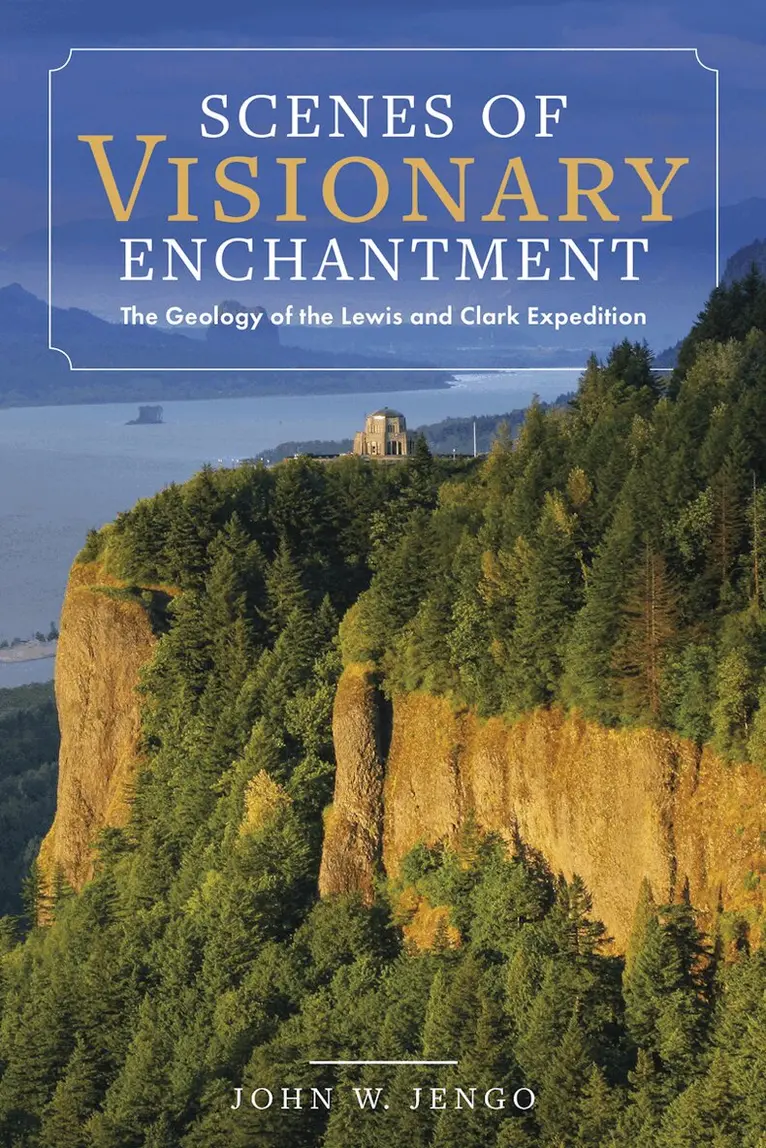
Although scholars have examined the ethnology, natural history, and geography surrounding the Lewis and Clark Expedition, in the ten expedition reaches Jengo studied, no equivalent earth sciences work exists. Still, multiple scholars questioned the quality, quantity, and accuracy of Lewis and Clark's geological and mineralogical observations, as well as their impact on further scientific inquiry, leading Jengo to scrutinize expedition journals, read hundreds of complex academic geological reports, and utilize rafts, canoes, kayaks, bikes, and hiking trails to visit numerous locations along the route. His extensive research affirms the accuracy and thoroughness of the captains' earth science and geological notations, and he now believes those stinging indictments and misinterpretations are unfair. His new book offers a detailed and accessible presentation of Lewis and Clark Trail geology, delving deep into the geological formations, geomorphic features, and past geological upheavals and catastrophic events, paying attention to the science as it existed in the early 1800s and bringing to light several long-forgotten pioneering geologists. He explores related topics such as native American pictographs, as well as some specific references to art and geological features. Finally, he traces the fate of the rock, mineral, and fossil specimens, even traveling to collection repositories in Philadelphia and Paris.
357 kr
Kommande
Although scholars have examined the ethnology, natural history, and geography surrounding the Lewis and Clark Expedition, in the ten expedition reaches Jengo studied, no equivalent earth sciences work exists. Still, multiple scholars questioned the quality, quantity, and accuracy of Lewis and Clark's geological and mineralogical observations, as well as their impact on further scientific inquiry, leading Jengo to scrutinize expedition journals, read hundreds of complex academic geological reports, and utilize rafts, canoes, kayaks, bikes, and hiking trails to visit numerous locations along the route. His extensive research affirms the accuracy and thoroughness of the captains' earth science and geological notations, and he now believes those stinging indictments and misinterpretations are unfair. His new book offers a detailed and accessible presentation of Lewis and Clark Trail geology, delving deep into the geological formations, geomorphic features, and past geological upheavals and catastrophic events, paying attention to the science as it existed in the early 1800s and bringing to light several long-forgotten pioneering geologists. He explores related topics such as native American pictographs, as well as some specific references to art and geological features. Finally, he traces the fate of the rock, mineral, and fossil specimens, even traveling to collection repositories in Philadelphia and Paris.
268 kr
Skickas inom 10-15 vardagar
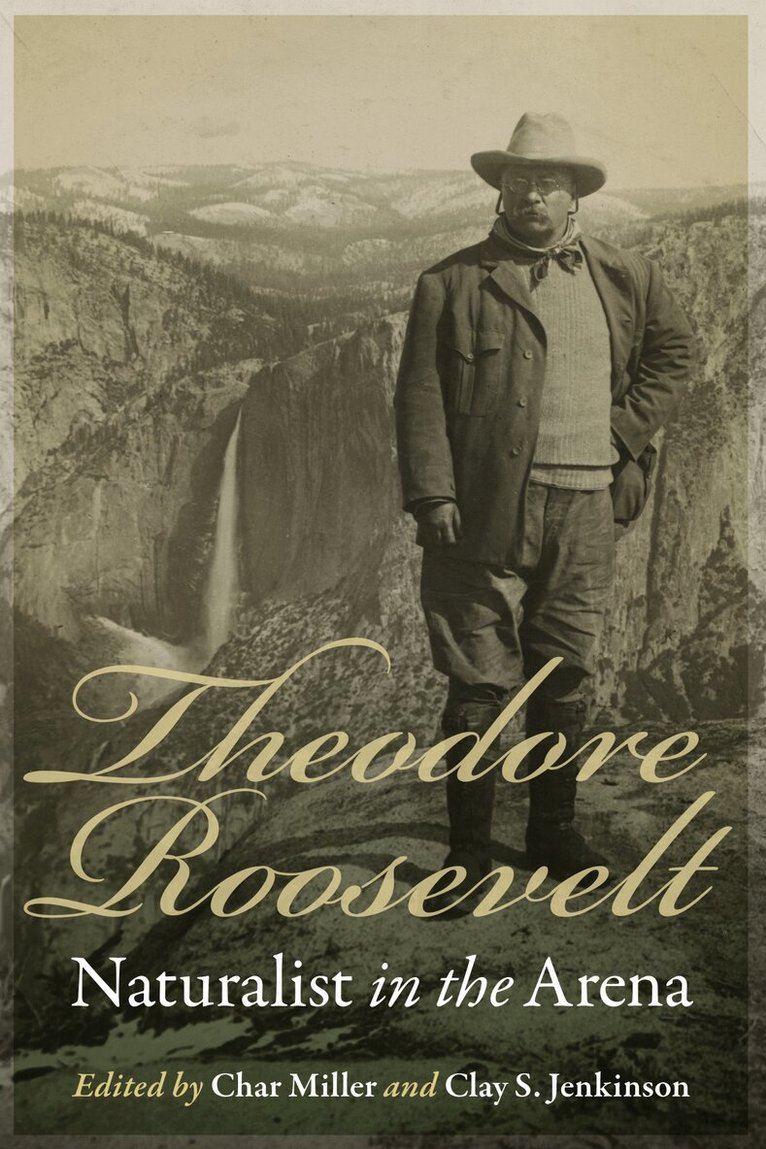
Theodore Roosevelt’s scientific curiosity and love of the outdoors proved a defining force throughout his hectic life as a rancher and explorer, police commissioner and governor of New York, vice president and president of the United States. Conservation and natural history were parts of a whole for this driven, charismatic public servant, and Roosevelt approached the natural world with joy and a passionate engagement.Drawing on an array of approaches-biographical, ecological and environmental, literary and political, Theodore Roosevelt, Naturalist in the Arena analyzes this energetic man’s manifold encounters with the great outdoors. George Bird Grinnell, Gifford Pinchot, John Muir, and William Hornaday were among the many conservationists with whom Roosevelt corresponded, collaborated, hiked, and governed-and in turn, inspired.Together, Roosevelt and his contemporaries developed a progressive argument for the conservation of natural resources as a way to construct a more democratic nation-state. This legacy also comes with some troubling domestic and global implications, as Roosevelt fused his call for the conservation of resources-natural and human, domestically and internationally-with a deep-seated conviction that some were more fit than others to control the world and define its future.