Clayton J. Drees – författare
Visar alla böcker från författaren Clayton J. Drees. Handla med fri frakt och snabb leverans.
4 produkter
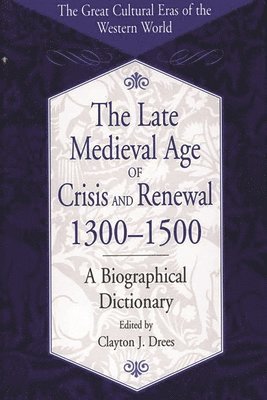
Late Medieval Age of Crisis and Renewal, 1300-1500
A Biographical Dictionary
Av Clayton J. Drees, Clayton J. Drees
Inbunden, 2000
954 kr
Lägg i varukorg
As part of a unique series covering the grand sweep of Western civilization from ancient to present times, this biographical dictionary provides introductory information on 315 leading cultural figures of late medieval and early modern Europe. Taking a cultural approach not typically found in …
Bishop Richard Fox of Winchester
Architect of the Tudor Age
Häftad, 2014
487 kr
Lägg i varukorg
Bishop Richard Fox of Winchester (1448-1528) was an important early modern English prelate whose tireless service to his church, to his king and to humanist studies single him out as one of the great shapers of the Tudor age. This book explores the life and career of Bishop Fox as an architect of …
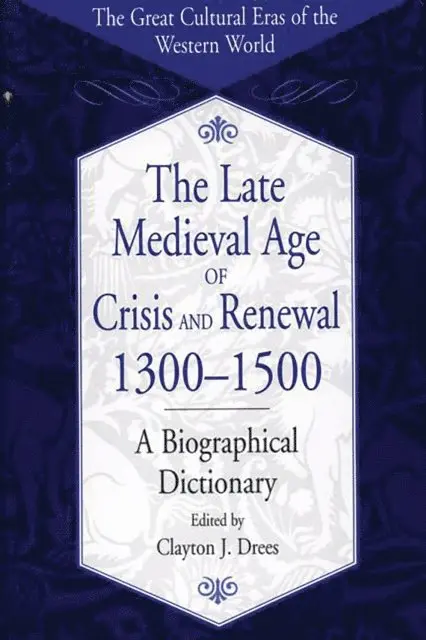
Late Medieval Age of Crisis and Renewal, 1300-1500
A Biographical Dictionary
E-bok, 2000
1021 kr
Lägg i varukorg
As part of a unique series covering the grand sweep of Western civilization from ancient to present times, this biographical dictionary provides introductory information on 315 leading cultural figures of late medieval and early modern Europe. Taking a cultural approach not typically found in …
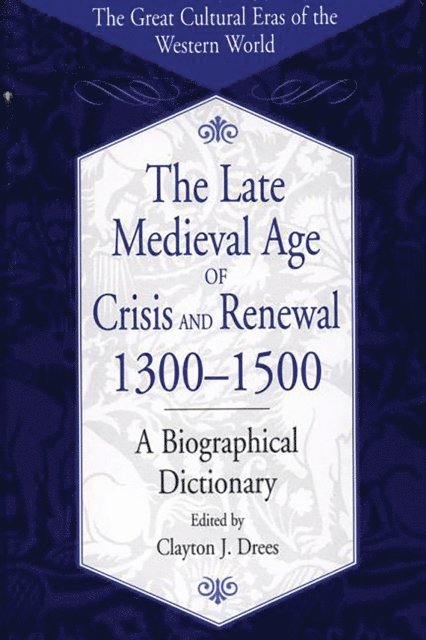
Late Medieval Age of Crisis and Renewal, 1300-1500
A Biographical Dictionary
E-bok, 2000
1044 kr
Lägg i varukorg
As part of a unique series covering the grand sweep of Western civilization from ancient to present times, this biographical dictionary provides introductory information on 315 leading cultural figures of late medieval and early modern Europe. Taking a cultural approach not typically found in …