Clément Chéroux - Böcker
Visar alla böcker från författaren Clément Chéroux. Handla med fri frakt och snabb leverans.
10 produkter
10 produkter
427 kr
Skickas inom 7-10 vardagar
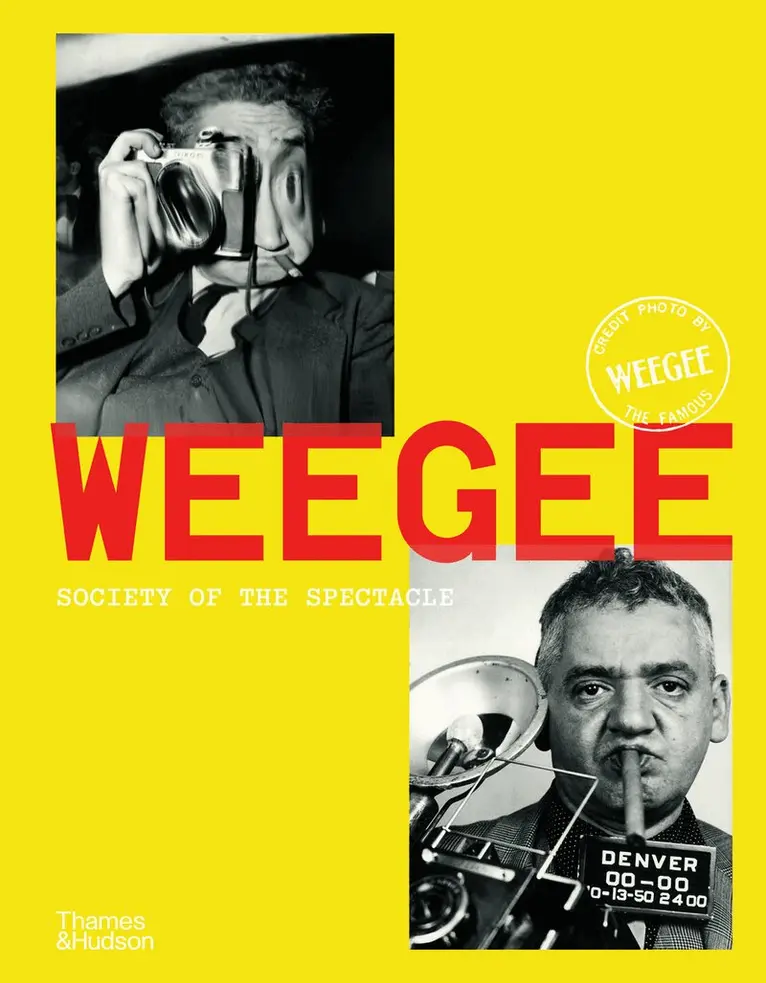
Offering a new perspective on Weegee’s oeuvre, Society of the Spectacle presents the photographer’s iconic images alongside lesser-known works. Weegee’s macabre tabloid photographs of murdered gangsters, bodies trapped in crashed cars, slums consumed by fire, and other poignant records of New York’s nocturnal low life in the 1930s and 40s are the stuff of legend. Lesser-known, however, is the work he created in his later years, when he satirized Hollywood, mocking its fleeting glory, jubilant crowds, and social scenes, and created celebrity portraits that he delighted in distorting using a palette of technical tricks. And herein lies the paradox of Weegee: how can two such wildly different bodies of work co-exist? Offering the first evaluation of the famed photographer’s career in its entirety, this book reconciles the two sides of Weegee by showing how the ‘spectacle’ was the unifying theme of his work. Over 130 images, some iconic, some more rarely seen, are accompanied by essays that explore the consistent themes throughout Weegee’s career, his documentary and photojournalism work, and his last great series taken on the set of Stanley Kubrick’s 1964 film Dr. Strangelove.
145 kr
Skickas inom 7-10 vardagar
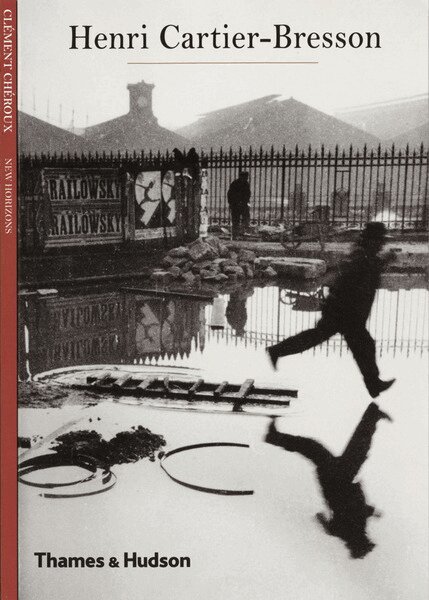
Henri Cartier-Bresson’s photography came to define the 20th century. This book tells his life story through his images: all the major events from his youth to his death in 2004 are described, contextualized and analysed in the light of his photographic work. From his early encounters with the Surrealists, his film work and his experiences in the SecondWorldWar, to the development of his own personal aesthetic, the concept of the ‘decisive moment’, and the foundation of Magnum Photos, his influence on the world has been profound and unforgettable.
427 kr
Skickas inom 7-10 vardagar
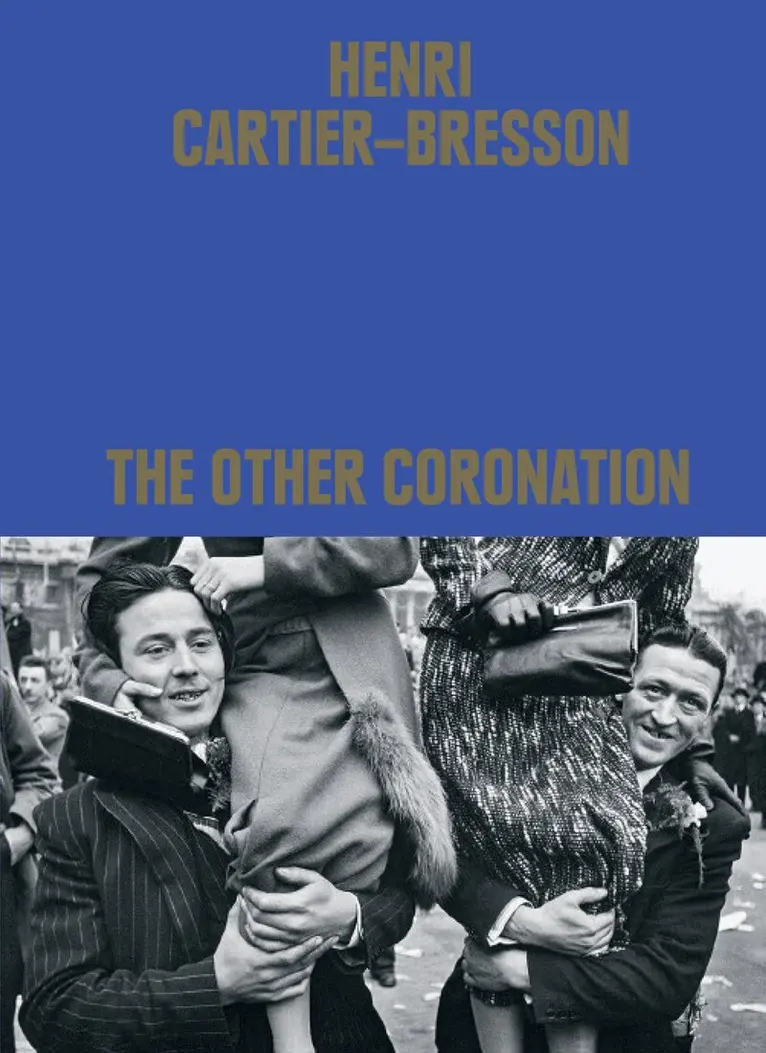
The coronation of George VI on 12 May 1937 was one of the biggest media events of the interwar period. While other photographers focused on the new King, his family and the ceremonial splendour of the day, Henri Cartier-Bresson turned his lens on the crowds that gathered in the streets of London to watch the pageantry. In a witty reversal of the expected order of proceedings, he shows us ordinary people of all ages and walks of life, some climbing on monuments or each other’s shoulders, others straining to get a better view with cardboard periscopes and mirrors on sticks. A few even slump on the ground, the festivities having proved too much. Presented alongside contemporary news clippings from around the world, these remarkable images reflect Cartier-Bresson’s unmistakeable photographic eye and capture the British public at a unique historical moment.
473 kr
Kommande
Described as ‘magnificent’ by the Good Book Guide, this lavishly illustrated monograph traces Cartier-Bresson’s development as a photographer, activist, journalist and artist.This is an indispensable work for lovers of photography and admirers of Henri Cartier-Bresson (1908–2004), whose influence continues to endure so powerfully today. In addition to some of his best-known photographs, here are many seldom seen or unpublished images, and some rarities in colour as well as black and white. His work embraced art, politics, revolution and war. But more powerful than any of these overarching themes was his evident concern for the human individual at every social level. Cartier-Bresson’s observations of the effects of poverty and revolution around the world led directly to his pioneering photojournalism, and his co-founding of Magnum Photos. He also became renowned for his penetrating portraits of the most prominent figures of his time: Cartier-Bresson’s biographer Pierre Assouline called him ‘the eye of the century’.
180 kr
Tillfälligt slut
Presented for the first time in English, this volume brings together twelve notable interviews and conversations with Henri Cartier-Bresson carried out between 1951 and 1998. While many of us are acquainted with his images, there are so few texts available by Cartier-Bresson on his photographic process. These verbal, primary accounts capture the spirit of the master photographer and serve as a lasting document of his life and work, which has inspired generations of photographers and artists. Here, Cartier-Bresson speaks passionately, with metaphors and similes, about the world and photography. A man of principles shaped by the evolving eras of the twentieth century, his major influences included Surrealism, European politics of the 1930s and ’40s, the Second World War, and his experiences with Magnum as cofounder and reporter. This book illuminates his thoughts, personality, and reflections on a seminal career. In his own words: “[Photography] is a way of questioning the world and questioning yourself at the same time. . . . It entails a discipline. For me, freedom is a basic frame of reference, and inside that frame are all the possible variations. Everything, everything, everything. But it is within a frame. The important thing is the sense of limit. And visually, it is the sense of form. Form is important. The structure of things. The space.”
376 kr
Tillfälligt slut
Over nearly eight decades, Louis Stettner (1922-2016) defined a singular poetic vision in photography, honing a style influenced by bothAmerican street photography and French humanism. Stettner began workingin the 1930s, becoming a member of the Photo League in New York and befriending Lisette Model, Paul Strand, and Weegee. After serving in theU.S. Army as a combat photographer, he moved to Paris in 1947, where hemet the influential street photographer Brassaï. The following decades were the most important in his career, as he traveled back and forth between Paris and New York and found inspiration in that geographical duality.Published to celebrate a major acquisition of Stettner’s prints by the San Francisco Museum of Modern Art, this beautiful volume presents iconic photographs from the entirety of Stettner’s career, along with 19essays about photography written by Stettner himself, originally published in the iconic magazine Camera 35 from 1971 to 1979, as well as a transcription of Stettner’s fundamental lecture, “Photography: Style & Reality,” delivered at the International Center of Photography in 2002.
196 kr
Skickas inom 3-6 vardagar
487 kr
Skickas inom 3-6 vardagar
494 kr
Skickas inom 5-8 vardagar
Ruth Orkin (1921-1985) was only 17 when she got on her bicycle and began a “bike trip” across the United States in 1939, from Los Angeles to New York. Her crossing and her audacity, quite unusual for the time, aroused the curiosity of people and the local press, which devoted numerous reports to her.On her return, she wrote a manuscript on her adventure which remained published for some time. Her experience was a decisive influence in her life and career. Twelve years later, Ruth became a professional photographer, and produced her most famous image American Girl in Italy (1951) which again returns to the experience of a woman who travels alone. Consisting of photographs, scrapbook pages, excerpts from her diary of the trip, maps and various documents, this book - which accompanies an exhibition at the Fondation Henri Cartier-Bresson - returns to this extraordinary adventure of one of the greatest women photographers of the 20th century.
434 kr
Skickas inom 5-8 vardagar
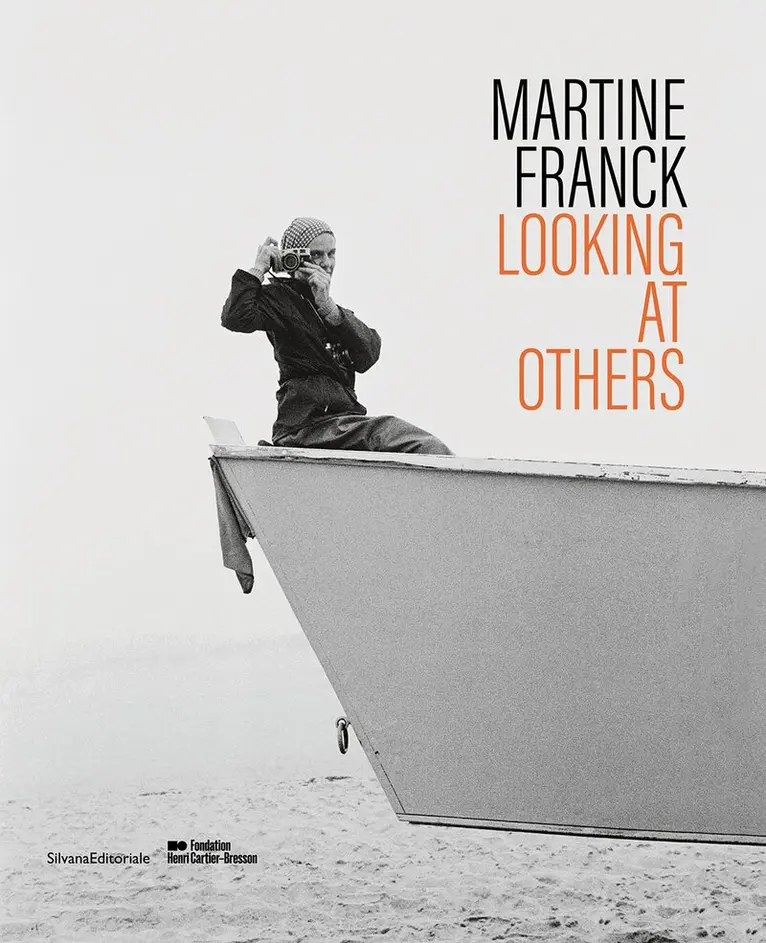
“I do not believe you can be a good photographer if you aren’t curious about others” — Martine FranckThis book was conceived to shed light on the significant visual contribution made to photography by Martine Franck (Anverra, 1938 - Paris, 2012), an influential woman photographer active during the final third of the 20th-century. Celebrating her most renowned images of childhood, old age and theatre, many of which have become iconic, this book also offers a glimpse into swathes of her work depicting labour, the women’s liberation movement and consumer society, which have seldom been displayed before now.This new retrospective brings to a wider audience this truly humanistic artist, who engaged so deeply with her times, and for whom the camera was the privileged medium for Looking at Others.